

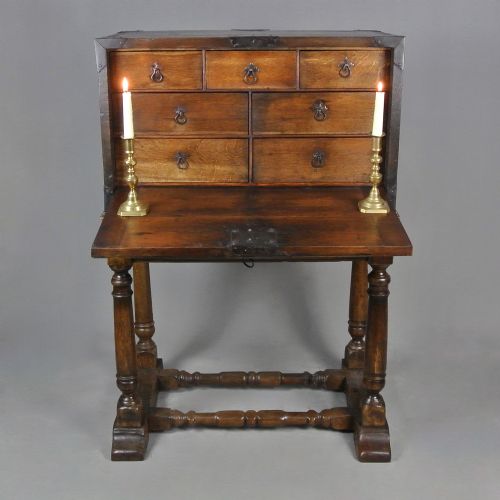
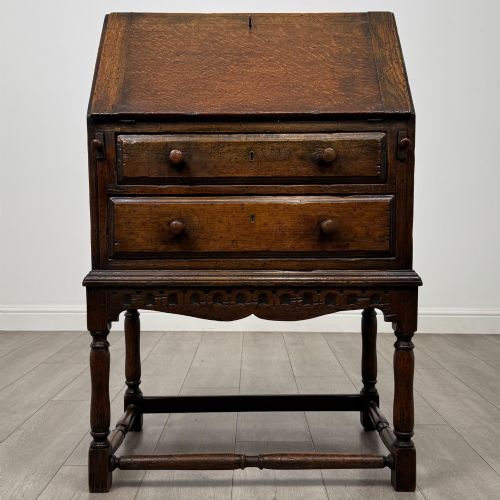

Antique Oak Drop Desk
An antique oak drop desk offers a solid writing surface that folds away neatly, combining practicality with centuries of timber work.
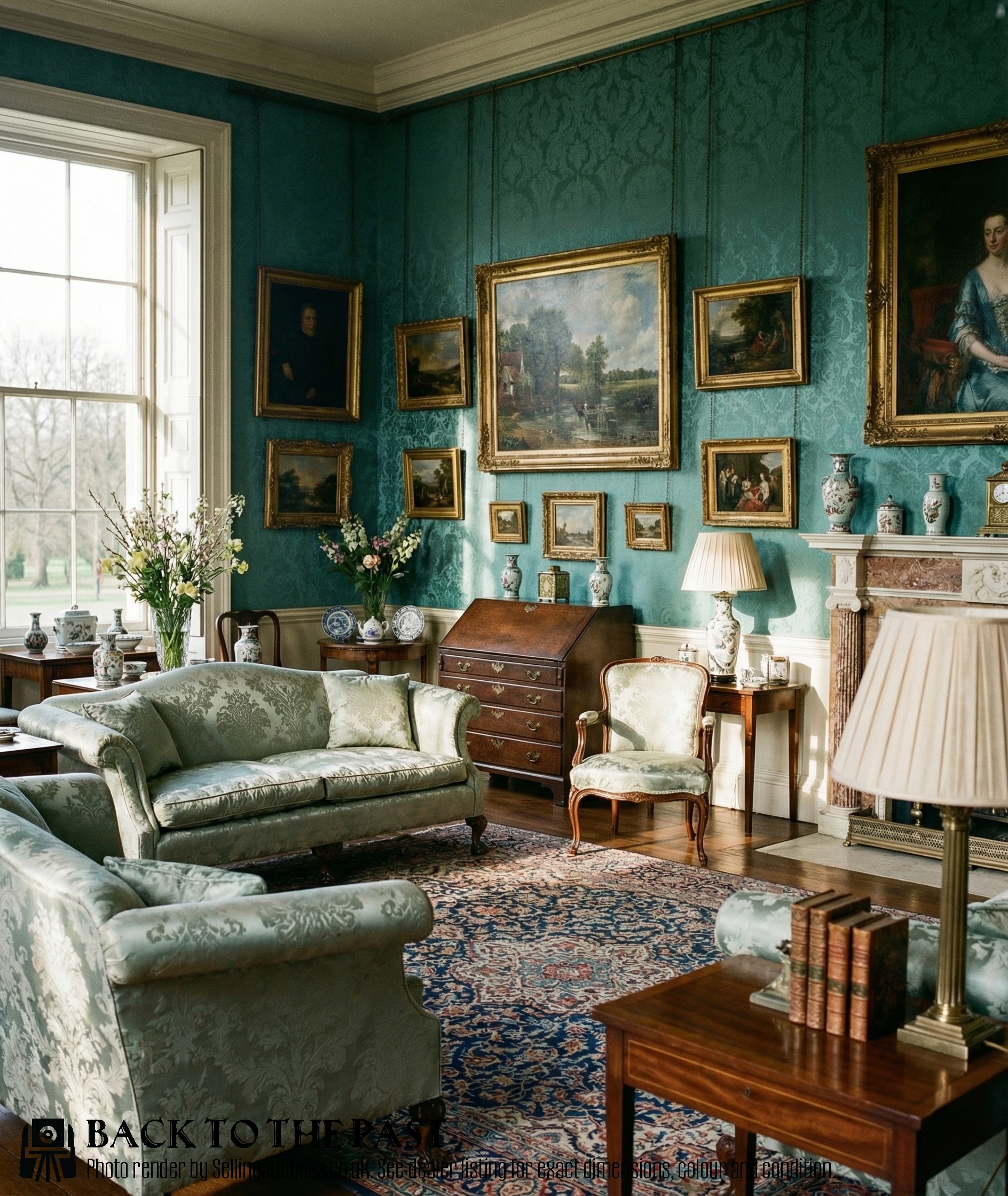
Antique Oak Drop Desk
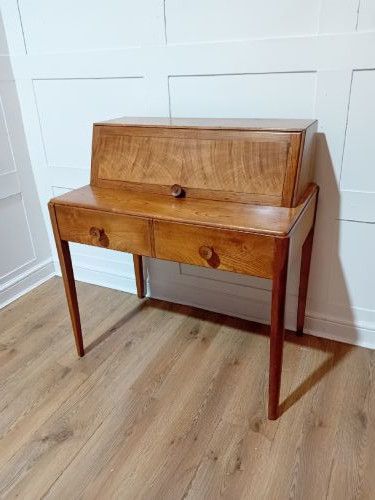
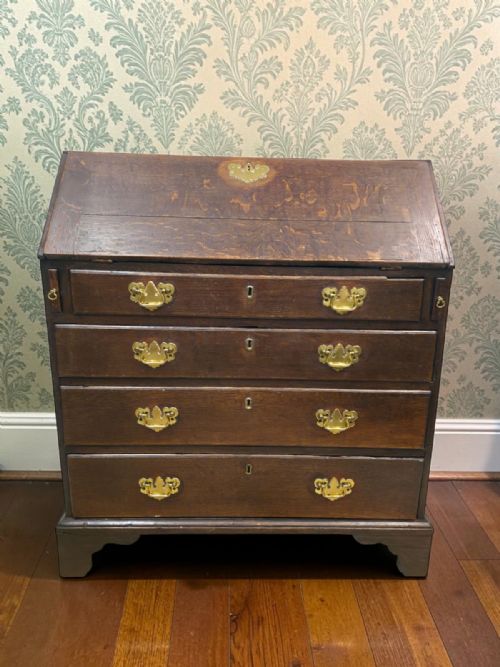
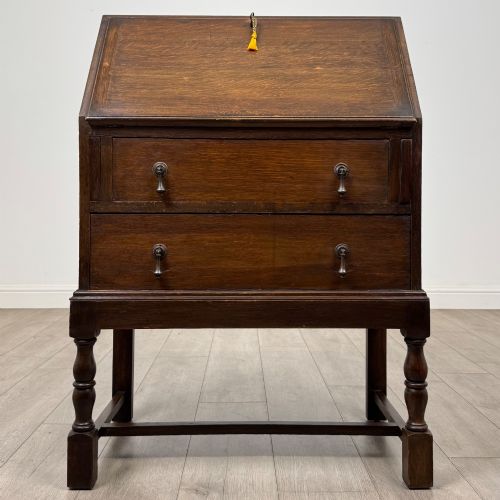
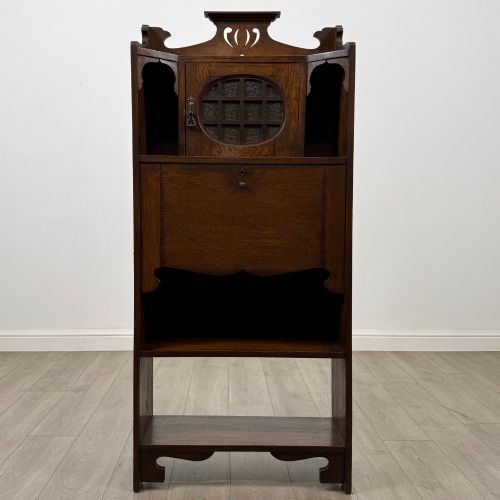
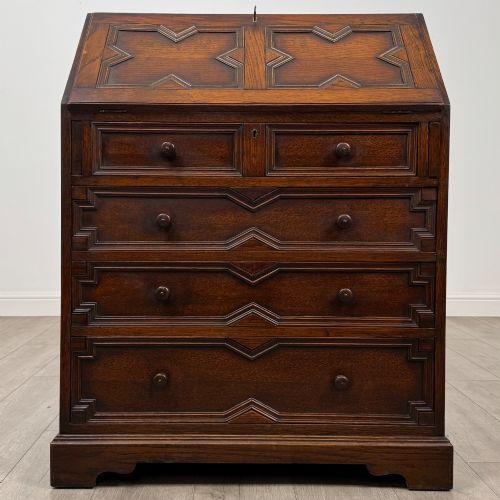
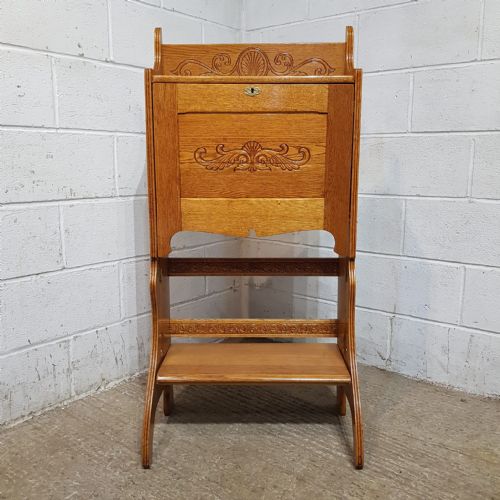
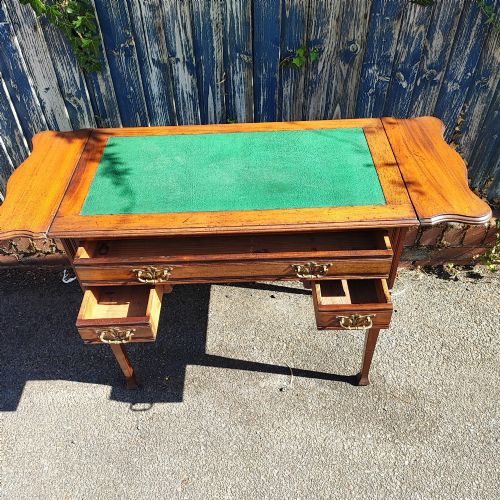
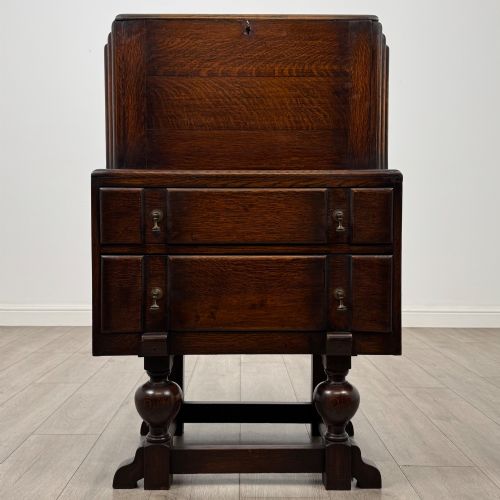
When you search for an antique oak drop desk, you encounter pieces that function primarily as writing furniture with a hinged flap that lowers for writing. The selection spans centuries of cabinet making, from early vernacular pieces to later revival styles.
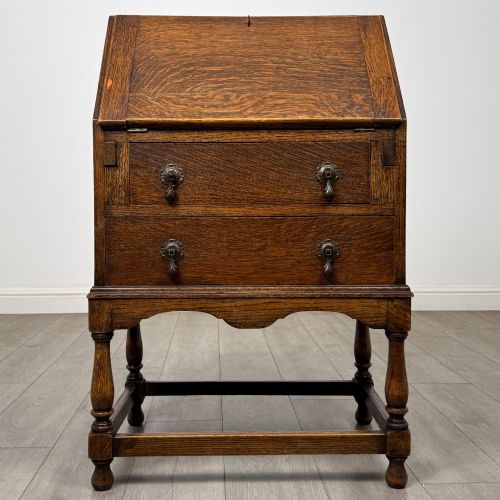
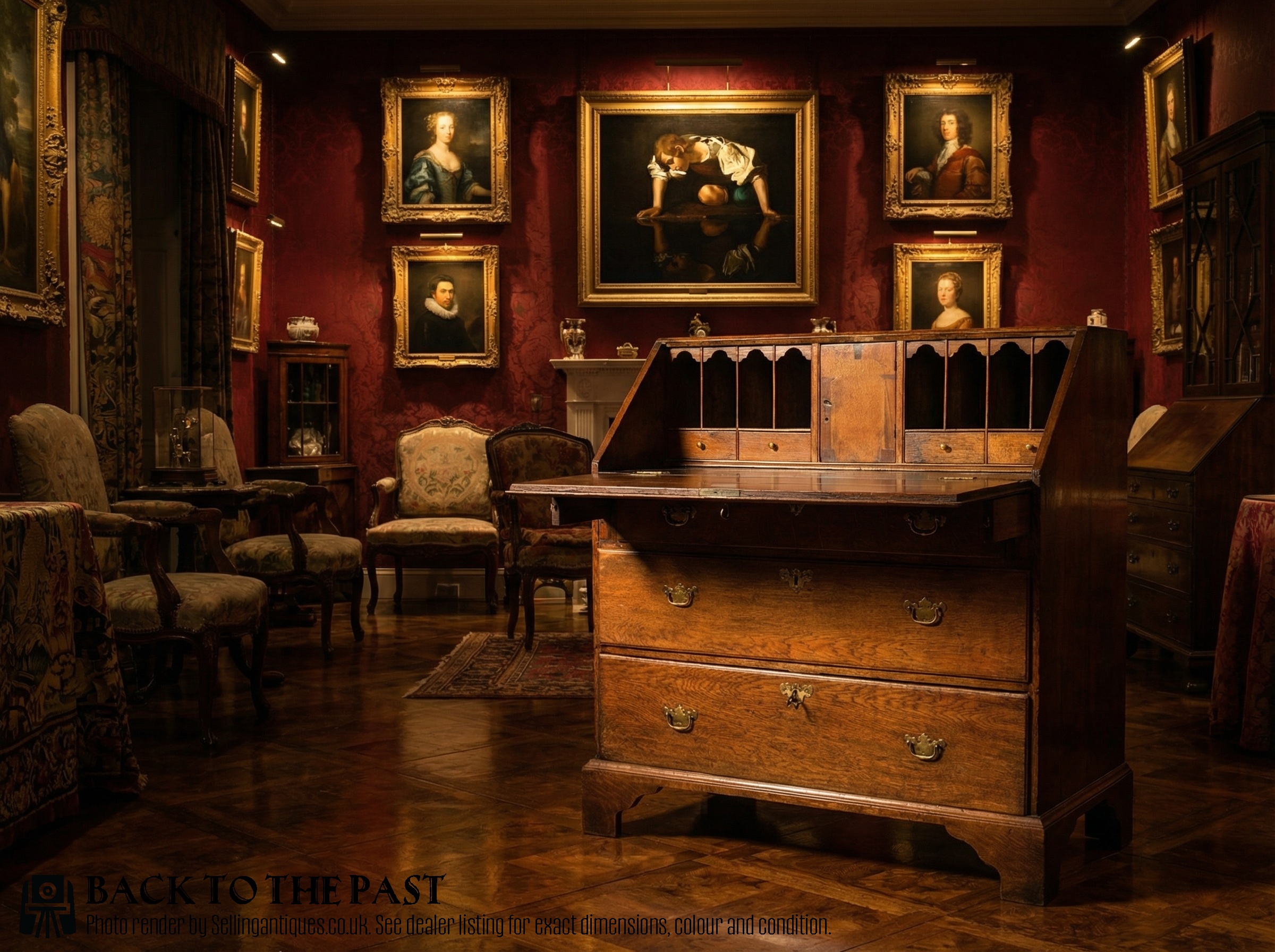
The version you meet most often on this page is the Edwardian bureau or the 18th century equivalent, constructed with a fall front that conceals inner compartments and small drawers.
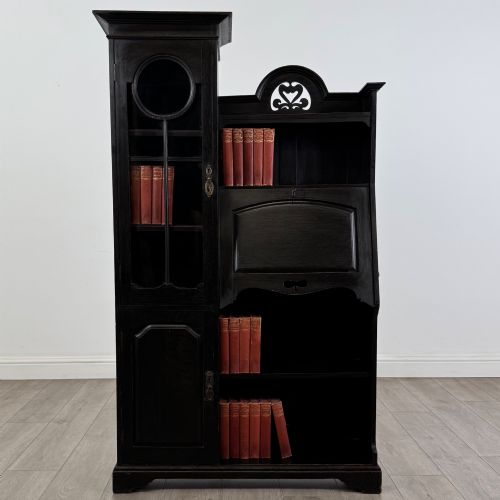
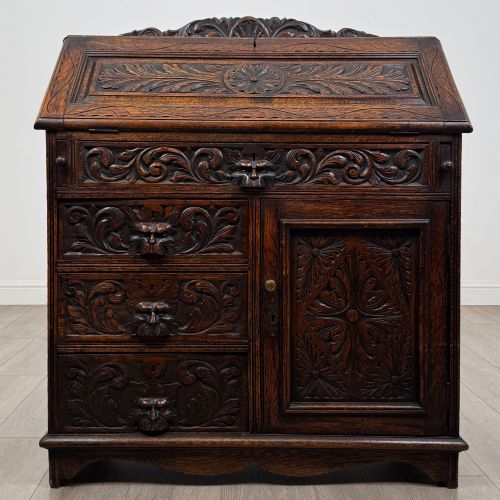
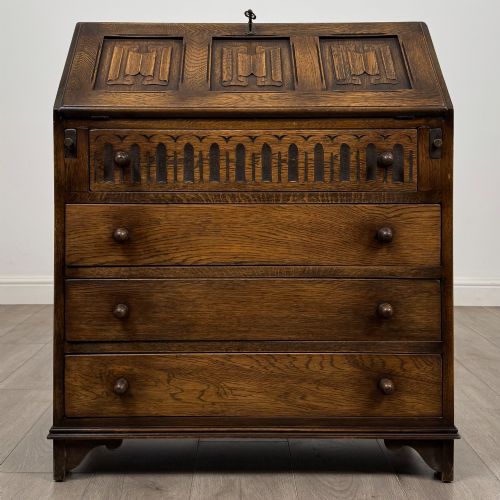
Makers utilised various forms ranging from compact writing desks to large bureau bookcases fitted with glass doors and multiple drawers. The timber exhibits distinct grain patterns, occasionally enhanced by carved details such as linenfold or green man motifs.
Assessing quality and craftsmanship
Quality shows in the precision of the interior joinery within the fall front and the condition of the timber grain across large flat surfaces. Superior examples display thoughtful proportions and careful selection of oak boards.
Desks featuring hand-carved details or fitted compartments with secret drawers demonstrate a higher level of workshop skill compared to plain utilitarian items.
Listings include oak furniture spanning from the 17th century through the Georgian and Victorian eras up to 1940.
ARTHUR BASIL REYNOLDS·Stanley Webb Davies·ROBERT MOUSEMAN THOMPSON·HARRIS LEBUS·Larkin
The Antique Oak Drop Desk Glossary
- Fall front
- The hinged panel on a bureau that drops down to form a horizontal writing surface. It often conceals pigeonholes and small drawers inside.
- Bureau
- A piece of furniture featuring a sloping writing flap above a set of drawers. It serves the dual purpose of a writing desk and storage chest.
- Linenfold
- A style of wood carving that resembles folded parchment or linen. It appears frequently on panels of Edwardian and revival furniture.
- Patina
- The surface sheen and deep colour developed by timber over years of handling and wax polishing. It indicates age and consistent maintenance.
- Pigeonhole
- A small, open compartment fitted inside the interior of a desk for sorting letters and papers. These compartments sit behind the main drop flap.
Antique Oak Drop Desk: Frequently Asked Questions
What is an antique oak drop desk?
An antique oak drop desk is a piece of furniture designed for writing, featuring a hinged flap that lowers to create a working surface. Inside, it typically houses a series of small drawers and pigeonholes for storage.
These pieces range from early provincial examples to later Edwardian interpretations, all utilising oak as the primary construction material.
How do I date an oak bureau?
Dating involves examining the construction methods, drawer linings, hardware, and overall style of the piece. Earlier examples from the seventeenth and eighteenth centuries often display hand-cut joints and vernacular design characteristics.
Later Edwardian or revival pieces tend to show standardised construction techniques while mimicking earlier historical periods like the Jacobean or Georgian eras.
How were these desks used originally?
They served as private writing stations for correspondence, record keeping, and storing important documents. The drop flap provided an immediate desktop when needed and concealed the clutter when closed.
Upper sections in larger variants, such as bureau bookcases, held libraries of bound volumes behind glazed or solid wooden doors.
Where should I place a drop desk?
These desks suit studies, living rooms, or bedrooms where their compact footprint provides both a surface for writing and enclosed storage. Placement away from direct heat sources helps protect the oak timber from drying out.
Allowing sufficient clearance in front of the desk ensures the fall flap can lower completely without obstruction.