
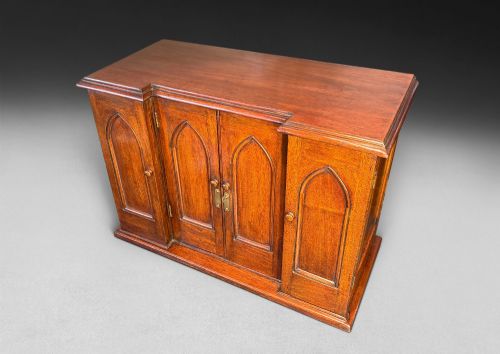
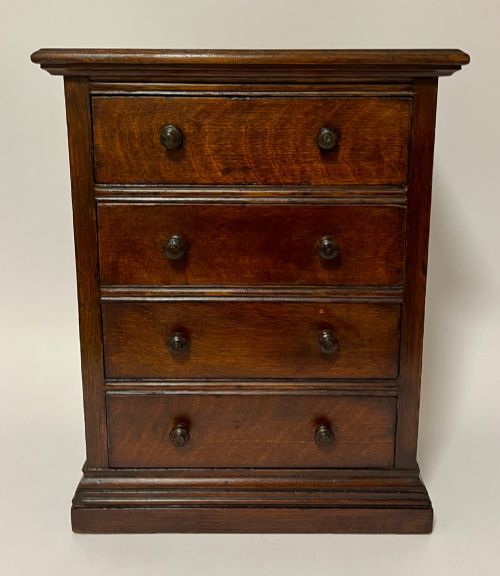


Antique Oak Desktop Cupboard
An antique oak desktop cupboard brings solid timber storage to a surface, offering compartments for small items.
Antique Oak Desktop Cupboard
An antique oak desktop cupboard is a compact wooden cabinet designed to sit on a table, desk or counter for storing small possessions. These pieces range from miniature chests of drawers and collector's cabinets to specialised watchmaker's storage and small tabletop cupboards.
The versions most commonly found here date from the Georgian, Victorian and Edwardian eras, alongside pieces from the 1920s and 1930s. Their forms vary from rustic wall-hanging spice cupboards to refined Regency burr oak chests and Gothic revival specimen cases.
Function dictated form in these pieces, with merchants, collectors and tradesmen utilising them for everything from needles and watch parts to documents and specimens. They provide practical enclosed storage without demanding the floor space of a full-size piece of furniture.
Materials and construction methods
Oak is the primary material across these pieces, frequently enhanced by burr oak figuring or subtle inlay wood work. Construction relies on traditional joinery methods suited to miniature and tabletop scale, ensuring stability for small compartments.
Metal fittings such as brass hinges, escutcheons, drop handles and iron locks provide both security and visual contrast against the timber. Glass panels occasionally appear in doors to display contents, while copper details feature on specific commercial units.
Listings feature oak as the dominant material, accompanied by brass, glass, iron, burr oak and inlay wood across various forms.
Assessing quality in small cabinets
Quality reveals itself in the selection of the timber, particularly where figured oak or burr oak is chosen for prominent surfaces. The crispness of carved details and the precision of the joinery in miniature drawers indicate the maker's skill.
Original hardware, including working locks with keys and period brass pulls, elevates a piece above those altered or repaired later. The integrity of the internal fittings, whether watchmaker's slots or collector's trays, defines the utility and desirability of the cabinet.
Manoah Rhodes & Sons Ltd
The Antique Oak Desktop Cupboard Glossary
- Desktop cupboard
- A small cabinet designed for placement on a desk or table, providing enclosed storage for papers, valuables or small objects. They often feature internal drawers or shelves behind one or two doors.
- Collector's cabinet
- A specialised piece built with shallow drawers or glazed compartments to house and display natural history specimens, coins or small artefacts. These units prioritize internal organisation and protection for delicate items.
- Burr oak
- A growth deformity in the oak tree that produces highly figured, swirling grain patterns highly prized for decorative veneer on fine furniture. It creates a rich, mottled appearance on the exterior surfaces.
- Apprentice piece
- A small-scale item demonstrative of high skill, traditionally made by a craftsman completing training. These often mirror the form of larger chests of drawers in miniature.
- Watchmaker's cabinet
- A specialised multi-drawer chest utilised by horologists to sort tiny gears, springs and tools. They typically contain numerous shallow compartments tailored to minute items.
Antique Oak Desktop Cupboard: Frequently Asked Questions
What were antique desktop cupboards used for?
These cabinets served diverse roles for merchants, collectors and tradesmen who needed secure storage for valuable items close at hand. People kept documents, spices, watch parts, sewing needles and scientific specimens inside them.
Their compact nature allowed them to sit directly on writing desks, shop counters or tables where quick access to small goods was required during daily work.
How do I date an oak desktop cabinet?
Dating relies on examining the construction techniques, timber preparation, and the style of the mouldings or hardware. Georgian pieces often show hand-cut dovetails and rustic joinery, while Victorian and Edwardian examples may incorporate machine-sawn elements or Gothic revival motifs.
Hardware such as brass locks, hinges and handles also provides strong clues, as manufacturing methods for metal fittings changed noticeably between the eighteenth and twentieth centuries.
Where should I place a desktop cupboard at home?
These pieces suit placement on sturdy sideboards, large desks, chests of drawers or console tables where their proportions can be appreciated. Because they were built for daily utility, they function well holding stationery, collections or everyday clutter.
Keep them away from direct heat sources and strong sunlight to protect the oak timber and any historic polish or finish from drying out or fading.