


Desktop Storage Cupboard
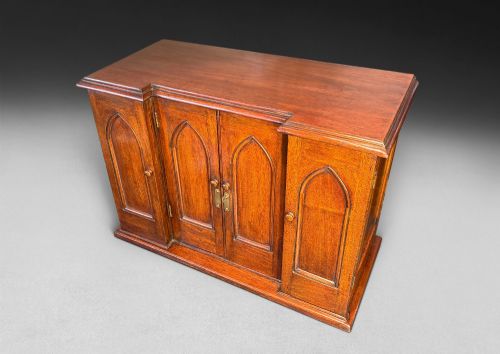
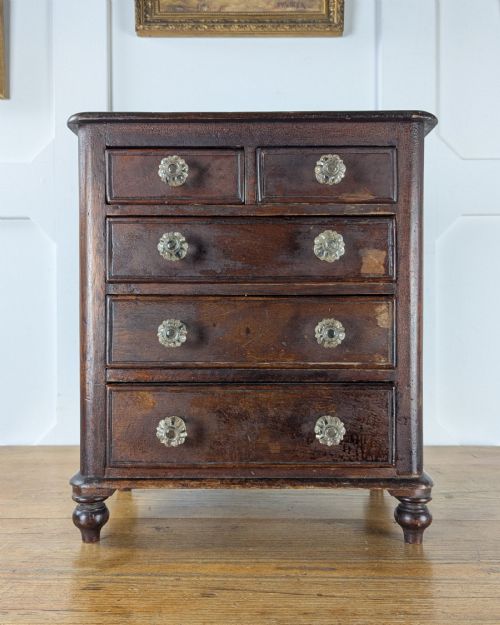
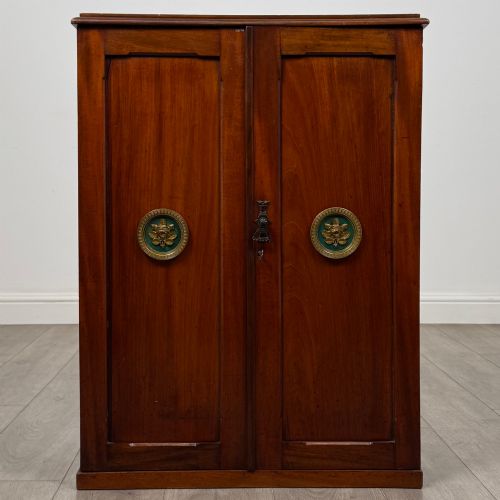
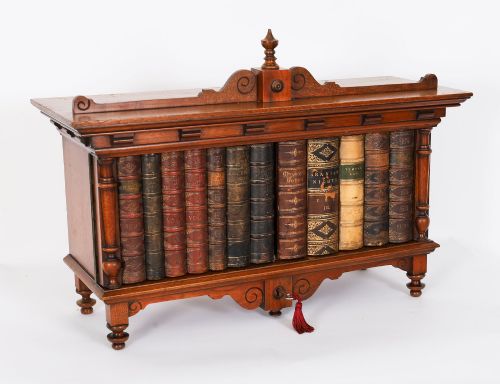
Desktop storage cupboard pieces are compact chests, tabletop cabinets and small drawers designed to keep small possessions orderly.
Desktop Storage Cupboard
When you search for desktop storage cupboard, you encounter a diverse selection of miniature furniture, spice cabinets, and tabletop repositories designed for domestic or commercial organisation. The pieces span periods from the Georgian era through the Victorian period into the 1920s and 1930s, reflecting changing functional demands on the desktop. Tabletop cabinets and small drawers dominate the selection, providing practical surface storage.
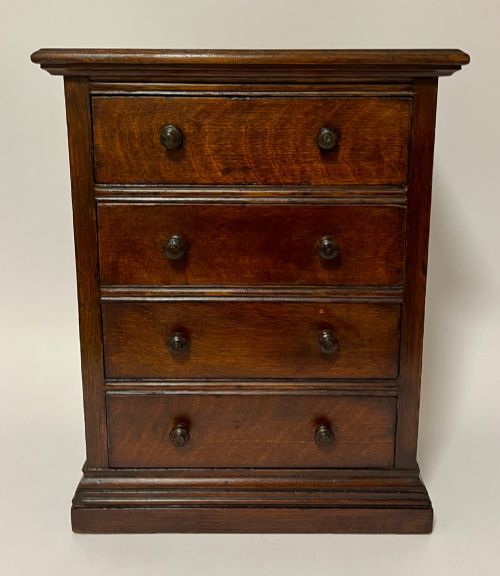
The forms range from apprentice chests of drawers and collector's cabinets with glass doors to draper's countertop needle drawer cabinets and watchmaker's cabinets. Oak and mahogany appear frequently as primary timbers, alongside walnut, pine, fruitwood, and metal. Many items incorporate brass handles or hinges, while specific variants include wall hanging or desk top combinations and filing units.
How they were made
Cabinet makers utilised durable hardwoods such as oak and mahogany, often constructing carcases with dovetailed joints to withstand daily use. Secondary timbers and pine appear in internal drawer construction, while fruitwood and walnut provide contrast in specific decorative examples. Surfaces receive traditional finishes that highlight the natural grain of the wood.
Hardware execution involves cast brass drop handles, escutcheons, and hinges that secure doors and drawers. Glass panels feature in collector's cabinets and specimen cases to display contents safely while excluding dust. In later interwar commercial pieces, metal elements integrate directly with wooden frames.
A pair of small oak cabinets on this page was manufactured directly from the timbers of HMS Osborne.
What varies in quality
The standard of timber selection and joinery separates basic utilitarian boxes from finer workshop productions. Finely turned feet, clean dovetailing, and careful timber matching indicate skilled cabinet making, whereas simpler constructions rely on straightforward board assembly.
Original hardware integrity and the precision of drawer fitting influence overall merit. Cabinets retaining matching brass drop handles and properly functioning locks demonstrate superior original manufacture compared to pieces with replaced components.
D Napier & Sons·Manoah Rhodes & Sons Ltd·Amberg
The Desktop Storage Cupboard Glossary
- Apprentice piece
- A small-scale item created by a trainee craftsman to demonstrate mastery of joinery techniques before admission to a trade guild. These often take the form of miniature chests of drawers.
- Collector's cabinet
- A tabletop case fitted with multiple shallow drawers designed for housing specimens, coins, or jewellery. These frequently incorporate glass doors or secure locking mechanisms.
- Spice cabinet
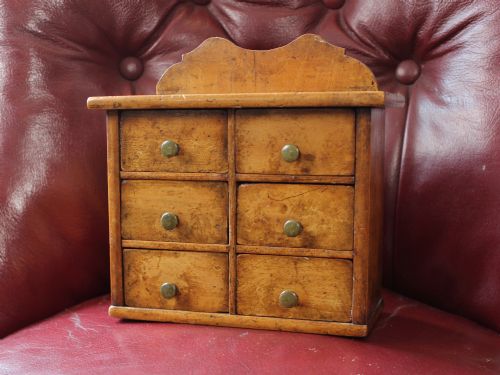
- A small wall-hanging or desk-top wooden cupboard containing numerous tiny internal drawers for culinary ingredients. They typically date from earlier periods and feature solid timber construction.
- Watchmaker's cabinet
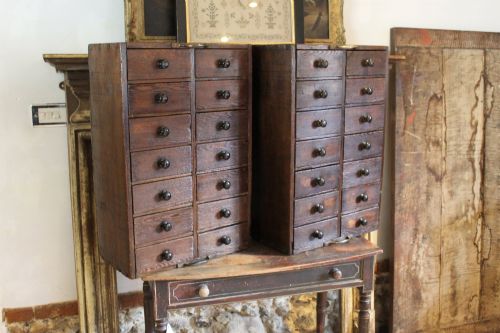
- A specialised multi-drawer workstation unit used by horologists to sort minute components and tools. They are commonly constructed from oak or mahogany with numerous compartmentalised drawers.
- Specimen case
- A fitted container intended for natural history samples or scientific collections. These incorporate protective internal layouts often framed in oak or mahogany.
Desktop Storage Cupboard: Frequently Asked Questions
What is a desktop storage cupboard?
A desktop storage cupboard is a small-scale wooden cabinet, chest of drawers, or repository designed to sit on a desk or table.
These pieces organise documents, small collectibles, sewing equipment, or spices within easy reach of a seated user.
How were apprentice chests used?
Apprentice chests served as physical portfolios for young woodworkers to demonstrate their proficiency to master craftsmen.
Once approved, the miniature chest functioned domestically as a jewellery box or small drawer unit.
What timbers are most common?
Oak and mahogany appear most frequently across Victorian and Georgian pieces, offering strength and fine grain patterns.
Walnut, pine, fruitwood, and metal also feature in specific regional or commercial variations.
How do I identify a collector's cabinet?
Collector's cabinets feature numerous shallow internal drawers intended for sorting small items like coins, insects, or jewellery.
Many examples include panelled or glass doors designed to protect the contents while allowing visibility.