
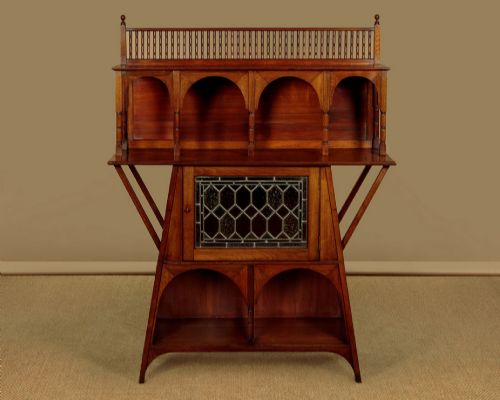
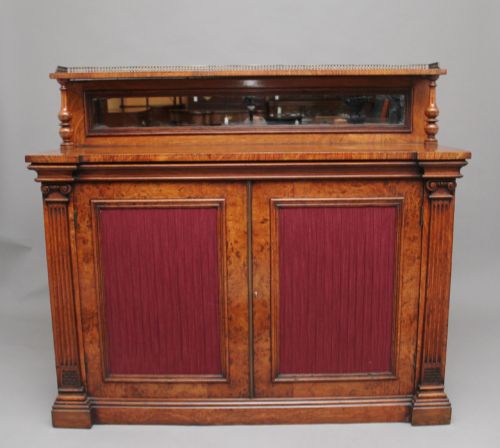


Antique Oak Chiffonier Cabinet
These antique oak chiffonier cabinet pieces combine a low sideboard base with a raised top shelf, built to store dining silver and display glassware.
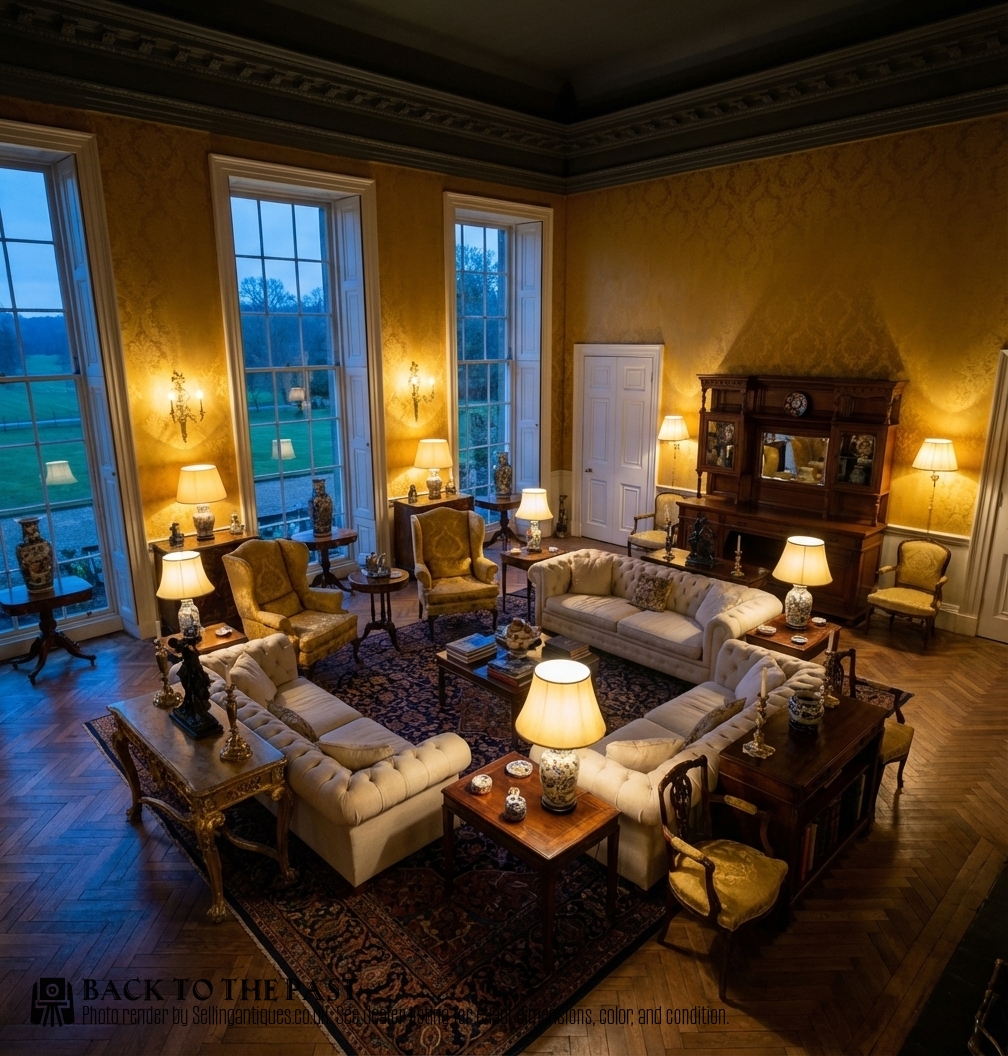
Antique Oak Chiffonier Cabinet
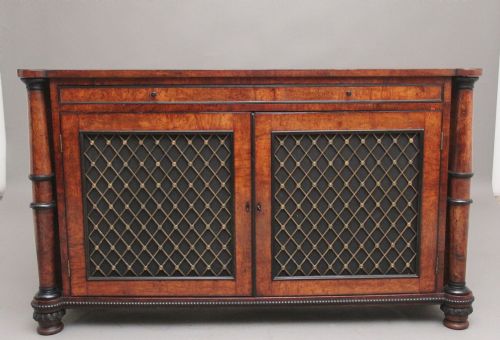
An antique oak chiffonier cabinet serves as a practical storage piece for the dining room or parlour, combining enclosed lower cupboards with an upper shelf or mirror back. The pieces seen here span from the Regency and William IV periods through the Victorian era and into Edwardian and Arts and Crafts designs.
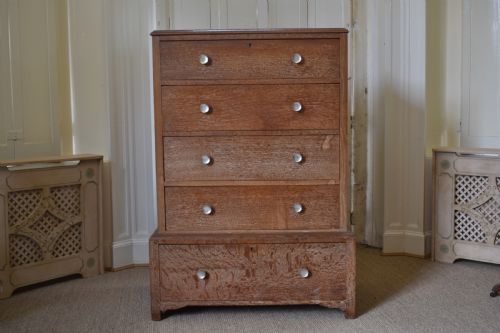
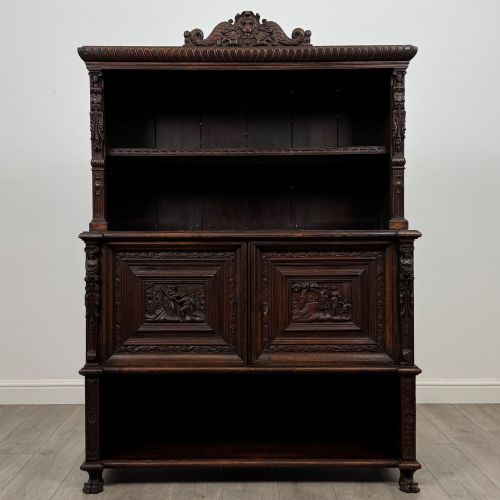
Most examples rely on solid oak or figured pollard oak timbers, often featuring carved panels, brass hardware, and glass doors. You encounter variations ranging from compact side cabinets to large mirror-backed sideboards with extensive shelving and storage capacity.
Makers utilised these forms to provide both utility and display space, meaning many versions include internal drawers or adjustable shelving behind panelled doors. The proportion typically remains low and horizontal, making them adaptable for modern rooms that require substantial surface space.
Materials and construction methods
Cabinet makers constructed these pieces using solid oak frames combined with figured veneers like pollard oak, kingwood, and rosewood to add contrast and pattern to the principal surfaces. Secondary woods such as pine appear in internal partitions and drawer linings.
Construction techniques include hand-cut dovetails for drawers and traditional mortise and tenon joints for the structural frames. Decorative elements incorporate carved woodwork, applied ebony details, and fitted brass handles or hinges.
Many Victorian dining rooms relied on these cabinets to hide away the port wine bottle from inquisitive parlour maids.
What separates the grades
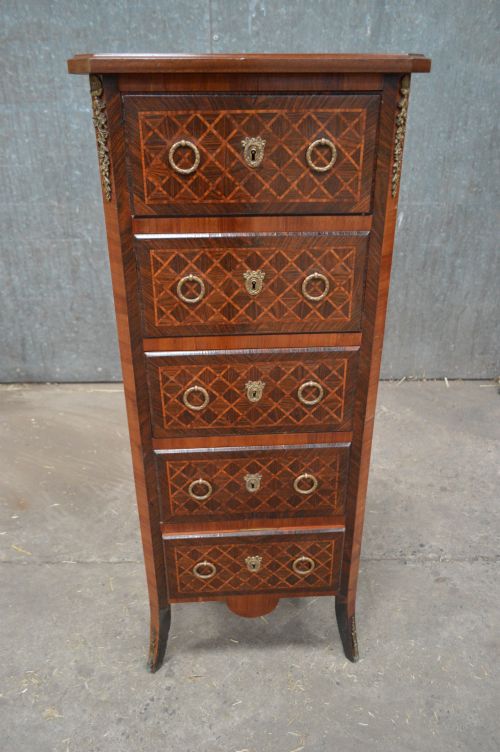
The choice of timber creates a primary distinction, where highly figured pollard oak or burr oak veneers demand greater skill in selection and book-matching than plain timber boards. Finishes range from simple wax polishes to elaborate ebonised highlights and intricate parquetry.
Structural integrity and the retention of original hardware, including brass locks and keys, elevate the standing of a piece. Carved ornamentation executed with crisp depth rather than shallow machine work distinguishes the superior workshop productions.
Liberty & Co.·Garnett & Sons
The Antique Oak Chiffonier Cabinet Glossary
- Pollard oak
- Timber taken from a tree that has been pruned close to the trunk to produce dense, highly figured grain patterns. This wood was favoured by cabinet makers for decorative veneers on principal doors and drawer fronts.
- Chiffonier
- A low sideboard or cabinet equipped with enclosed lower storage and frequently topped by a raised shelf or mirror back. It developed in the nineteenth century to serve dining rooms and drawing rooms.
- Parquetry
- A geometric mosaic of wood pieces used for decorative surfaces on cabinet doors or tabletops. Makers arranged contrasting timbers like ebony and oak to create patterns.
- Aesthetic Movement
- A late nineteenth-century design style that emphasised artistic expression, simplicity, and craftsmanship over heavy Victorian ornamentation. Ebonised finishes and Japanese-inspired brass hardware often accompany this style.
- Limed oak
- Oak treated with a white pigment or lime finish to highlight the open grain of the wood. This technique appears frequently in pieces from later periods like the nineteen-thirties.
Antique Oak Chiffonier Cabinet: Frequently Asked Questions
What is an antique oak chiffonier cabinet?
An antique oak chiffonier cabinet is a low storage piece featuring cupboards in the base and a raised shelf or mirror on top. These items originated as functional furniture for dining rooms and parlours.
Cabinet makers built them to hold silverware, linen, and glassware while providing a surface to display decorative ceramics. The form bridges the gap between a side table and a full sideboard.
How do I date an oak chiffonier?
Dating relies on stylistic clues and construction methods, ranging from Regency and William IV proportions to Victorian carved details and Edwardian mirror backs. Later pieces from the nineteen-thirties often feature limed finishes and simpler lines.
Examining the secondary woods inside drawers and the type of fixings used can also clarify the period of production. Cabinet styles shifted from heavy ornamentation to cleaner Arts and Crafts designs as the nineteenth century progressed.
Where should I place a chiffonier in a room?
These cabinets suit dining rooms, living spaces, or hallways where low storage and display surface area are required. Their horizontal proportions allow them to sit beneath windows or against large walls without dominating the room.
The raised upper shelf or mirror provides a dedicated spot to display books, lamps, or decorative objects while keeping the main surface clear for serving food or drinks.
How do I care for pollard oak furniture?
Pollard oak furniture requires regular dusting with a soft, dry cloth and occasional application of appropriate beeswax to nourish the wood and maintain the grain's lustre. Avoid placing the cabinet in direct sunlight or near heat sources to prevent the veneer from drying out.
Keeping the room at a stable humidity level protects both the solid oak framework and the delicate veneers applied to the doors and drawers.