


Oak Mirror Back Chiffonier
An oak mirror back chiffonier brings architectural presence and practical display surface into a room, combining substantial timber storage with integrated glass.
Oak Mirror Back Chiffonier
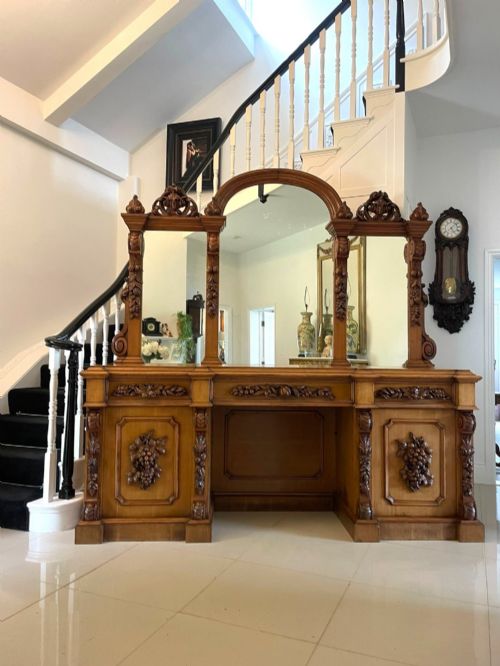
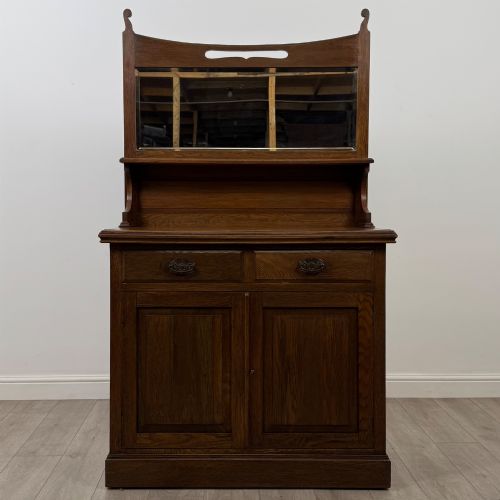
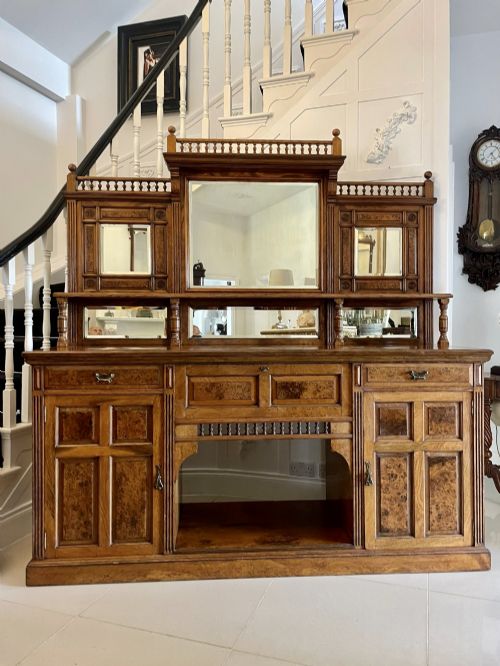
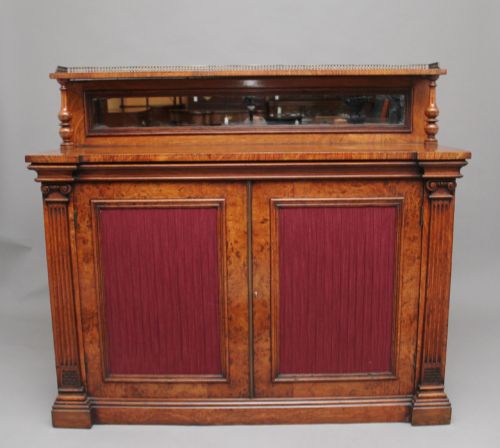
An oak mirror back chiffonier sits firmly within the sideboard family, combining a low cabinet base with an upright wooden superstructure holding a central mirror plate. These pieces span from the mid-Victorian era through the Edwardian period and into the early twentieth century, taking stylistic cues from Victorian, Edwardian, and Arts and Crafts movements.
The primary forms found here are robust sideboards and buffets executed in various shades of oak, including pollard oak, golden oak, and light oak. They serve as both functional serving surfaces and decorative focal points, reflecting light into a space through their fitted mirror glass backs.
Materials and construction
Cabinetmakers utilised solid and veneered oak alongside secondary timbers like pine, mounting glass mirror plates within carved or plain wooden frames. Metal elements such as brass, copper, and iron appear in the hardware, including handles, hinges, and decorative mounts.
Surface ornamentation relies heavily on timber selection, particularly the mottled figuring of pollard oak, alongside carved detailing and fitted fabric elements within specific cabinet interiors or back panels.
Pollard oak veneer was gathered from trees deliberately lopped at height to produce dense, swirling knots that resemble bubbling water across the cabinet front.
Assessing quality in these pieces
The distinction between standard and superior examples rests upon the choice of timber and the ambition of the carving. Highly figured pollard oak and deeply carved architectural mouldings elevate an item above plain utilitarian counterparts.
Maker attribution and stylistic cohesion also define the upper tier of these pieces. Defined movements like Arts and Crafts demonstrate considered integration of hardware and timber grain, whereas simpler examples rely on straightforward joinery.
The Oak Mirror Back Chiffonier Glossary
- Pollard oak
- A decorative timber obtained from pollarded oak trees, featuring dense, clustered knots and complex grain patterns. This wood was selected for high-status Victorian cabinet work.
- Mirror back
- An upright wooden superstructure attached to the rear of a sideboard, housing a mirror plate. It was designed to reflect light and display decorative objects placed on the surface below.
- Arts and Crafts
- A design movement prioritising honest construction, visible craftsmanship, and simple materials. Pieces in this style often feature minimal carving and emphasis on natural timber grain.
- Chiffonier
- A low sideboard or cabinet featuring cupboards and drawers, frequently fitted with a superstructure. It evolved during the nineteenth century as a versatile dining room storage piece.
- Sideboard
- A large piece of furniture used for storing dining utensils and serving food. In these examples, the form is augmented with an integrated mirror back.
Oak Mirror Back Chiffonier: Frequently Asked Questions
What is an oak mirror back chiffonier?
It is a form of sideboard featuring a low wooden cabinet base with cupboards and drawers, surmounted by an upright frame holding a mirror glass plate. These pieces were designed to store dining accessories while providing a reflective display surface.
They combine heavy timber construction with decorative glass elements, reflecting the aesthetic preferences of Victorian and Edwardian cabinetmakers.
How were these pieces used originally?
Dining rooms utilised these cabinets for storing cutlery, linen, and serving dishes, while the top surface held food or decorative items. The integrated mirror served to brighten dark Victorian interiors by reflecting candlelight and daylight.
Their substantial presence made them the visual anchor of a formal dining space.
How do I date an oak mirror back chiffonier?
Dating relies on identifying stylistic markers associated with periods such as Victorian, Edwardian, and Arts and Crafts. Heavier carved ornamentation often indicates mid to late Victorian manufacture, while lighter oak tones point towards Edwardian or 1910s production.
Construction methods and secondary timbers like pine also assist in narrowing the timeframe.
How do I live with one in a modern home?
These sideboards function effectively in modern dining rooms, hallways, or spacious living areas as statement storage pieces. The surface accommodates lamps or ornaments, and the internal cupboards conceal modern clutter.
Placement should consider the weight of the timber and the height of the mirror back against contemporary ceiling proportions.