

Antique Oak Chest Front
When you handle an antique oak chest front, you are looking at centuries of timber framing, carved panels and integrated storage salvaged or preserved from larger case furniture.
Antique Oak Chest Front
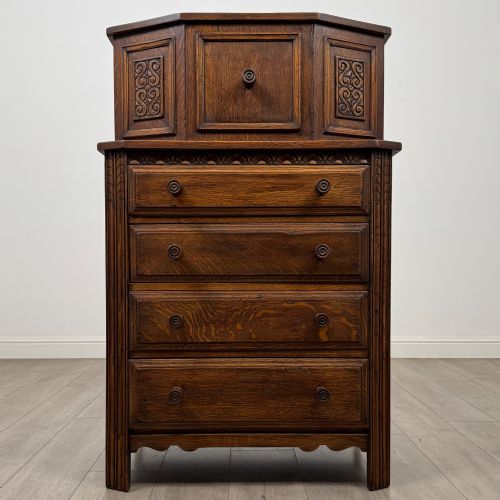
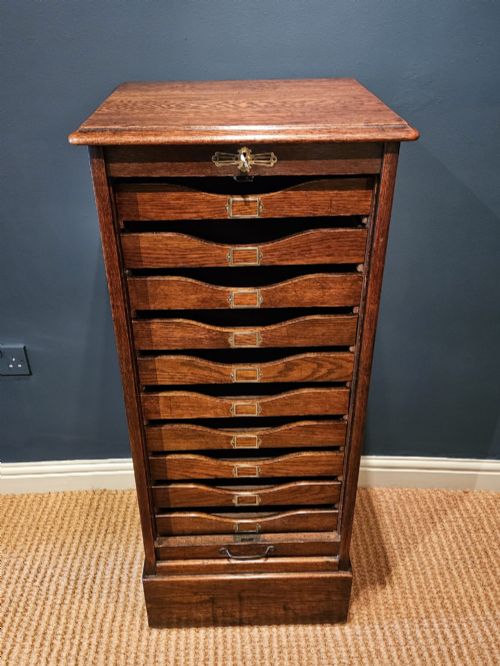
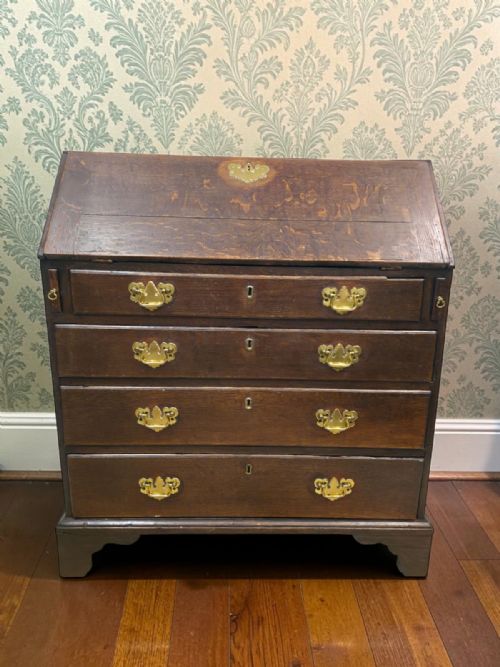
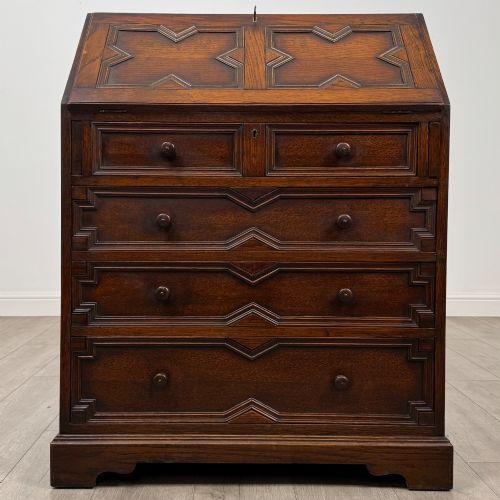
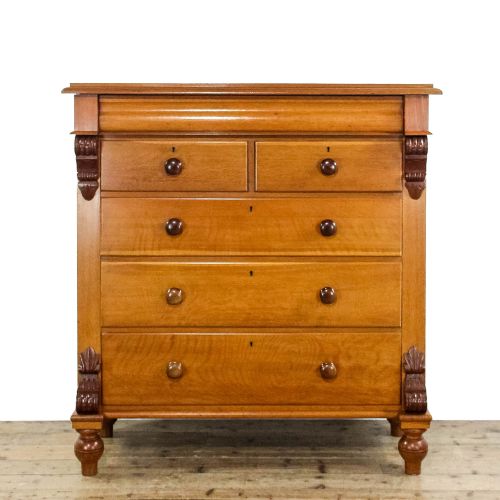
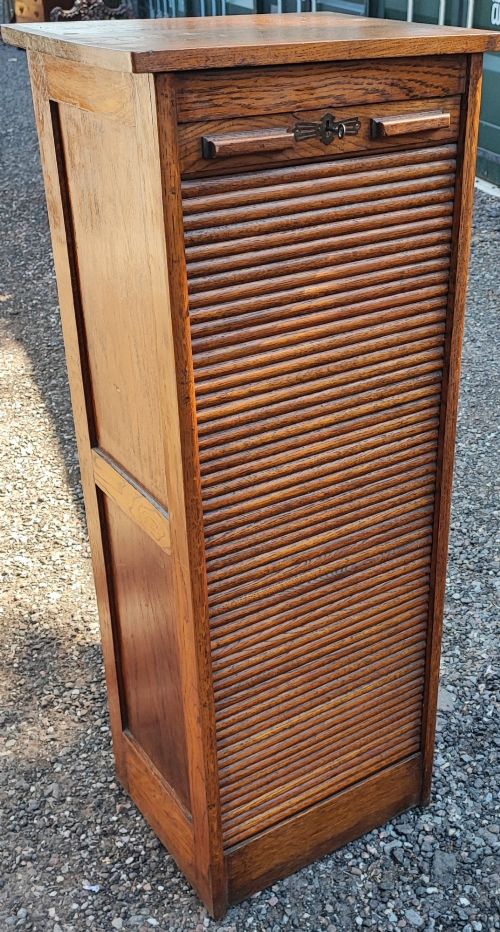
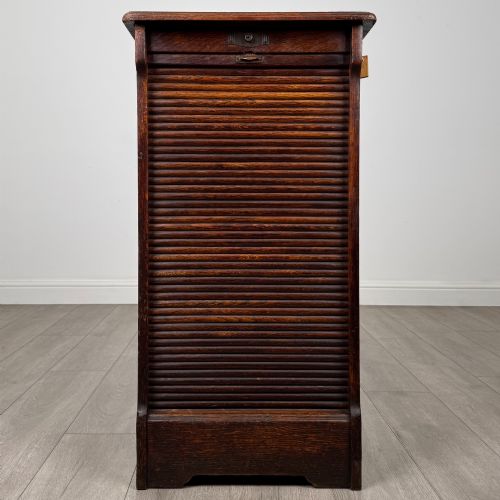
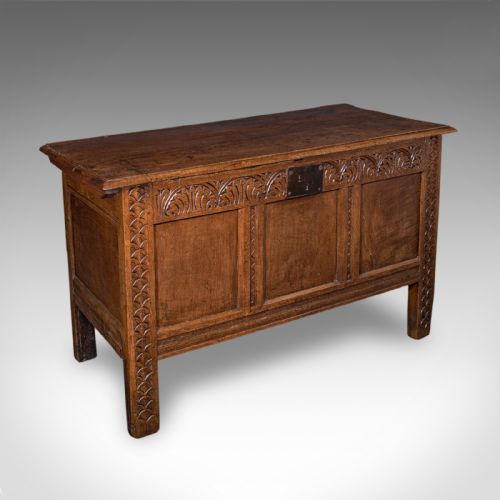
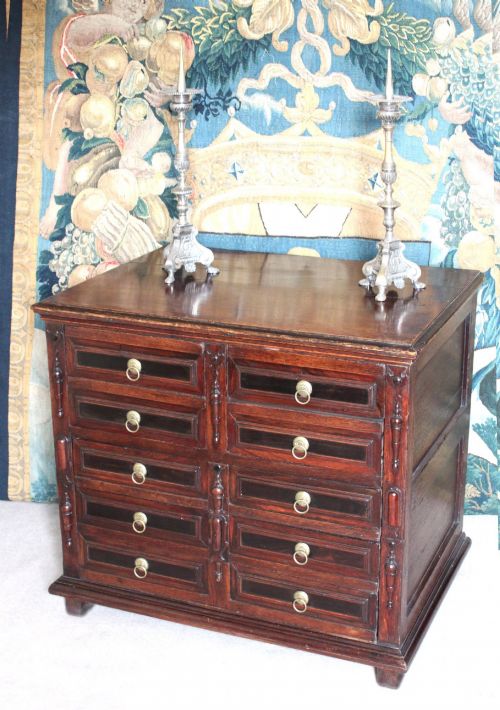
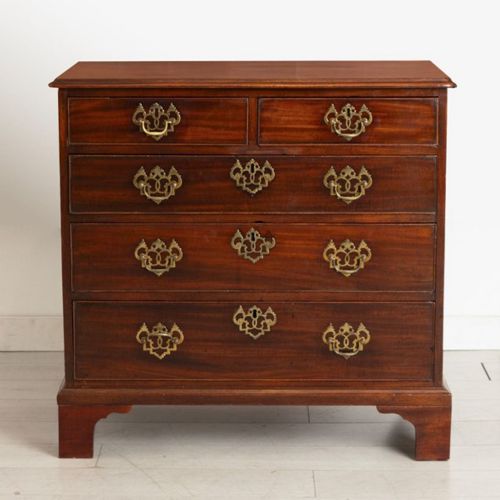
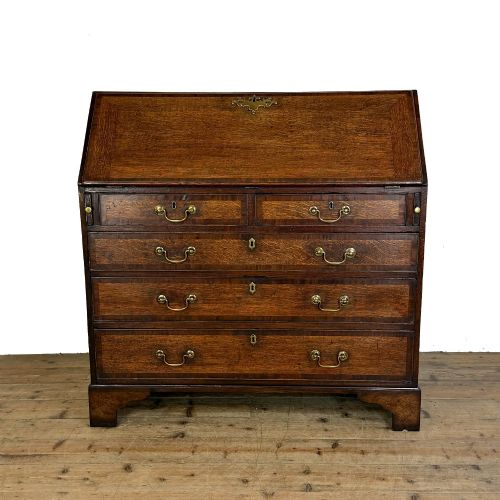
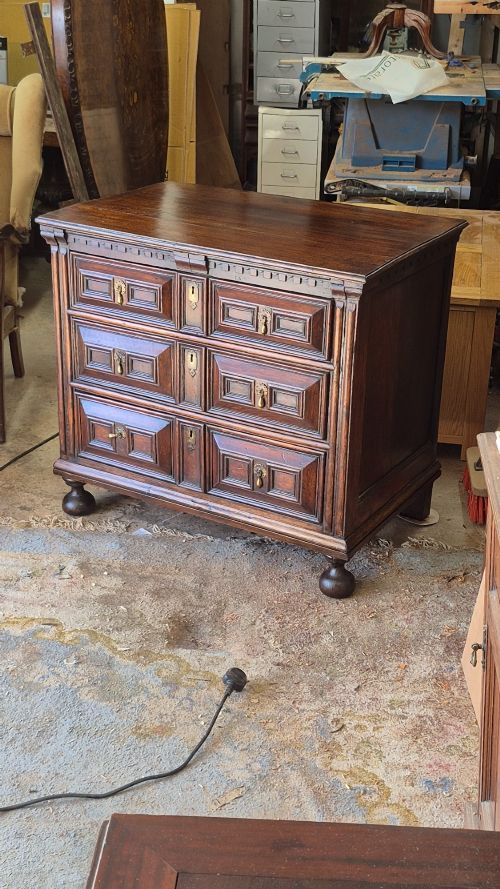
An antique oak chest front is a salvaged architectural section or the visible facade of a larger storage piece, ranging from 16th century coffer panels to 17th century moulded drawer banks and Edwardian tambour filing units. These components isolate the decorative joinery of older furniture, showing geometric mouldings, linenfold carving and panelled construction without the bulk of the full carcass.
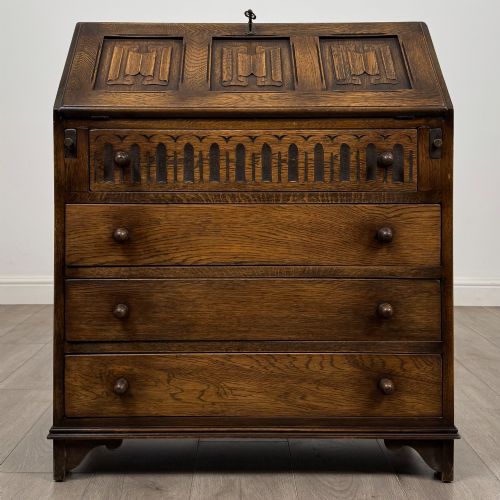
The versions most common on this page span the 17th century through the Edwardian period, often taking the form of straight-front drawer banks, slant-front bureau facades and carved blanket chest panels. They reflect the evolution of domestic storage from basic boarded coffers to sophisticated tier systems in solid oak.
Materials and construction methods
Makers relied primarily on solid oak, supplemented occasionally by chestnut, mahogany or ebonised details, framing the timber using traditional mortise and tenon joints. Panels were left free to move within grooves to accommodate seasonal timber shrinkage without splitting the grain.
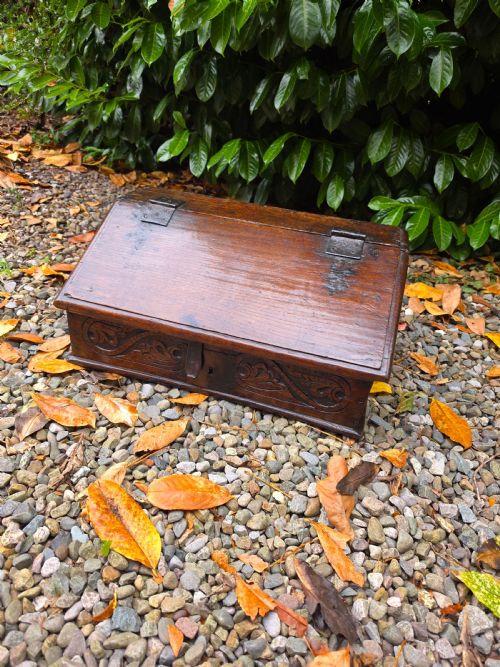
Surface detailing involved hand-carved linenfold motifs, geometric cushion mouldings and applied arcading, fixed with wooden pegs rather than modern fasteners. Hardware such as brass drop handles and iron hinges were integrated directly into the structural layout of the facade.
Listings span multiple centuries of oak working, incorporating styles from Charles II and Tudor Revival through to Edwardian filing cabinets.
Distinctions in standard and execution
Quality rests in the crispness of the hand-carved relief and the depth of the timber's natural patina, where centuries of handling impart a soft lustre to the oak grain. Finer examples display precise geometric mitres and tight joinery that remain stable across changing humidity.
Lesser execution appears in later mechanical reproductions or heavy restorations where the integration of replacement hardware and mismatched timber sections disrupts the continuity of the original facade.
The Antique Oak Chest Front Glossary
- Coffer
- A heavy wooden storage chest constructed with panelled sides and a hinged lid. These form the earliest structural basis for many surviving front panels.
- Linenfold
- A style of wood carving that mimics folded fabric or linen cloth. It appears frequently on 16th and 17th century panels.
- Tambour
- A flexible shutter made from narrow strips of wood glued to canvas, allowing smooth sliding access across filing cabinet and bureau fronts.
- Patina
- The surface sheen and colour developed by aged timber through decades of exposure, use and polishing. It serves as a key indicator of authenticity.
- Cushion moulding
- A rounded, protruding profile applied to drawer fronts during the 17th century, creating strong visual depth across the facade.
Antique Oak Chest Front: Frequently Asked Questions
What is an antique oak chest front?
An antique oak chest front is either the decorative facade removed from a historic piece of case furniture or a dedicated architectural panel section preserved from periods ranging from the 16th century to the Edwardian era. These items isolate specific woodworking styles, such as linenfold carving or geometric mouldings.
Buyers often collect them to study historic joinery techniques, mount them as wall displays or incorporate them into bespoke interior architectural projects.
How were these wooden panels originally used?
These facades originally served as the functional or decorative face of domestic storage pieces, including blanket chests, bible boxes, writing bureaux and multi-drawer chests. They protected household valuables, documents and textiles from dust and dampness.
The integration of doors, fall fronts and drawers allowed daily access while keeping contents secure behind heavy oak framing.
How do I care for antique oak timber?
Living with antique oak requires maintaining stable indoor humidity and temperature to prevent the dry timber from splitting or warping. Keep pieces away from direct heat sources and strong sunlight.
Apply a microcrystalline wax periodically to nourish the surface and preserve the historic patina without sealing the wood pores.
How can I tell 17th century work from Edwardian pieces?
Seventeenth-century oak elements display hand-split timber grain, pegged mortise joints, deep hand-carved cushion or geometric mouldings and heavy iron hardware. The wood shows decades of oxidation and deep wax accumulation.
Edwardian interpretations often utilise machine-sawn oak, tambour tracks, lighter brass fittings and cleaner, more uniform surface finishes reflective of early 20th century factory production.