
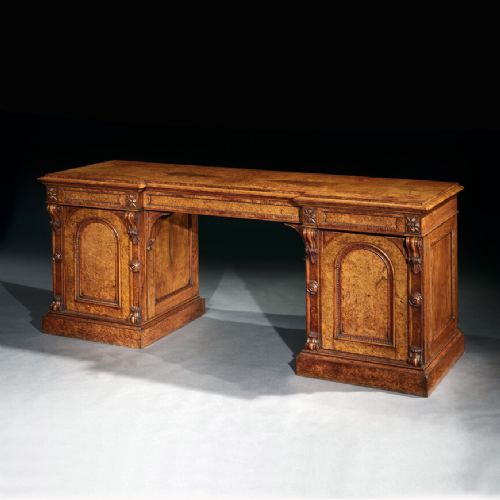
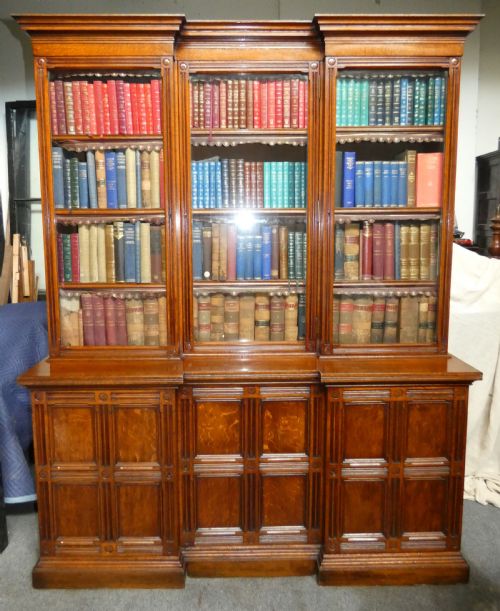


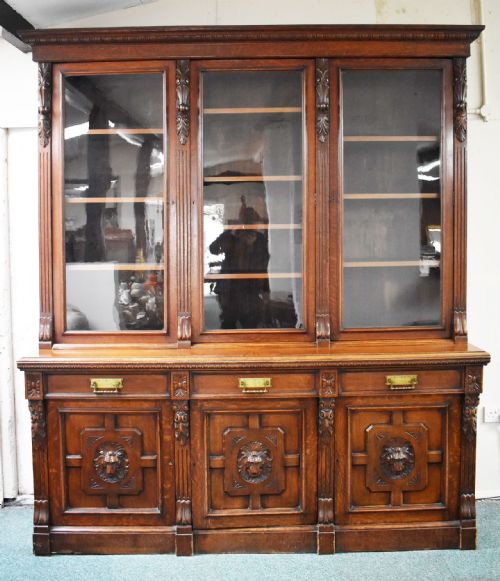


Antique Oak Breakfront Cabinet
An antique oak breakfront cabinet anchors a room with its projecting central section and rich timber grain.
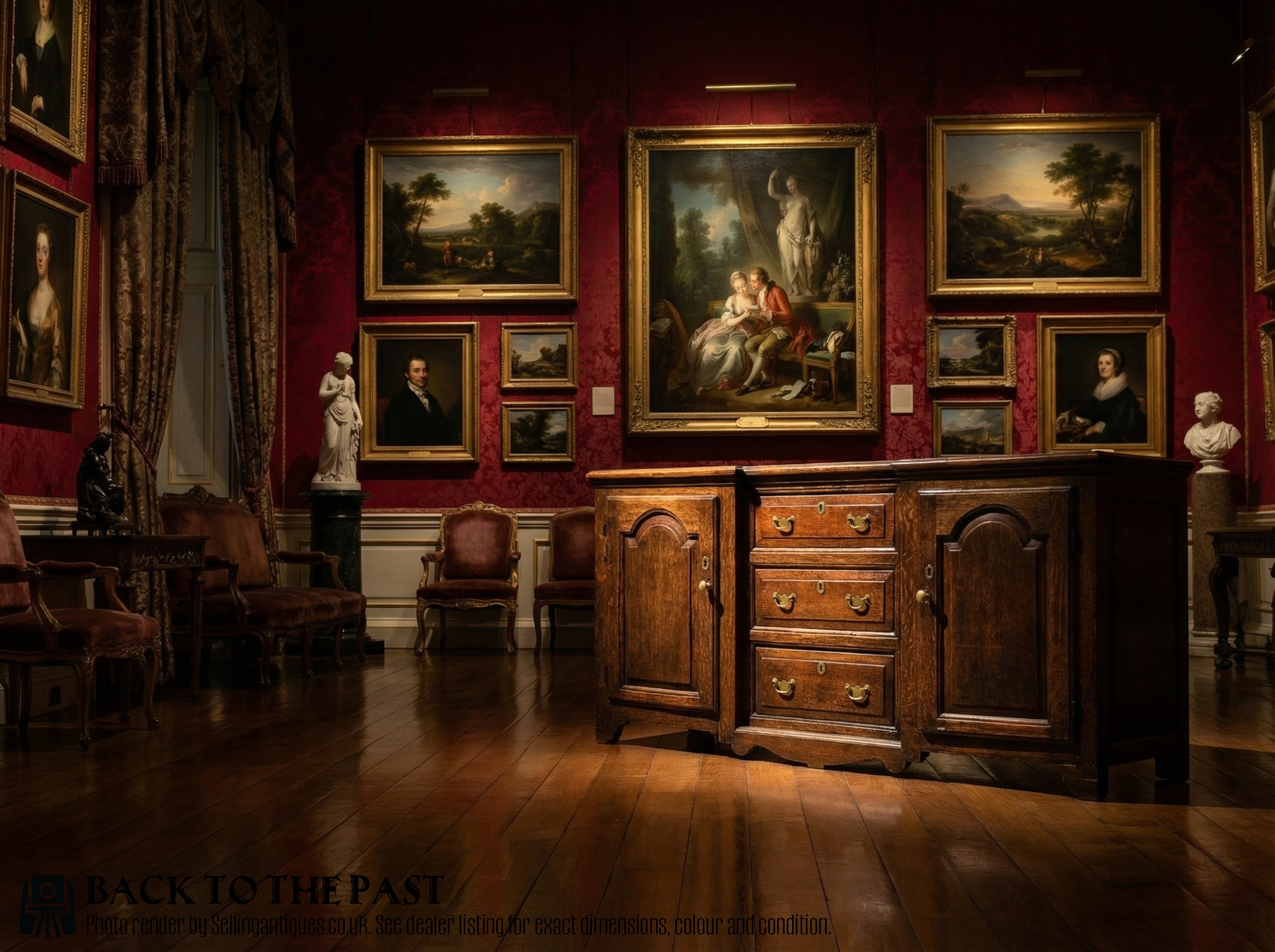
Antique Oak Breakfront Cabinet
The antique oak breakfront cabinet search phrase brings together substantial timber storage pieces designed with a stepped forward central section. These forms include grand library bookcases, estate housekeepers cupboards, Welsh dressers, and large sideboards spanning the eighteenth, nineteenth, and early twentieth centuries.
Victorian and nineteenth-century examples dominate the selection, often featuring carved details and multiple glass or panelled doors. Earlier eighteenth-century Georgian pieces appear as dresser bases and estate cupboards, while Edwardian versions offer lighter interpretations of the traditional form.
Buyers encounter everything from monumental library bookcases built for country houses to compact breakfront dressers and sideboards. Oak provides the structural foundation across these periods, frequently enhanced by pollard oak veneers, brass hardware, and glass display panels.
How they were made
Cabinet makers constructed these large pieces using solid oak frames, drawer linings in secondary timbers such as pine, and applied mouldings. Carpenters selected figured pollard oak for decorative veneers on prominent surfaces, creating striking patterns across doors and drawer fronts.
Joiners integrated brass hinges, escutcheons, and locks to secure heavy panelled and glazed doors. Carvers embellished cornices, pilasters, and friezes with intricate motifs, particularly during the Victorian Gothic Revival period.
Constructed in sections to facilitate movement into large rooms, these cabinets rely on traditional mortise and tenon joinery. Backboards consist of closely fitted timber planks secured with handmade nails or screws appropriate to their manufacturing era.
Samuel Pepys makes an unexpected stylistic appearance here, referenced through a monumental seventeenth-century revival library bookcase suite.
What varies in quality
The calibre of an antique oak breakfront cabinet rests upon the choice of timber and the ambition of its construction. Selected quartersawn oak and richly figured pollard oak veneers distinguish superior examples from plain utility pieces.
Carving depth and execution separate standard production from master craftsmanship. Crisp, undercut relief work on pilasters and cornices reflects superior workshop output compared to shallow, mechanical stamping.
Proportion and scale dictate visual success in breakfront furniture. Cabinets that maintain balanced projections across their multi-door facades and retain original brasswork and fitted glass demonstrate higher original commissioning standards.
Liberty of London·Richard Bridgens·Gillows
The Antique Oak Breakfront Cabinet Glossary
- Breakfront
- A cabinet or sideboard whose central section projects forward from the flanking wings. This architectural arrangement creates depth and shadow across a long facade.
- Pollard oak
- Timber taken from trees that were pollarded, producing a tightly clumped, highly figured grain pattern. Cabinet makers used these burls as decorative veneers on high-status Victorian furniture.
- Housekeepers cupboard
- A large storage piece with upper cupboards and lower drawers or doors, traditionally used in large estates for linen and dry stores. These utility pieces often utilised sturdy local oak.
- Gothic revival
- A nineteenth-century design movement drawing inspiration from medieval architecture. Pieces feature pointed arches, tracery, and heavy carved mouldings.
- Dresser base
- The lower portion of a Welsh dresser, featuring cupboards and drawers without the plate rack superstructure. Georgian examples provide low storage surfaces.
Antique Oak Breakfront Cabinet: Frequently Asked Questions
What is a breakfront cabinet?
A breakfront cabinet is a large storage furniture piece featuring a central section that steps forward from the left and right sections. This design creates visual depth and allows for varied internal configurations such as bookshelves or drawer banks.
Cabinet makers utilised this architectural layout across bookcases, sideboards, and dressers to break up long expanses of timber in large libraries and dining rooms.
How do I date an oak cabinet?
Dating relies on examining construction techniques, hardware, and stylistic details. Eighteenth-century Georgian pieces often show hand-planed surfaces and simpler lines, while Victorian examples frequently incorporate heavy Gothic carving or pollard oak veneers.
Secondary timbers inside drawers and the style of hinges provide further clues to the manufacturing period, ranging from early Georgian to Edwardian.
Where were these cabinets used?
These substantial pieces served primarily in country houses, estate libraries, and formal dining rooms. Large bookcases housed extensive private book collections, while housekeepers cupboards stored linens and provisions in domestic service areas.
Sideboards and dresser bases functioned as serving surfaces and tableware storage in dining spaces.
How do I care for antique oak?
Maintenance requires stable indoor humidity and protection from direct sunlight to prevent timber movement and fading. Dusting with a dry, soft cloth preserves the wax or polish finish without building up residue.
Avoid placing oak furniture near direct heat sources which can dry out the timber and cause splits in large panels.