

Antique Neoclassical Clock
An antique neoclassical clock brings architectural proportion and classical bronze work into a room.
Antique Neoclassical Clock
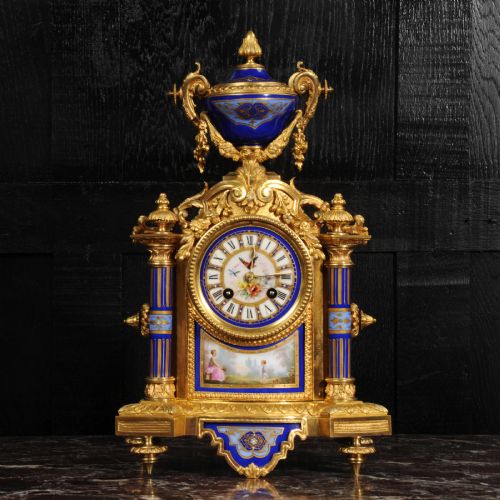
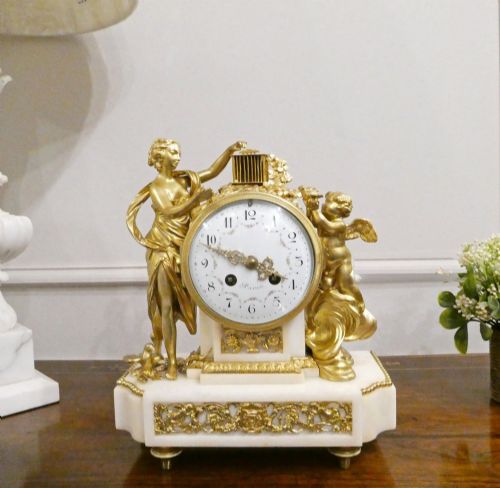
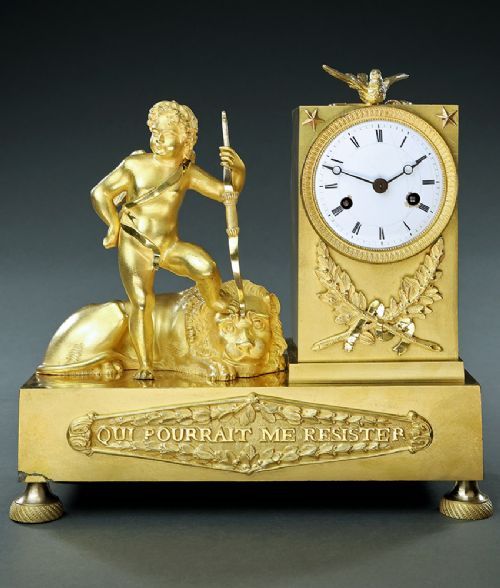
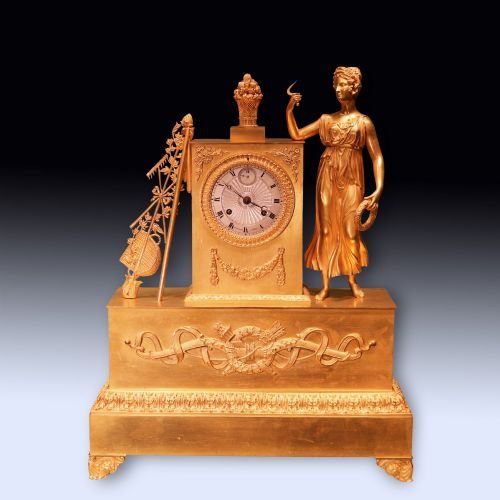
An antique neoclassical clock draws upon the decorative vocabulary of the 18th and 19th centuries, taking the form of mantel clocks, wall clocks, and garniture sets. These timepieces reflect classical antiquity through architectural elements, urns, and mythological subjects.
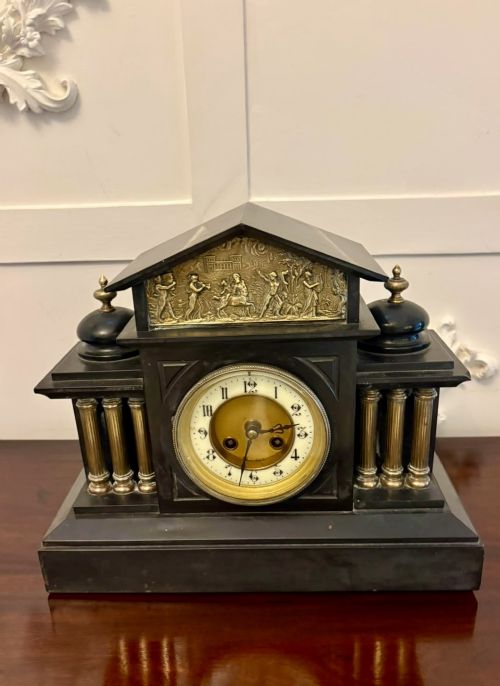
The most common versions met here are French in origin, spanning the Louis XVI, Empire, and Victorian periods. They combine functional timekeeping with sculptural bronze or marble cases designed for domestic interiors.
How they were made
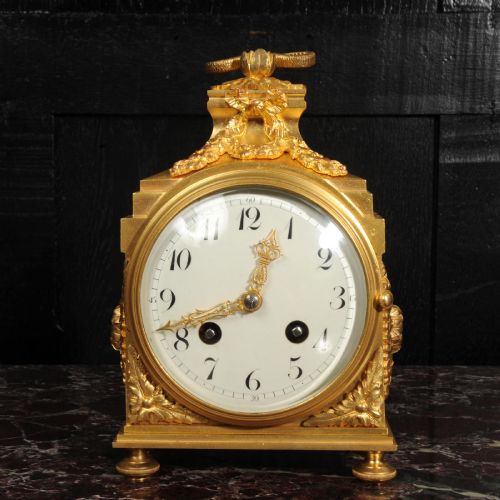
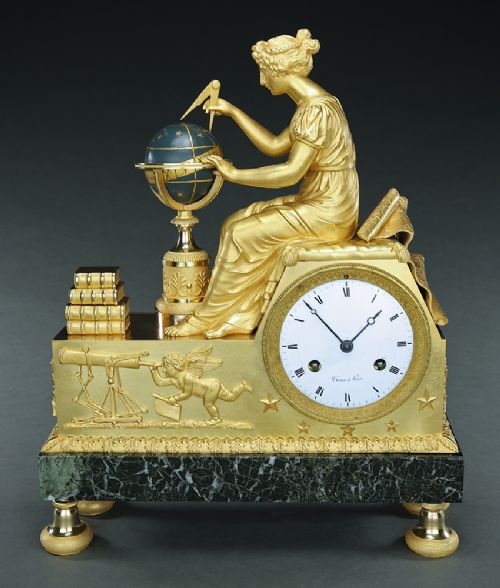
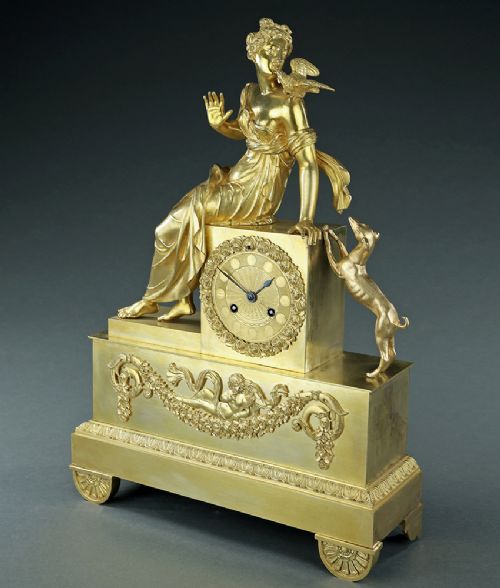
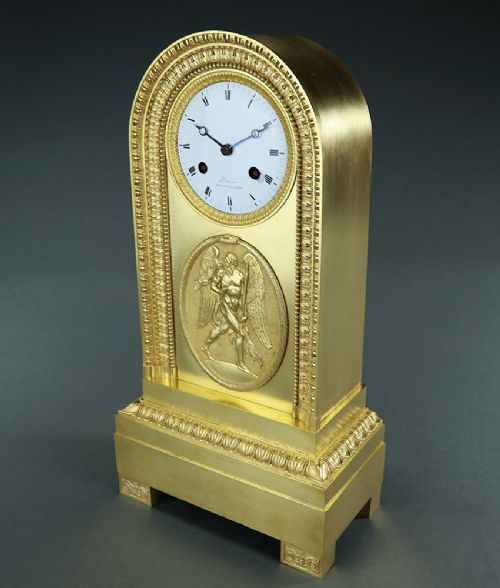
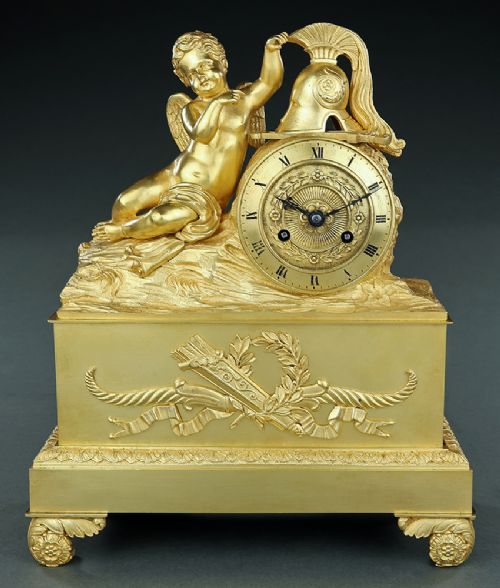
Maker workshops utilised cast metals such as ormolu, gilt bronze, and brass, often combining them with white, black, or sienna marble and glass panels. Cases were assembled from multiple cast components, chased by hand, and fire-gilt to achieve a lasting surface lustre.
Dials frequently incorporate enamel with painted numerals, paired with fine metal hands, while movements range from simple timepieces to eight-day mechanisms with striking trains.
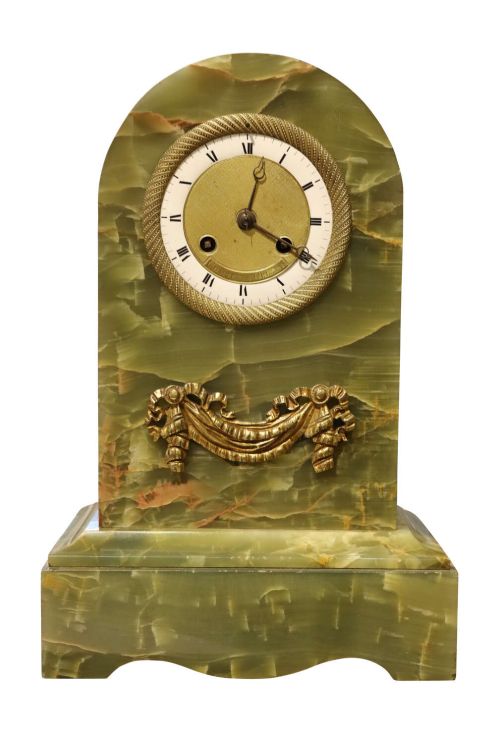
Listings feature materials spanning gilt bronze, ormolu, white marble, black marble, sienna marble, enamel, and glass.
What varies in quality
The standard of an antique neoclassical clock depends upon the crispness of the bronze casting and the depth of the hand-chasing on decorative mounts. Pieces with sharp architectural details and well-preserved fire-gilding stand apart from later or simpler castings.
The integration of the movement with the case also distinguishes the range, alongside the quality of the marble work and the original preservation of enamel dials.
Japy Freres·Charles a Orleans·Canaillor of Paris·Le Roy·Berger·Louis Goret·Wetterstrands·Sacre·Remond
The Antique Neoclassical Clock Glossary
- Ormolu
- Gilt bronze produced by applying a mixture of gold and mercury to a copper alloy and heating it. This historic technique creates a warm, durable golden finish found on many French cases.
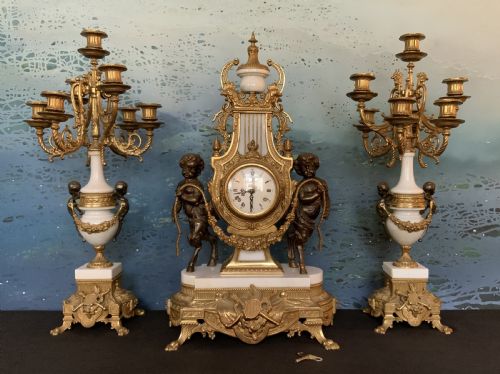
- Garniture
- A set consisting of a central clock flanked by matching decorative objects such as candelabra or urns. These matched suites were designed to display together on a mantelpiece.
- Cartel clock
- A wall-mounted clock with an ornamental frame made of gilt bronze, brass, or carved wood. They are typically secured directly to the wall via a bracket or hanging loop.
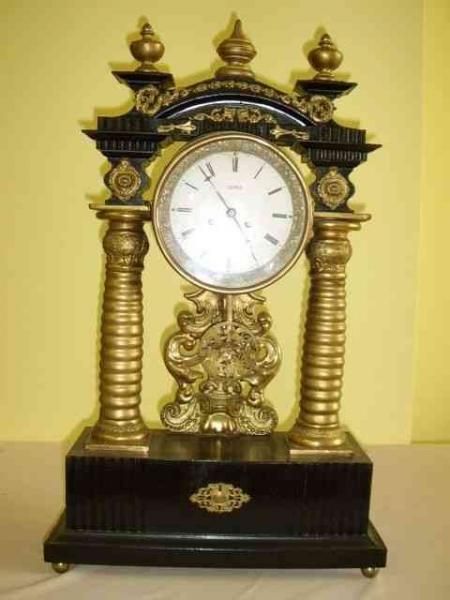
- Portico clock
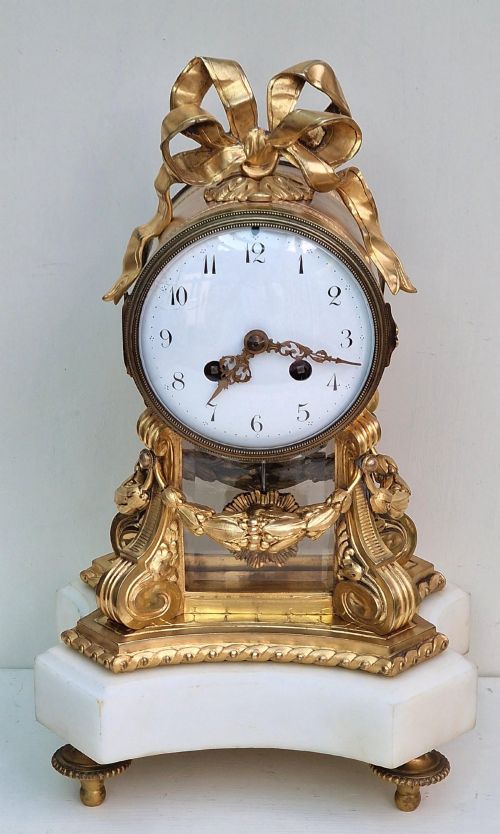
- A mantel clock featuring a distinctive architectural case supported by columns, resembling a classical portico. These often incorporate pendulum swings visible within the central opening.
- Enamel
- A glassy substance fused to a metal dial substrate through high-firing, used to provide a smooth, white surface for painted clock numerals.
Antique Neoclassical Clock: Frequently Asked Questions
How do I wind the clock?
Most mechanical pieces use a key inserted into winding holes on the enamel dial to tension the springs. Care must be taken not to overwind the movement.
Regulating the pendulum via a small square nut helps keep accurate time once the clock is stationary on a level surface.
Where should I place a heavy marble clock?
Due to the substantial weight of marble and bronze cases, position the clock on a sturdy mantelpiece or firm console table. The surface must be level to ensure the pendulum swings evenly.
Avoid locations exposed to direct sunlight or damp air to protect the dial enamel and metal surfaces.
How do I distinguish Empire from Louis XVI style?
Louis XVI pieces favour restrained classical symmetry, delicate floral swags, fluted columns, and white marble. They lean towards lighter, refined proportions.
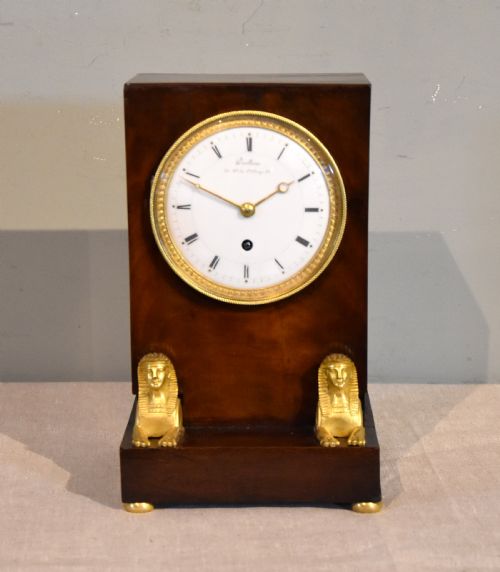
Empire designs, influenced by military campaigns and antiquity, display heavier bronze mounts, martial trophies, patinated bronze figures, and rich mahogany or dark marble.