




Antique Needlework Basket
An antique needlework basket is a specialised piece designed for domestic sewing, combining practical storage with refined period timber or papier-mâché craft.
Antique Needlework Basket
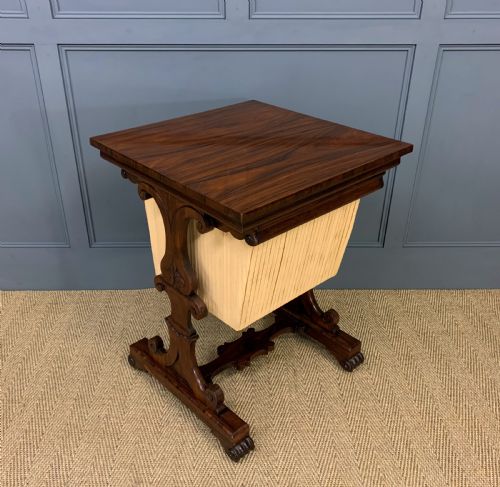
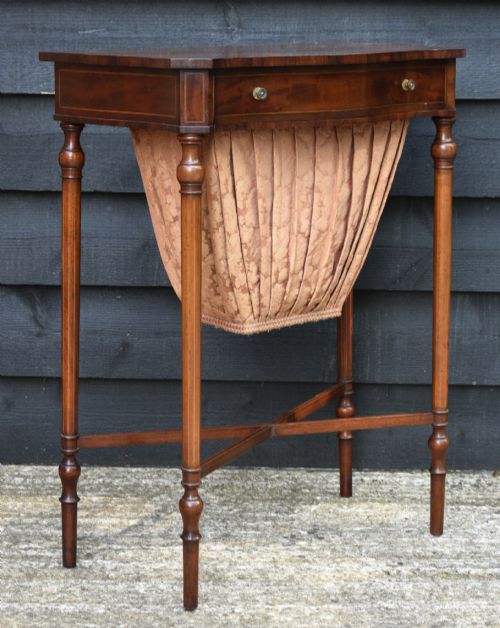
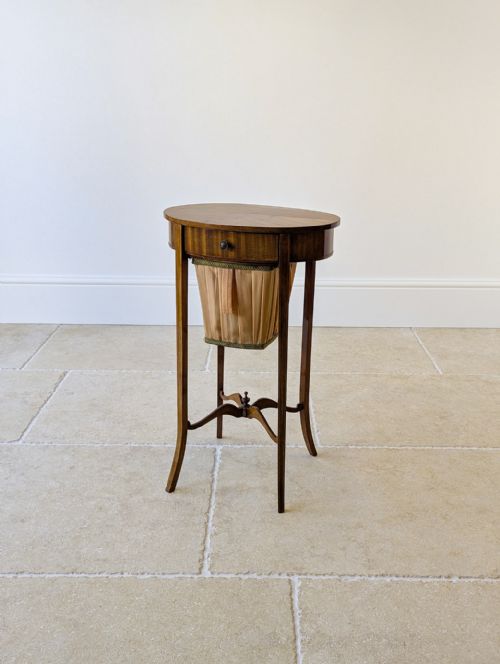
When you search for an antique needlework basket, you encounter a variety of forms designed to house sewing implements, threads, and fabrics. These pieces primarily manifest as work tables, sewing tables, and occasional side tables originating from the Regency, Victorian, and Edwardian periods.
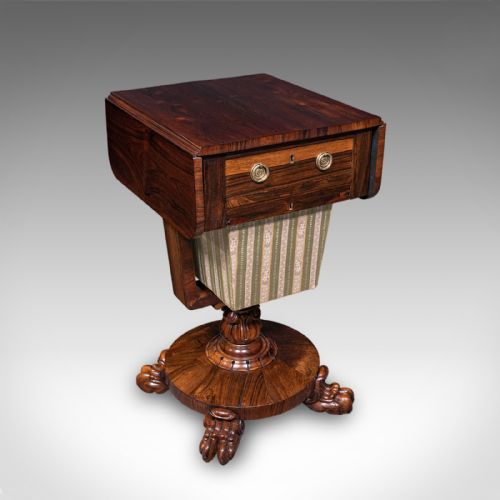
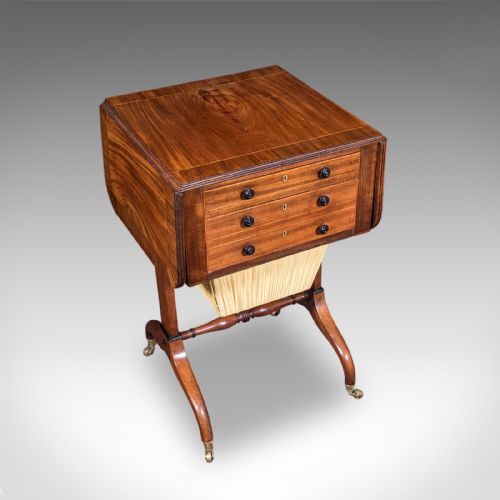
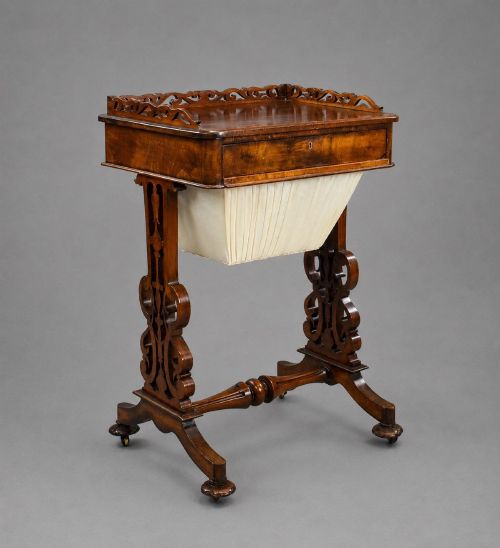
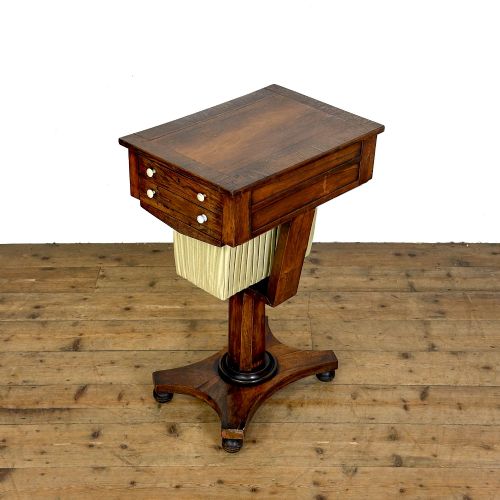
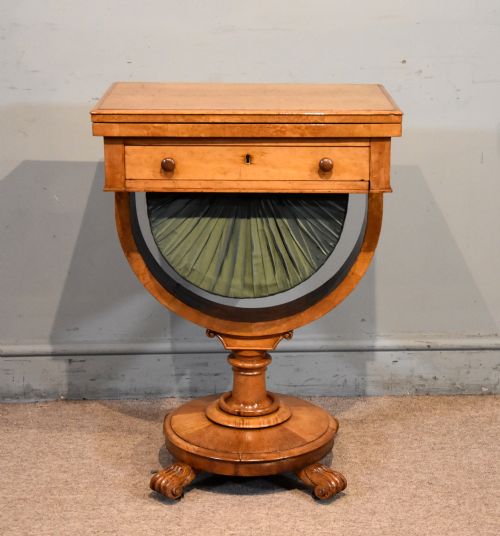
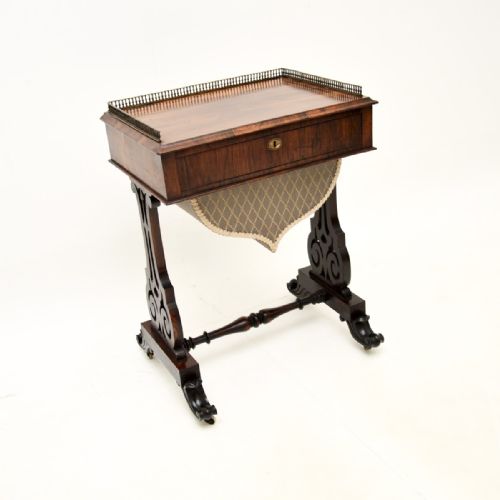
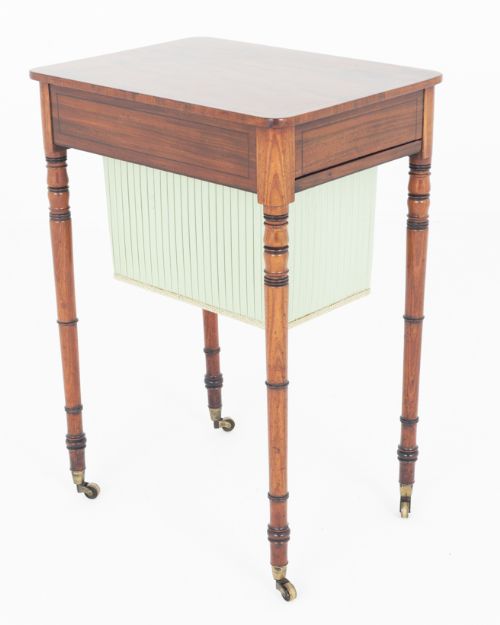
The selection frequently includes drop-leaf sewing tables and tabletop caskets or boxes, often constructed from figured rosewood, mahogany, and burr walnut. Many examples integrate silk baskets or compartmentalised interiors beneath their lids to organise domestic needlecraft.
Originating largely from English country house and parlour contexts, these objects served both utilitarian and social functions for ladies of the household. The materials range from rich dark timbers to delicate satinwood and papier-mâché, reflecting the decorative tastes of the nineteenth and early twentieth centuries.
Materials and construction methods
Cabinetmakers utilised dense hardwoods such as mahogany, rosewood, and burr walnut for the structural carcases and legs, often highlighting natural grain patterns. Satinwood and inlaid veneers added contrasting decorative borders to Edwardian and Regency surfaces.
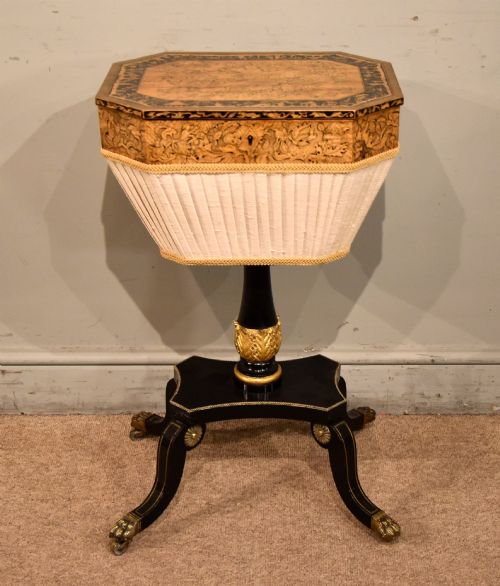
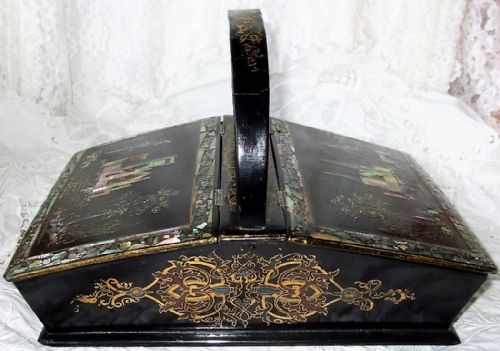
Specialised interior fitments incorporated hanging silk baskets, fabric compartments, and wooden dividers to hold needles and threads securely. Papier-mâché caskets relied on moulded paper pulp layered and lacquered to create durable surfaces suited for detailed painting or inlay.
Support structures varied from lyre-ended pedestals to delicate tapered legs and circular pillar bases, occasionally combining drop-leaf mechanisms or games boards into the upper design.
Distinctions in construction and design quality
The selection of timber veneer dictates much of the visual merit, with highly figured rosewood, burr walnut, and satinwood marking the upper tier of execution. Finer examples display meticulous marquetry inlay and well-matched grain patterns across drop-leaf surfaces and tabletops.
Internal complexity also separates standard pieces from superior specimens, particularly those featuring bespoke compartmentalisation, intact original silk baskets, and fully functional metamorphic mechanisms. Structural joinery, such as neatly turned pillar supports and sturdy lyre ends, ensures longevity and stability in daily use.
The Antique Needlework Basket Glossary
- Work table
- A specialised small table containing drawers, compartments, or a suspended fabric bag designed to hold sewing materials. These pieces were central to nineteenth-century domestic parlours.
- Drop-leaf
- A table design featuring hinged flaps on either side that can be raised to extend the surface area or lowered when space is limited. This mechanism is frequently found on Regency and Victorian sewing tables.
- Papier-mâché
- A composite material made from paper pulp mixed with glue or resin, then moulded and finished with lacquer. It provided a smooth base for intricate painting and inlay on caskets.
- Burr walnut
- A prized timber veneer harvested from the knot growths of walnut trees, yielding highly ornamental swirling grain patterns. Cabinetmakers applied it to high-status Victorian tabletops.
- Lyre-ended
- A furniture base design shaped to resemble an ancient Greek lyre, often utilised in pairs connected by a stretcher on Regency tables.
Antique Needlework Basket: Frequently Asked Questions
What is an antique needlework basket used for?
These pieces served as dedicated storage units for sewing accessories, threads, pins, and ongoing textile projects within the home. Ladies utilised them during parlour gatherings to keep their needlecraft organised and close at hand.
Beyond simple storage, many designs incorporated writing surfaces or folding games boards, doubling as versatile occasional tables for sitting rooms and drawing rooms.
How do you identify a Regency sewing table?
Regency examples typically exhibit classical proportions, precise mahogany or rosewood veneers, and structural elements like lyre-ended supports or brass paw feet. Their lines tend to be cleaner and more architectural than later Victorian iterations.
They frequently feature silk work bags suspended beneath the drawer or tabletop, alongside penwork or subtle inlay details characteristic of the early nineteenth century.
What materials were used for Victorian work tables?
Victorian pieces predominantly utilise rich timbers such as rosewood, burr walnut, and mahogany, often showcasing deeply figured grain patterns. Cabinetmakers also employed papier-mâché for portable caskets and boxes.
Internal fittings commonly included pleated silk or fabric baskets, ivory winders, and velvet-lined compartments designed to protect delicate sewing tools.
Are Edwardian sewing tables different from Victorian ones?
Edwardian versions generally display lighter proportions and brighter woods, such as satinwood and inlaid mahogany, reflecting a shift away from heavier Victorian aesthetics. Octagonal tops and slender tapered legs become common.
They maintained the traditional silk basket or interior compartmentalisation but favoured a more delicate, decorative appearance suited to early twentieth-century interiors.
How do you care for an antique work table?
Maintain timber surfaces by dusting with a soft, dry cloth and avoiding direct sunlight or excessive heat sources that can dry out old veneers. Natural wax applied sparingly helps preserve the finish of mahogany and rosewood.
Protect original silk or fabric basket linings from moisture and heavy handling to preserve the integrity of fragile historical textiles.