


Antique Needlepoint Seat
An antique needlepoint seat brings centuries of tactile needlework and timber framing into a room.
Antique Needlepoint Seat
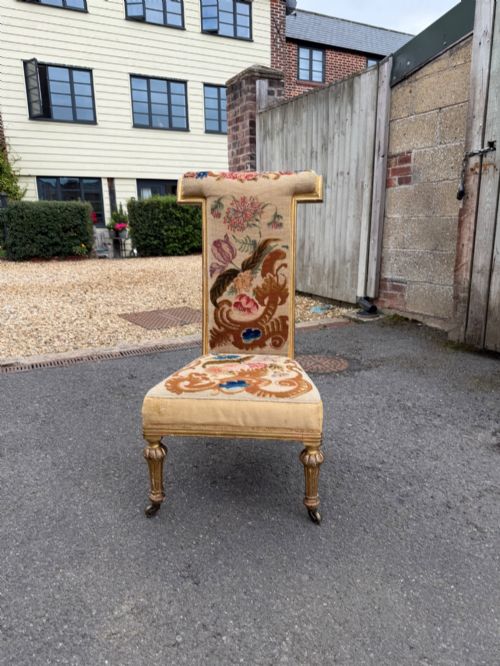
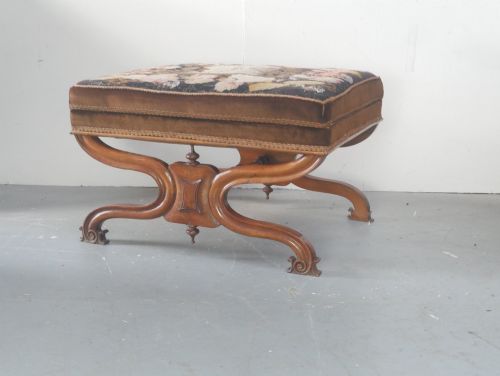
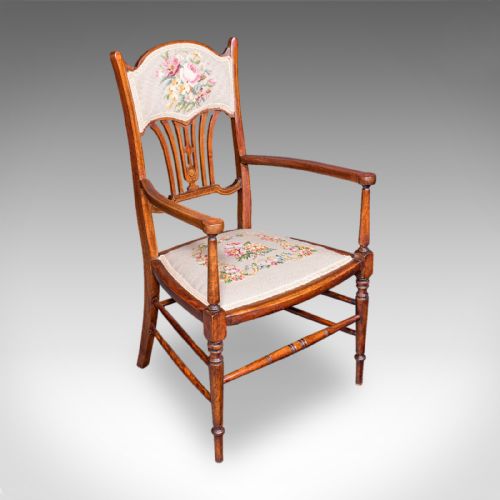
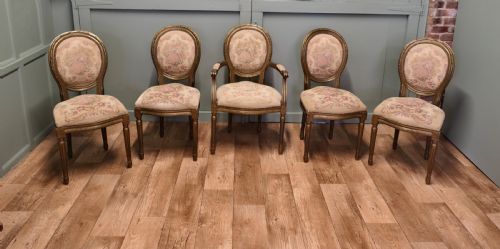
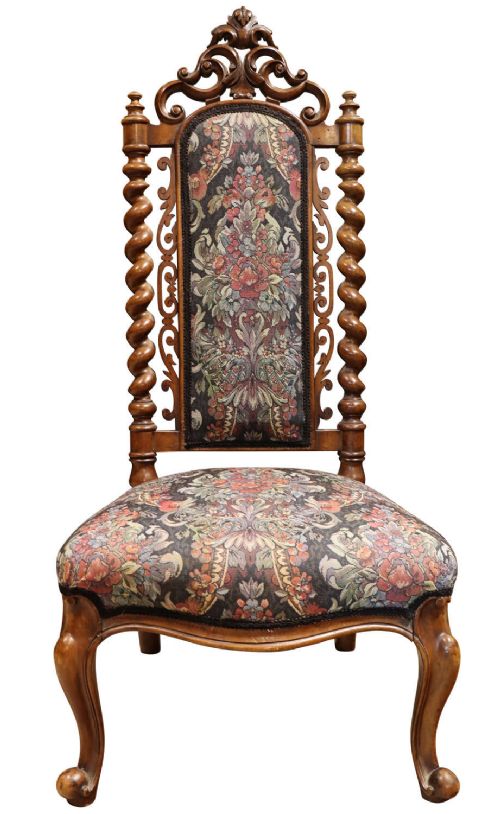
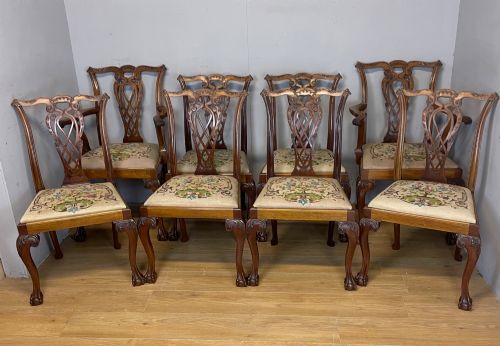
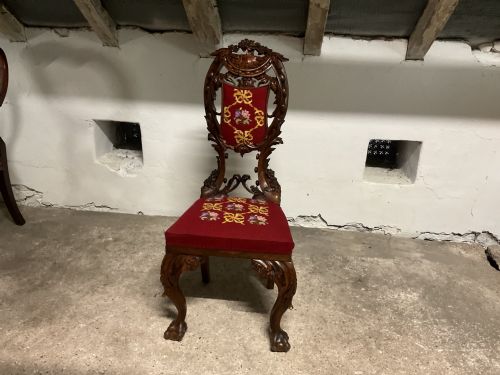
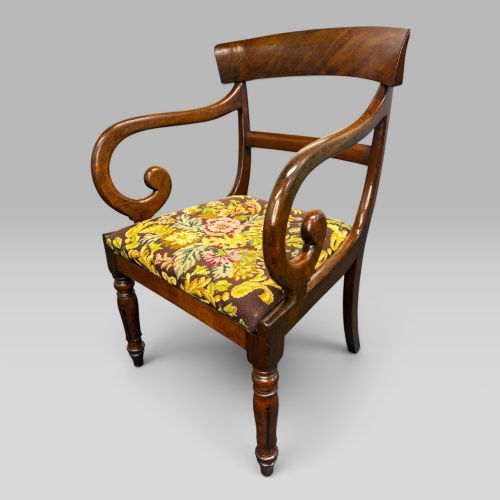
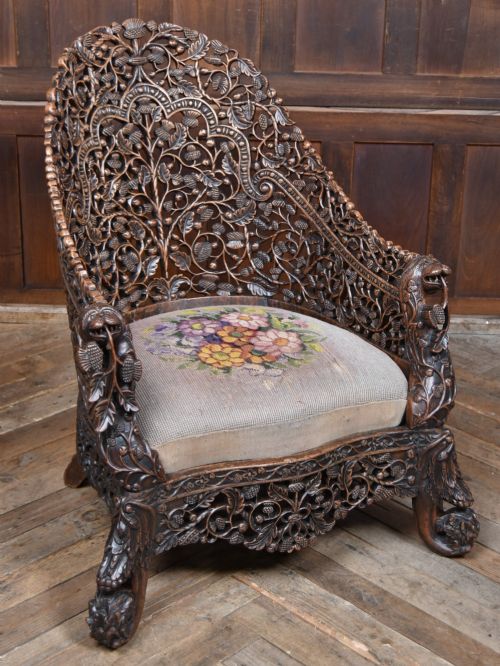
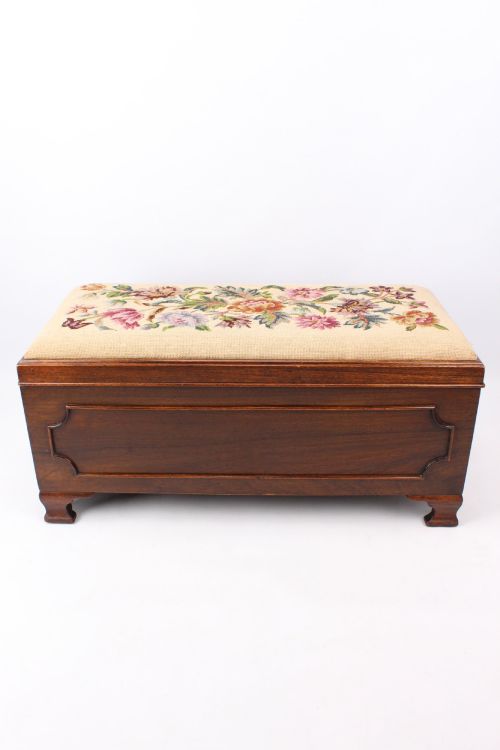
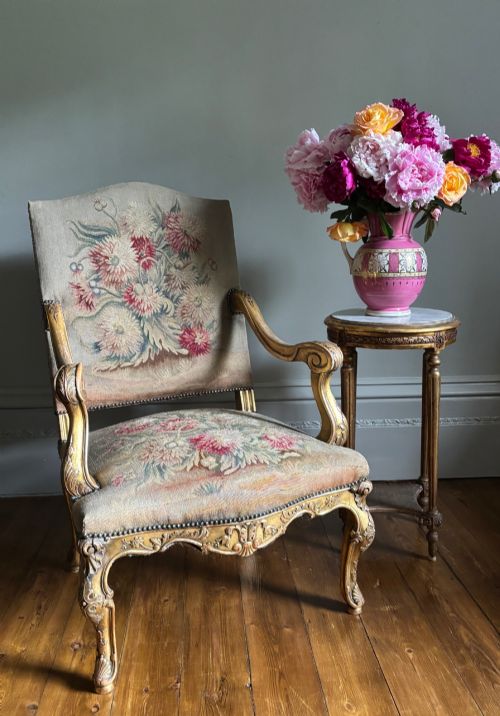
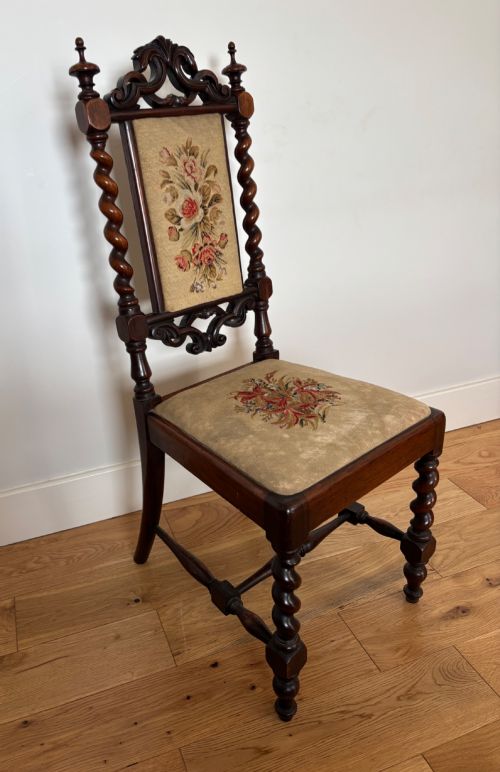
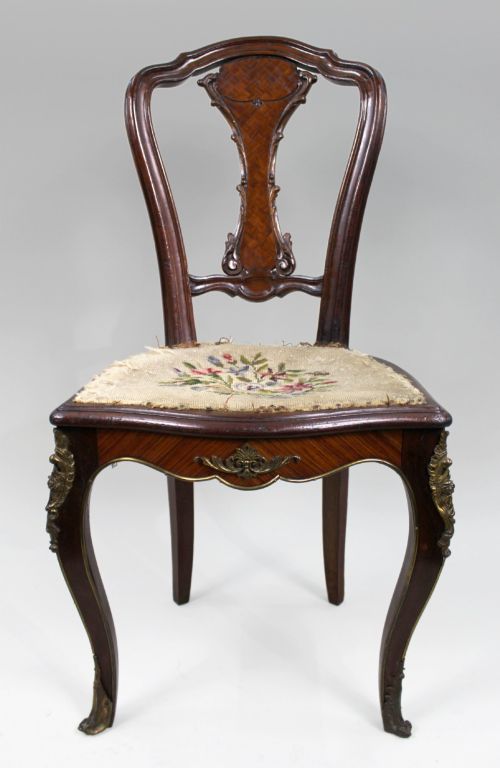
An antique needlepoint seat encompasses chairs, stools, and ottomans featuring stitched upholstery in wool and textile. These pieces span from the eighteenth century through the Edwardian period, incorporating Georgian, Victorian, and Regency forms.
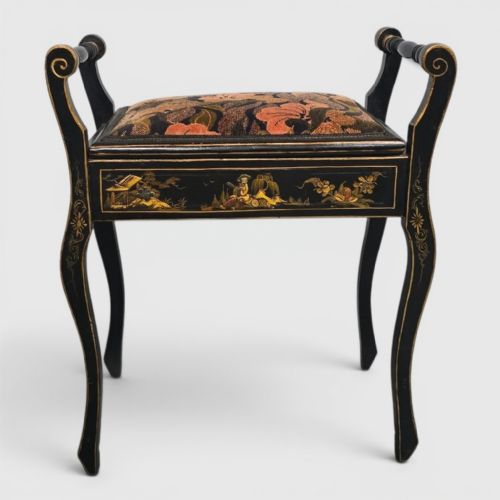
Armchairs, side chairs, and dressing stools appear frequently in the selection. Buyers encounter both English walnut and mahogany frames alongside French salon suites and occasional piano stools.
The working surface of these objects combines structural woodwork with intricate needlework panels. Many items retain their original tapestry covers, while others display later period upholstery.
How they were made
Frames rely on dense hardwoods such as mahogany, walnut, rosewood, and beech, shaped through turning, carving, and joinery. Brass and ormolu mounts occasionally accent French and Regency examples.
Needlepoint and tapestry panels employ wool and textile threads worked tightly over canvas grounds. These textile surfaces are then secured directly to drop-in frames, padded seats, or open armchair panels.
Some nineteenth-century makers hid needlepoint seats inside revolving music stools, giving pianists a secret stash for their sheet music.
What varies in quality
The crispness of the timber carving and the complexity of the frame construction define the baseline of execution. Finer pieces demonstrate precise joinery, balanced proportions, and sophisticated styling such as Chippendale revival or French parquetry.
The needlework itself dictates much of the visual distinction. Dense stitching with subtle colour shading and intact wool pile represents a higher grade of craftsmanship than coarse or worn textile panels.
Charles Tozer·Warings·Waring and Gillow·Liberty and Co
The Antique Needlepoint Seat Glossary
- Needlepoint
- A type of embroidery stitched on a stiff open-weave canvas ground. It forms the primary decorative upholstery surface on these chairs and stools.
- Drop-in seat
- A removable framed seat insert that lifts directly out of the chair rails. This construction method simplifies both upholstery work and timber maintenance.
- Prie Dieu
- A low devotional chair featuring an elevated backrest designed for kneeling or leaning. These nineteenth-century examples often incorporate elaborate tapestry panels.
- Ormolu
- Gilded bronze mounts applied to the woodwork of French and Regency furniture. It provides metallic contrast against dark hardwoods and kingwood veneer.
- Tapestry
- Hand-woven or hand-stitched textile featuring pictorial or geometric designs. It is frequently applied to nineteenth-century salon suites and armchairs.
Antique Needlepoint Seat: Frequently Asked Questions
How should I clean needlepoint seats?
Vacuum textile surfaces gently using a low suction setting and a soft brush attachment to lift dust without catching loose wool threads.
Avoid liquid cleaners and harsh detergents, which can cause shrinkage or bleeding in antique wool and fabric fibres.
Are these chairs suitable for daily use?
Most sturdy mahogany and walnut frames handle normal sitting perfectly well when the underlying joinery remains sound and tight.
Delicate rosewood or giltwood pieces from the salon or dressing room benefit from lighter placement to protect fragile carved details.
How do I identify a Victorian piece?
Victorian items frequently utilise rosewood, walnut, or heavy carved mahogany, often paired with bright wool tapestry covers and balloon backs.
Proportions tend to be heavier and more ornate than eighteenth-century Georgian furniture, reflecting mid-nineteenth-century domestic comfort.
What is a piano stool used for?
Adjustable piano stools allowed musicians to alter their seating height while playing keyboard instruments in nineteenth-century parlours.
They frequently feature revolving mechanisms and decorative needlepoint tops framed in rosewood or mahogany.