


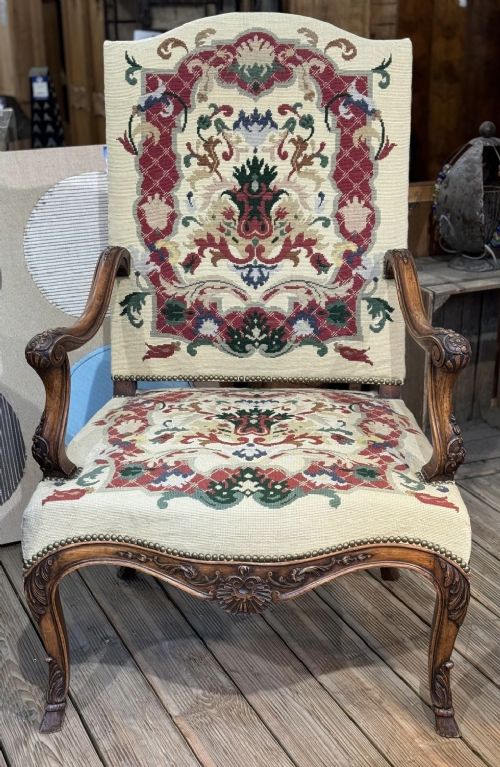


High Back Fauteuil
A high back fauteuil delivers commanding presence to a room, offering grand proportions and historic French seating styles ranging from the late seventeenth century onwards.
High Back Fauteuil
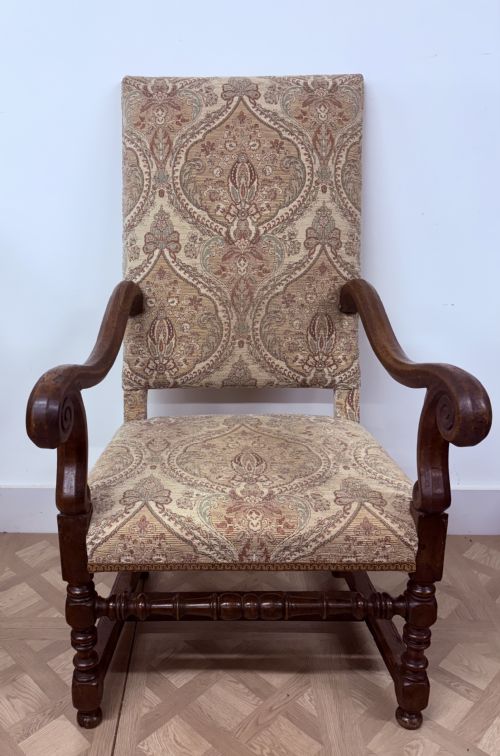
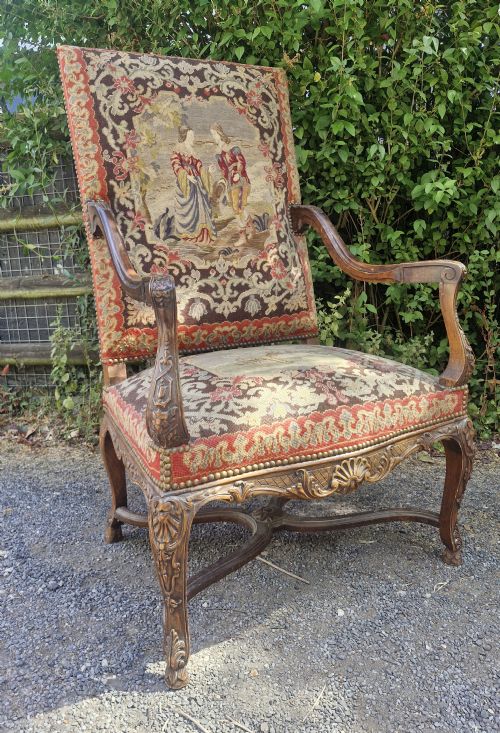
When searching for a high back fauteuil, collectors encounter grand armchairs originating primarily from French and revival traditions. These seating forms combine substantial timber frames with generous upholstered panels designed to provide both status and comfort.
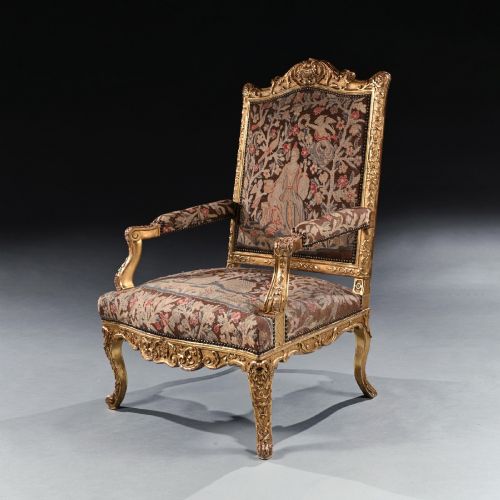
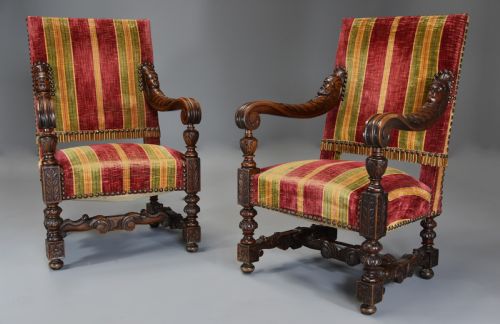
The selections span distinct periods including the seventeenth century, the eighteenth century, and various nineteenth century revivals such as William and Mary and French Baroque styles. Walnut and giltwood form the primary structural backbones across these diverse chronological examples.
Buyers most frequently meet nineteenth century interpretations alongside authentic earlier frames upholstered in tapestry, needlework, velvet, or contemporary fabric. These chairs function equally as focal points in large salons or as practical seating with a distinct historical pedigree.
What varies in quality
The finesse of the timber carving sets superior examples apart, where deep relief work and crisp detailing on the arms and crest rails demonstrate exceptional craftsmanship. Plain or worn mouldings indicate simpler production or heavy later intervention.
Originality of surface finish and the integrity of the upholstery materials greatly influence the standing of each piece. Retaining period gilding, authentic walnut patination, and early needlework or tapestry elevates the desirability of an armchair.
Several large throne armchairs appear ready to receive local royalty, provided the monarch does not mind seventeenth-century French posture.
The High Back Fauteuil Glossary
- Fauteuil
- An open-framed upholstered armchair originating in France, typically featuring exposed wooden arms and a padded backrest. This form evolved through successive design periods from the seventeenth century onward.
- Giltwood
- Timber treated with a thin layer of gold leaf applied over a prepared gesso base. This decorative finish appears frequently on formal salon armchairs.
- Tapestry
- A heavy woven textile featuring pictorial or decorative designs, often utilised for the upholstery of grand period chairs. Such panels add considerable texture and historical context to the seat.
- William and Mary style
- A decorative aesthetic dating to the late seventeenth and early seventeenth-century revivals, characterised by tall vertical proportions and structured framing. Pieces in this manner display formal, architectural lines.
High Back Fauteuil: Frequently Asked Questions
How do I identify a true period fauteuil?
Examine the timber construction methods, tool marks, and overall joinery beneath the upholstery lines to understand the manufacturing age. Comparing the stylistic motifs against documented seventeenth, eighteenth, and nineteenth century design books clarifies the exact period.
Pay close attention to the wear patterns on the walnut or giltwood frame and the integration of the arm supports. Authentic pieces display consistent ageing appropriate to their stated origin.
Where should I place a high back chair?
These commanding armchairs suit large reception rooms, libraries, or spacious hallways where their tall proportions do not overwhelm the surrounding space. They function effectively as standalone statement pieces or paired symmetrically beside a fireplace.
Ensure adequate clearance around the open wooden arms to protect the carved details and any delicate tapestry or velvet upholstery from daily friction.
What is the difference between baroque and regence styles?
Baroque designs feature heavy, theatrical carving, robust structural forms, and an emphasis on symmetry and grandeur. This aesthetic projects immense visual weight and formal authority.
Regence style marks a transition toward lighter, more curving lines, introducing subtle asymmetry and refined ornamentation. The frames become slightly more fluid while retaining significant vertical presence.
Can I use these armchairs daily?
Historic seating accommodates regular use provided the internal frame remains stable and the joints are secure. Solid walnut structures offer durable support for sitting.
Consider the fragility of antique needlework or delicate silk velvets when selecting a chair for high traffic areas. Sturdy tapestry or robust modern fabric upholstery handles everyday interaction with greater resilience.