



Antique Needlepoint Ottoman
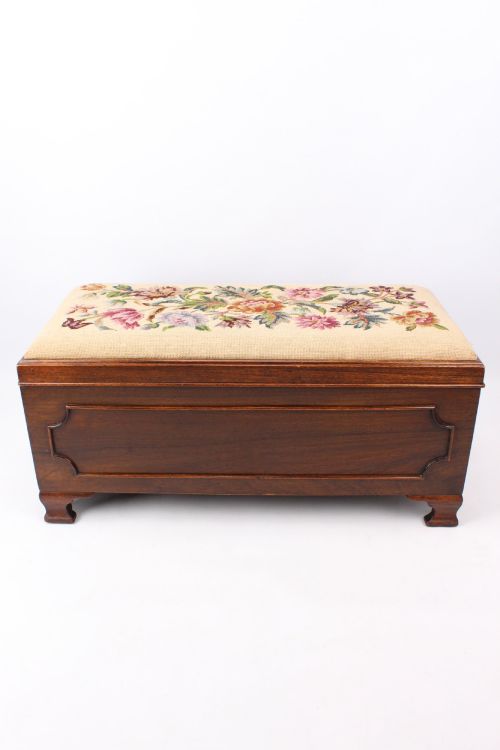
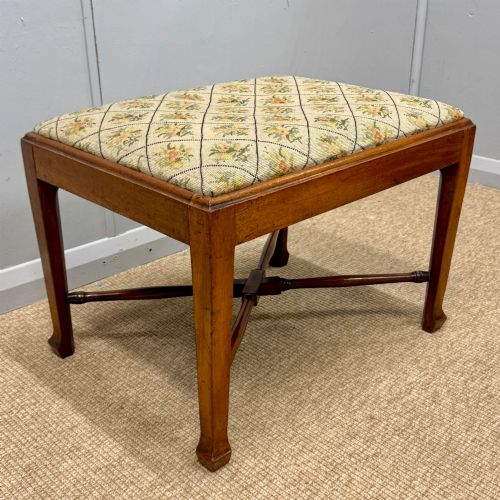
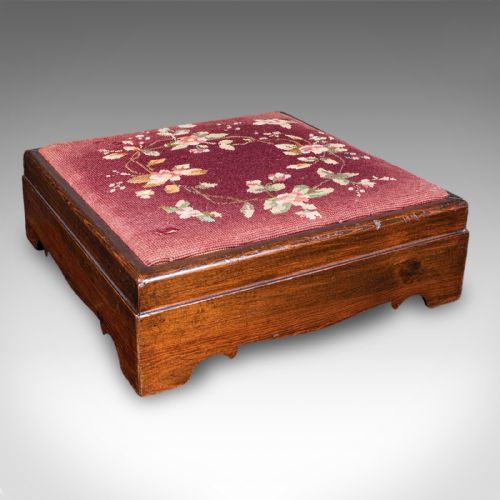
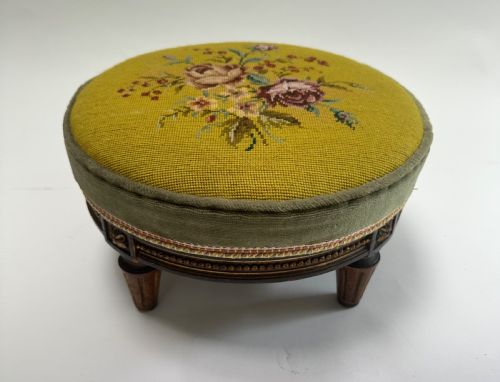
These antique needlepoint ottomans combine sturdy timber frames with worked textile tops, offering both low seating and footrests for period interiors.
Antique Needlepoint Ottoman
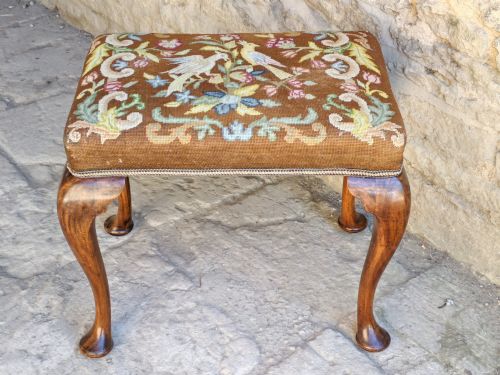
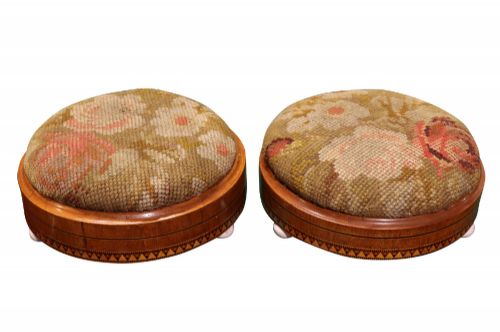
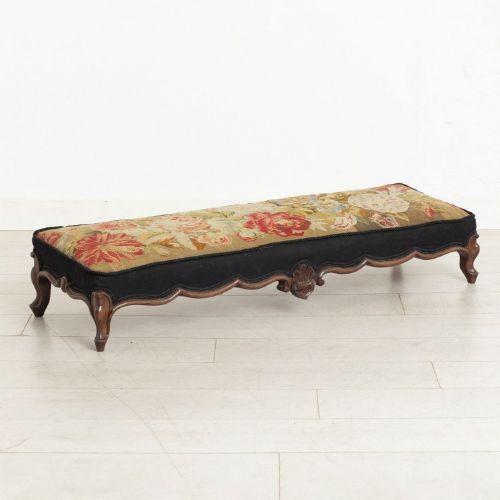
When you search for an antique needlepoint ottoman, you encounter a variety of low seating forms designed for fireside or dressing room use. The pieces on this page span the Victorian era, the nineteenth century, and the early twentieth century, alongside occasional earlier revivals.
You meet everything from small round footstools to large rectangular ottomans and dressing table stools. Walnut and mahogany frames predominate, often paired with original wool tapestry and needlework covers.
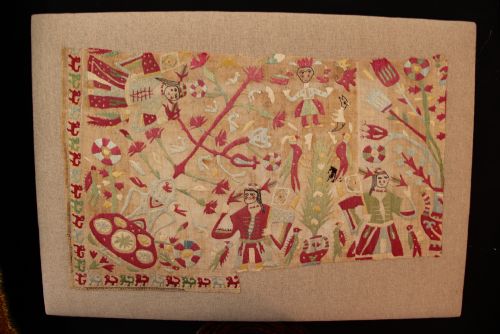
Origins range across English workshops to French and Italian makers, with specific regional pieces like Greek island embroideries appearing among the textile selections.
Timbers and textiles in construction
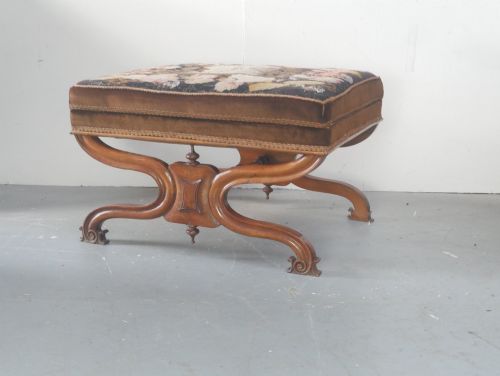
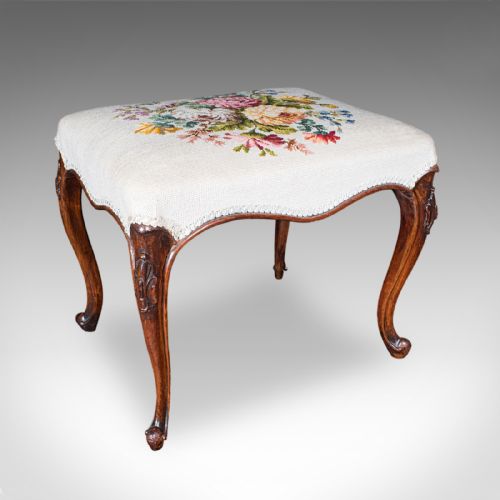
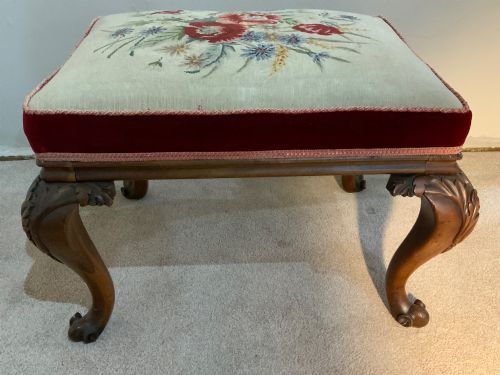
Carpenters built the frames of these pieces using dense hardwoods such as walnut, mahogany, rosewood, and pitch pine. These timbers allowed for carved cabriole legs, inlaid details, and sturdy cross stretchers that support weight over centuries.
Upholsterers then applied wool needlepoint, tapestry, fabric, and velvet directly over stuffing to form the padded top. Hand-stitched needlework often featured geometric kilim patterns or floral designs executed in durable wool threads.
Some small Victorian footstools incorporate hidden Tunbridge ware mosaic woodwork beneath their needlepoint tops, offering a miniature geometric surprise.
Assessing quality in frames and needlework
Quality rests in the crispness of the timber carving and the tightness of the joinery within the frame. Pieces featuring figured walnut or rosewood with intact inlay demonstrate superior cabinetmaking.
The density and fineness of the needlepoint stitches dictate the merit of the upper textile. Intricate geometric or pictorial needlework that remains taut and well-preserved elevates the entire piece.
The Antique Needlepoint Ottoman Glossary
- Needlepoint
- A type of canvas work embroidery stitched by hand using wool or silk yarn. It forms the durable decorative top seen on many period footstools.
- Cabriole leg
- A furniture leg that curves outward at the knee and inward at the ankle, mimicking an animal's limb. This form appears frequently on Victorian walnut frames.
- Cross stretcher
- An X-shaped or H-shaped wooden brace connecting the legs beneath a seat for added stability. It is often found on larger dressing table and centre stools.
- Tunbridge ware
- Small-scale decorative woodwork characterised by tiny mosaic tiles formed from differently coloured woods. It decorates specific Victorian pieces on this page.
- Tapestry
- A heavy textile woven or worked with decorative designs. In these listings, it refers to the worked seat covers attached to wooden frames.
Antique Needlepoint Ottoman: Frequently Asked Questions
What is an antique needlepoint ottoman?
An antique needlepoint ottoman is a low seat or footstool featuring a hand-stitched canvas top mounted on a wooden frame. These pieces date primarily from the nineteenth and early twentieth centuries.
They served various domestic roles, from resting feet by the fireplace to providing seating at a dressing table.
How were these ottomans used originally?
Victorians used these small stools and ottomans primarily as footrests in living rooms and firesides. They also functioned as movable seats in bedrooms and dressing rooms.
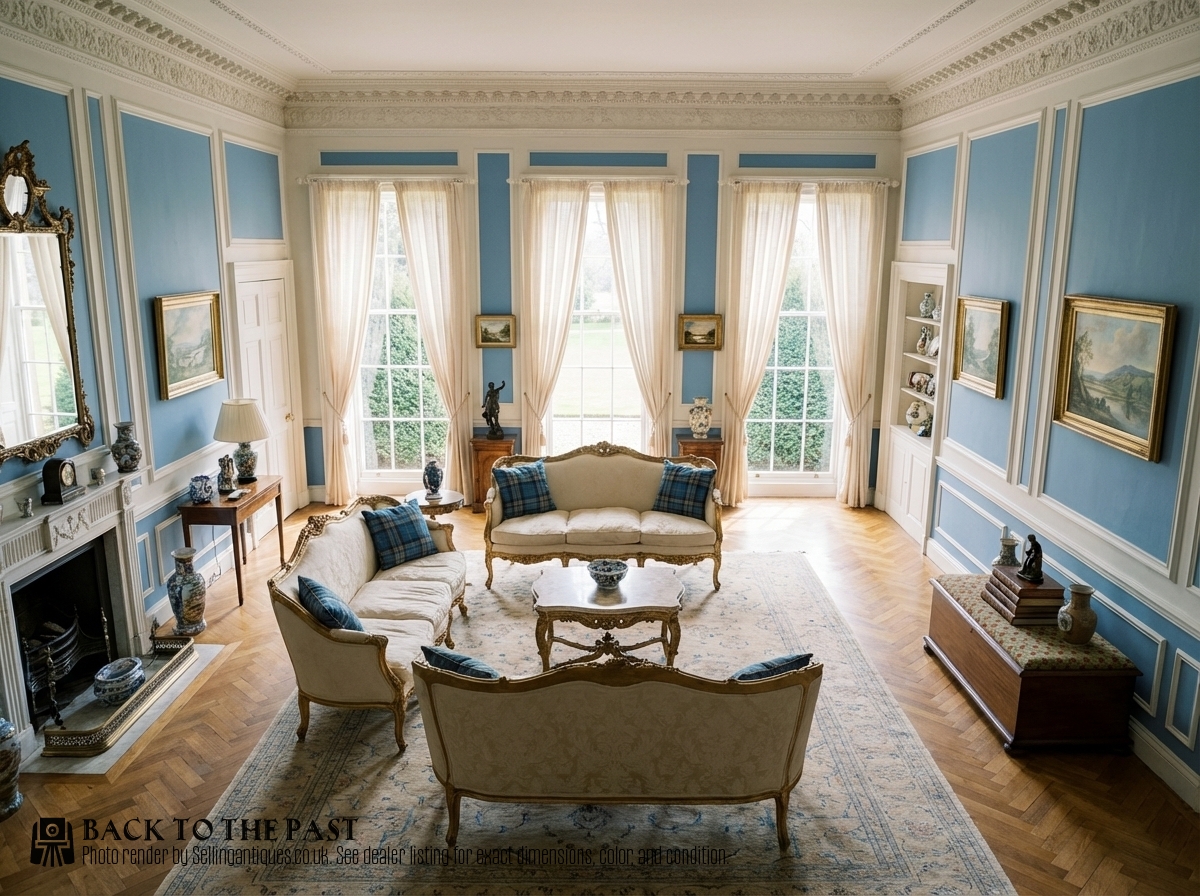
Some larger examples doubled as storage chests or centre pieces within formal reception rooms.
How do I date a Victorian footstool?
Dating relies on identifying the primary timber, the style of the legs, and the nature of the upholstery technique. Walnut and rosewood frames with hand-carved cabriole legs typically point to the mid-nineteenth century.
Later pieces from the early twentieth century often employ simpler mahogany frames without elaborate carving.
How do I care for needlepoint upholstery?
Keep needlepoint seats out of direct sunlight to prevent the wool threads from fading over time. Gentle surface dusting with a soft brush helps maintain the integrity of the antique textiles.
Avoid using liquid cleaners on the wool tapestry to prevent shrinkage and fibre damage.