



Vintage Mahogany Hassock
These vintage mahogany hassock examples unite sturdy timber frames with traditional upholstery to anchor a room.
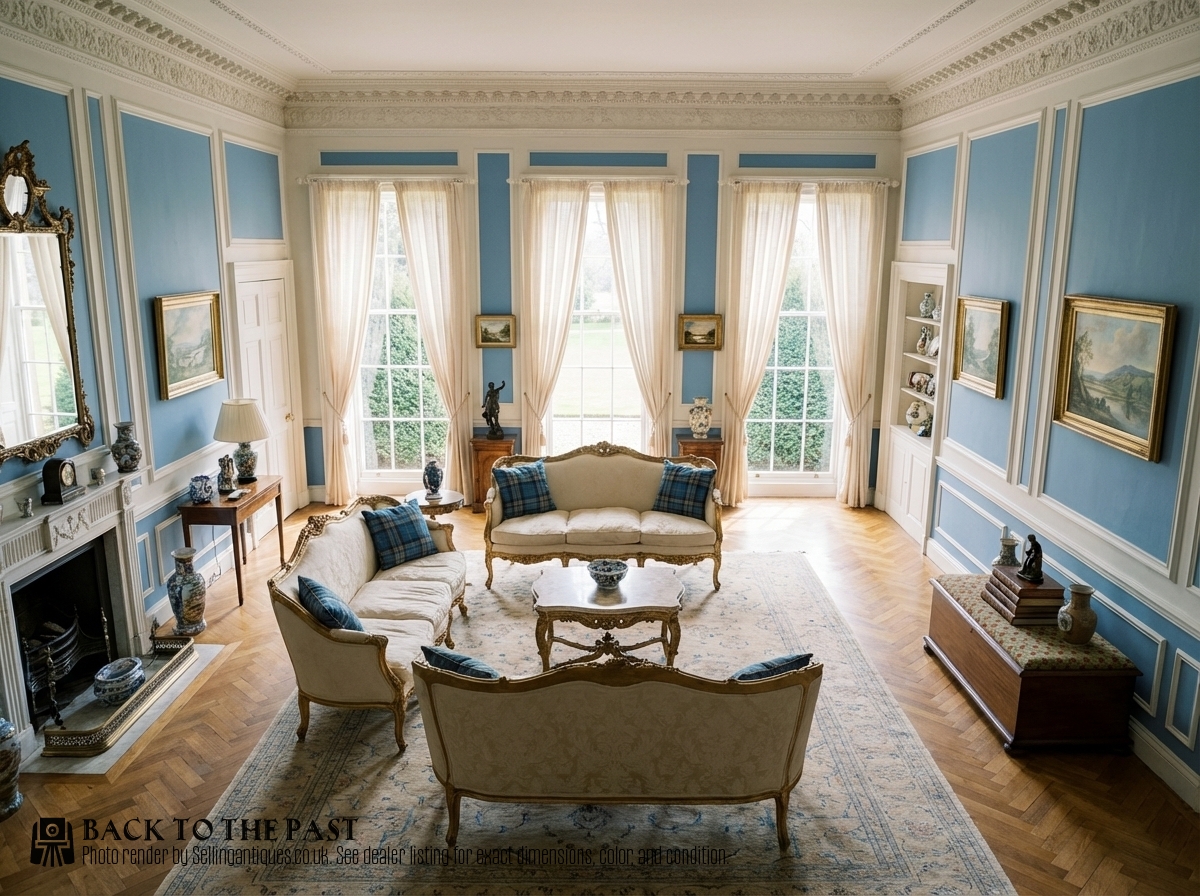
Vintage Mahogany Hassock
A vintage mahogany hassock provides low seating or foot support, appearing across various forms including footstools and ottomans. These pieces trace their origins through the 19th Century, Victorian, Regency, and Edwardian periods.
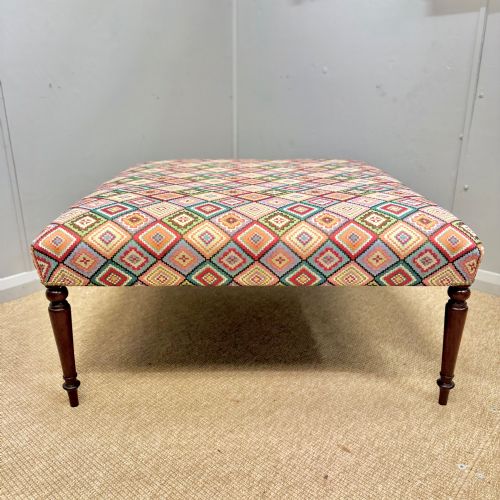
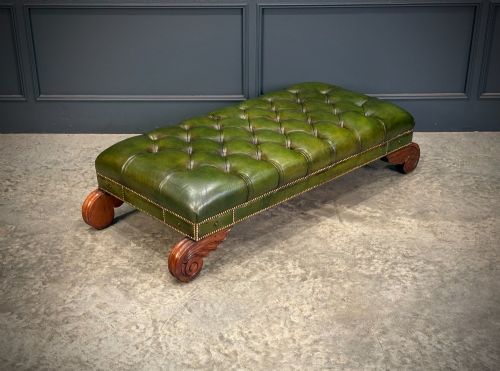
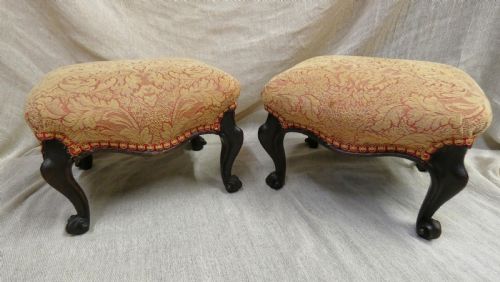
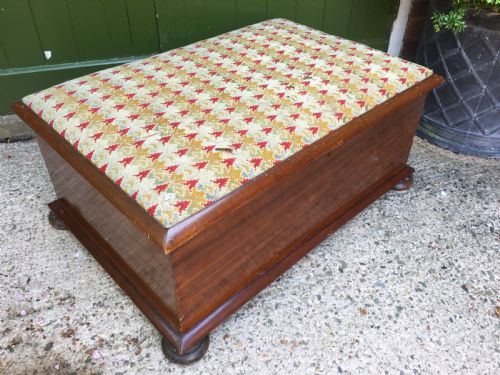
Buyers meet sturdy frames shaped from mahogany, paired with diverse textiles ranging from leather and damask fabric to wool tapestry and gros-point needlework. The styles span English Country House, Queen Anne Revival, and Early Victorian aesthetics, often resting on timber or brass elements.
The selection ranges from compact square footstools to very long upholstered benches and impressive ottomans. Each variation reflects the domestic comforts and craft traditions of its respective era.
How they were made
Cabinet makers constructed the foundational frames using solid mahogany, shaping the timber to form clean lines or decorative contours. Brass fittings and castors occasionally appeared on these pieces to aid mobility.
Upholsterers then applied traditional stuffing methods over the wooden bases, securing the internal padding with durable webbing and stitching. They finished the tops using textiles such as buttoned leather, patterned damask, and hand-worked wool tapestry or gros-point needlework.
The listings span the 19th Century, Victorian, Regency, and Edwardian periods, utilising mahogany, brass, leather, and wool tapestry.
What varies in quality
The refinement of the timber carving and the structural integrity of the mahogany frame determine the foundational standard of the piece. Artisans who invested greater care in jointing and timber selection produced sturdier seating.
The choice and execution of the upper textile upholstery mark the primary distinction between standard domestic items and finer works. Pieces finished in buttoned leather, silk, or intricate gros-point needlework demonstrate superior original commission value.
Howard and Sons
The Vintage Mahogany Hassock Glossary
- Hassock
- A thick cushion used for kneeling or as a low stool for resting the feet. These pieces evolved from simple floor pads into substantial timber-framed furniture.
- Mahogany
- A durable tropical hardwood prized for its reddish-brown colour and stable grain. Cabinet makers utilised this timber extensively for fine frames throughout the eighteenth and nineteenth centuries.
- Gros-point
- A type of counted-thread embroidery worked on coarse canvas to create durable textile covers. Makers frequently applied this heavy needlework to the tops of ottomans and footstools.
- Ottoman
- A low upholstered seat or bench without a back or arms, designed for domestic comfort. Larger examples often feature deep wooden frames and elaborate fabric trims.
Vintage Mahogany Hassock: Frequently Asked Questions
What is a vintage mahogany hassock?
A vintage mahogany hassock is a low upholstered footstool or ottoman built upon a timber frame. These pieces combine exposed wood with various textile coverings.
They serve primarily as foot rests or extra seating in traditional interiors. Their varied sizes allow them to fit easily beside armchairs or sofas.
How do I date a mahogany footstool?
Dating relies on examining the timber characteristics, construction methods, and the style of the upholstery frame. Pieces from the Regency period often display classical lines, whilst Victorian examples tend to be heavier and more ornate.
Changes in secondary woods and fastener types also provide clues to the exact decade of manufacture. Comparing the footstool to documented pieces from the same era confirms the period.
What fabrics were used originally?
Original coverings included buttoned leather, damask fabric, silk, and wool tapestry. Artisans selected these textiles for durability and visual harmony with the room.
Needlework covers like gros-point also appeared on higher quality nineteenth-century pieces. The choice of fabric often reflects the status and wealth of the original household.
How do I care for mahogany and leather?
Keep wooden frames clean using a soft cloth and apply quality furniture wax sparingly to protect the finish. Avoid placing the timber in direct sunlight to prevent colour fading.
Maintain leather upholstery with appropriate conditioners to prevent cracking over time. Gentle dusting preserves both the wood grain and the textile surface.