


Antique Muted Landscape Art
Antique muted landscape art captures quiet rural and coastal scenes through subdued tones, offering buyers a serene piece of history to display.
Antique Muted Landscape Art
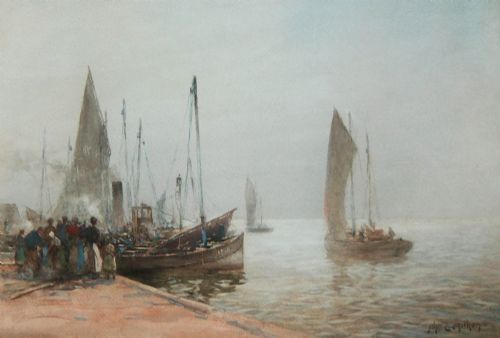
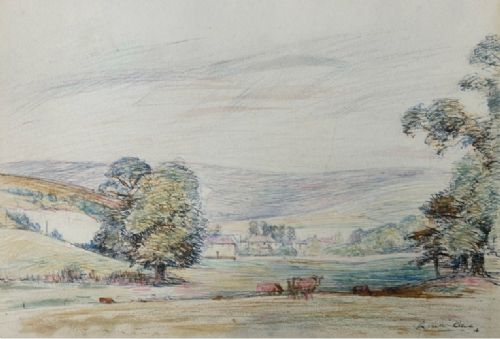
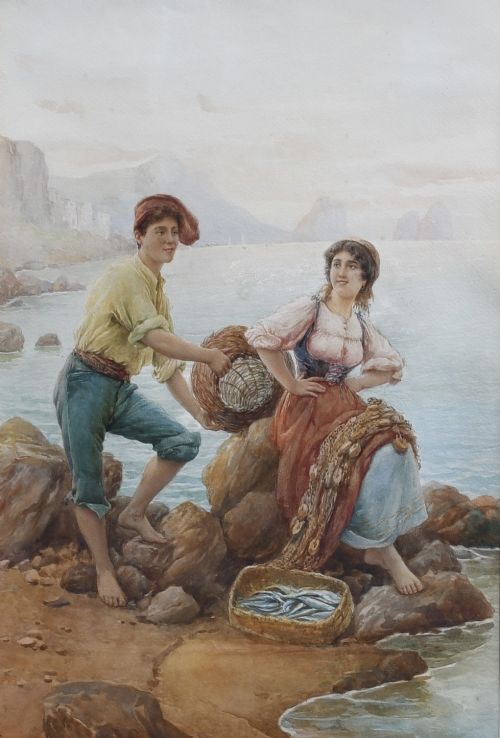
Antique muted landscape art comprises paintings created primarily during the nineteenth and early twentieth centuries, spanning the Victorian, Edwardian, and early modern periods. These works capture pastoral vistas, coastal harbours, and quiet riversides using restrained palettes that evoke a peaceful atmosphere. Buyers selecting antique muted landscape art encounter subjects ranging from Yorkshire dales and Scottish coasts to Norfolk broads and pastoral farming scenes.
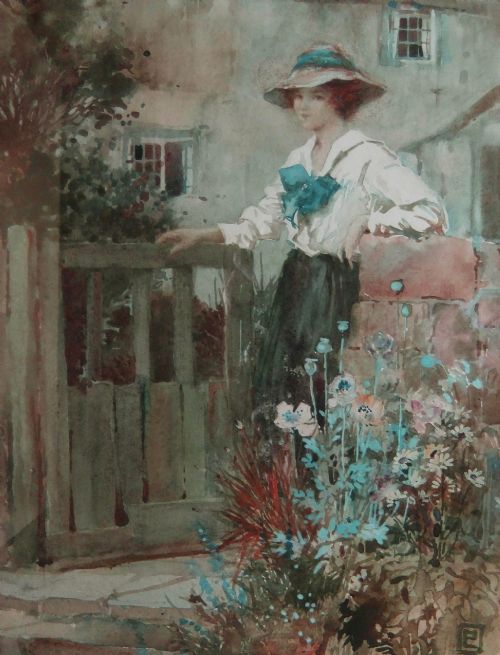
The pieces available in this category appear predominantly as works on paper and canvas. Watercolour paintings and oil paintings represent the standard formats produced by British and Irish artists of the era. Many works depict specific regional locations, recording topography and rural life with understated pigments rather than vivid primary colours.
Materials and Techniques
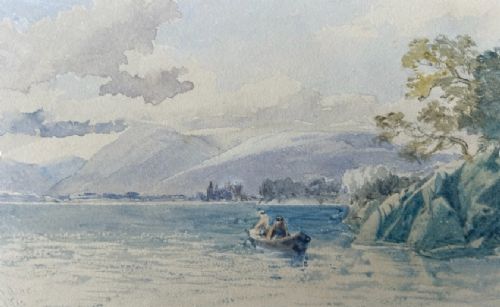
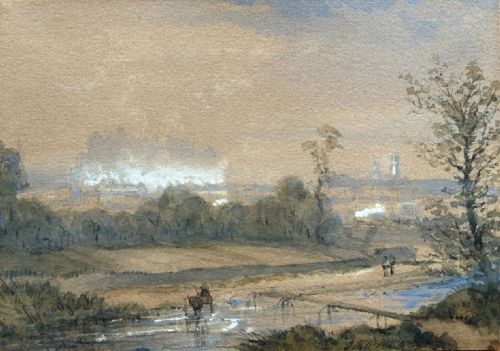
Artists relied on watercolour pigment applied to paper, or oil paint worked onto canvas and panel. Watercolour paintings often utilise washes of muted earth tones, sometimes heightened with bodycolour to build subtle highlights on skies and water.
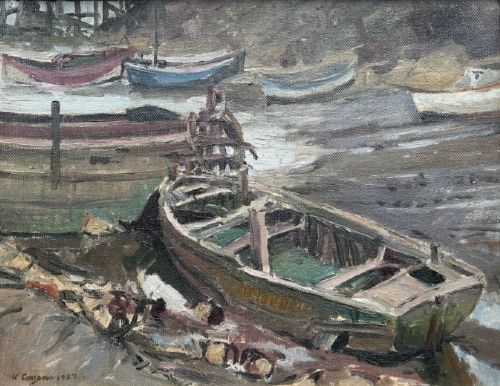
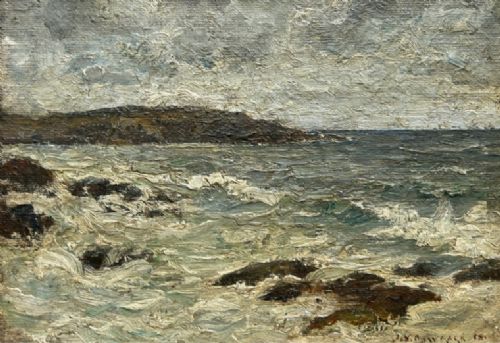
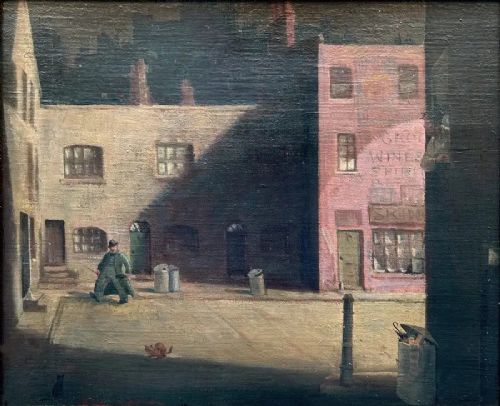
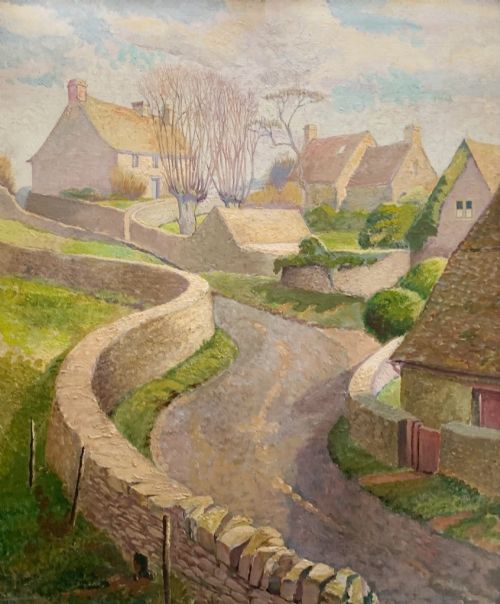
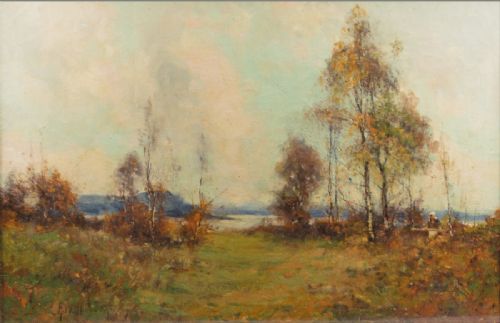
Oil paintings employ oil paint laid down with brushes or applied in thicker impasto strokes. Supports include stretched canvas as well as wooden panels, allowing painters to capture the atmospheric light of coastal dockyards and winter fields.
Cows frequently inhabit these pastures, quietly grazing their way across nineteenth-century riverbanks and early twentieth-century fields.
Variations in Quality
Quality in these landscapes rests upon the artist's handling of tone, light, and perspective. Superior works demonstrate a confident command of atmospheric depth, rendering distant hills and overcast skies with subtle tonal gradations rather than flat washes.
The strength of composition and the fidelity of local detail distinguish the finest examples. Pieces by established practitioners from groups such as the Staithes art colony or recognised watercolour societies exhibit greater refinement in brushwork and structural balance.
Thomas Miles Richardson Jnr·John R Prentice·James E Aitken·Francisco Sancha·Russell Sidney Reeves·Carlo Ferranti·Percy Lancaster·Alexander Wellwood Rattray·Alfred George Morgan·Ernest Higgins Rigg·Fred Lawson·Arthur Reginald Smith·Cuthbert Crossley·Sir Thomas Newenham Dean·Ernest Pile Bucknall·Thomas Hunn·Tom Clough·James Orrock·Percy Robertson·James Watson·Florence Hess·Henri Joseph Harpignies·Herbert Royle·Frederick William Hattersley·Sidney James Beer
The Antique Muted Landscape Art Glossary
- Watercolour
- A painting method where paint is made of pigments suspended in a water-based solution. It is typically applied to paper to create translucent washes of colour.
- Impasto
- Paint applied thickly to a canvas or panel, leaving visible brush or palette knife marks. This technique adds tactile dimension and texture to surfaces such as rocky seascapes.
- Pastoral
- A style of art depicting rural life and idyllic country scenes. These compositions frequently feature farming cattle, cottages, and quiet rivers.
- Seascape
- A painting depicting the sea, coastal views, or maritime activity. Such works often record harbours, fishing dockyards, and tidal flats.
- Panel
- A rigid flat support made of wood used for painting instead of stretched canvas. Artists during the early twentieth century utilised panels for smaller outdoor oil studies.
Antique Muted Landscape Art: Frequently Asked Questions
What periods do these landscapes come from?
The works span from the nineteenth century through the 1950s, encompassing Victorian, Edwardian, and early twentieth-century movements.
Most pieces date specifically from the late Victorian era up to the interwar period.
How should I frame an antique watercolour?
Antique watercolours require framing behind glass with acid-free mount board to protect the paper from humidity and ultraviolet light.
Keeping the paper from touching the glass prevents condensation damage over time.
Where were these landscape artists active?
Many painters worked across British and Irish regions, recording local topography in Yorkshire, Norfolk, Scotland, and Sussex.
Regional art colonies, such as the one in Staithes, produced numerous paintings of local coastal life.
How do I care for antique oil paintings?
Oil paintings on canvas or panel should be kept away from direct sunlight and extreme temperature fluctuations.
Dusting requires only a soft, dry brush without applying any liquid cleaners to the paint surface.