

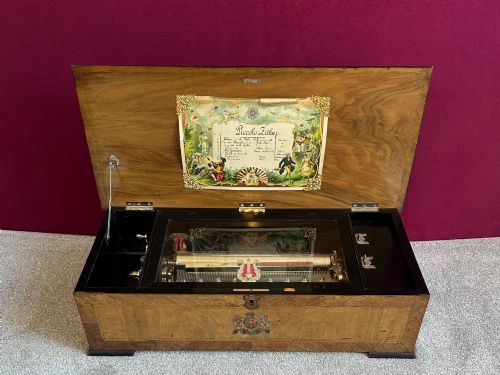


Antique Musical Chest
An antique musical chest brings mechanical harmony and rich cabinet timber into a room.
Antique Musical Chest
These pieces are mechanical instruments housed within decorative wooden cabinets, commonly referred to as music boxes in the listings. They range from simple tabletop units to larger forms designed to play multiple airs.
The examples recorded here belong primarily to the Victorian period, with dates clustering around eighteen eighty, alongside references to the eighteenth century and Swiss origins. Most pieces take the form of wooden boxes enclosing a brass cylinder and steel comb mechanism.
Buyers frequently encounter variations featuring inlaid fruitwood, marquetry, and visible bells. The casework ranges from plain rosewood and walnut to ebonised finishes and burr walnut veneers.
How they were made
Cabinet makers utilised dense timbers such as rosewood, walnut, and burr walnut to construct the outer housing, often enhancing the surfaces with marquetry and inlaid fruitwood details. Glass covers occasionally protect the internal mechanism while allowing the movement to be observed in operation.
Internal components combine brass cylinders pinned with timing arrangements and tuned steel combs that vibrate as the pins rotate. Additional elements such as bells add complexity to the auditory output of these Swiss and Victorian movements.
Antique Musical Chest Retail Price Guide 2026
Typical asking prices for musical chest among the pieces listed under this phrase on Sellingantiques today, from the lower quarter to the upper quarter. They describe what is for sale here now, not the wider market.
Some boxes include bells in view, letting the listener watch tiny hammers strike metal while the music plays.
What varies in quality
Distinction across the range lies in the complexity of the musical arrangement and the richness of the casework. Pieces playing a greater number of airs or incorporating bells demonstrate a higher level of mechanical ambition.
Cabinetwork differentiates the standard examples from the finer ones through precise marquetry, intricate fruitwood inlay, and the choice of luxury veneers such as burr walnut. The execution of the woodwork and the clarity of the musical tone determine the standing of each piece.
Nicole Freres
The Antique Musical Chest Glossary
- Air
- A distinct tune or musical piece played by the cylinder mechanism. Multiple airs allow the box to cycle through different melodies.
- Cylinder
- The rotating brass barrel set with pins that pluck the teeth of the steel comb. Its precision dictates the timing of the notes.
- Comb
- The tuned plate of steel featuring multiple teeth that produce the notes when struck by the cylinder pins. Each tooth is hand-tuned to a specific pitch.
- Marquetry
- Decorative patterns formed by fitting small pieces of veneer into the wooden lid or sides. This technique displays considerable woodworking skill.
Antique Musical Chest: Frequently Asked Questions
Where were these musical boxes made?
Many fine examples originate from Swiss workshops renowned for precision mechanical engineering. They were subsequently housed in decorative cabinets constructed in Britain and Europe.
Swiss makers such as Nicole Freres produced sophisticated movements that were exported internationally. The combination of Swiss engineering and European cabinetmaking defined the trade.
What timber finishes appear on the cabinets?
Cabinet makers employed woods such as rosewood, walnut, and burr walnut to enclose the delicate mechanisms. Ebonised wood and fruitwood inlay also feature prominently across the surviving pieces.
Marquetry patterns frequently decorate the lids, adding visual interest to the exterior. The choice of veneer often indicates the relative ambition of the piece.
How are multiple tunes played?
The brass cylinder shifts laterally on its axis to engage different sets of pins with the steel comb. This allows a single cylinder to cycle through a sequence of several distinct airs.
Advanced mechanisms accommodate twelve or more airs, requiring intricate pinning on the barrel. Indicators or tune sheets inside the lid often list the titles of the programmed melodies.