


Antique Mountain Oil Painting
An antique mountain oil painting captures craggy peaks and quiet valleys through nineteenth-century brushwork.
Antique Mountain Oil Painting
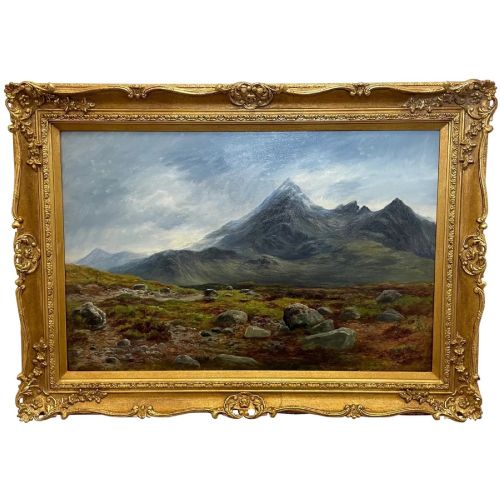
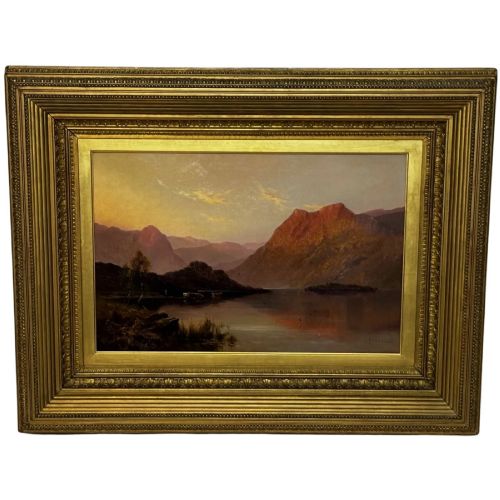
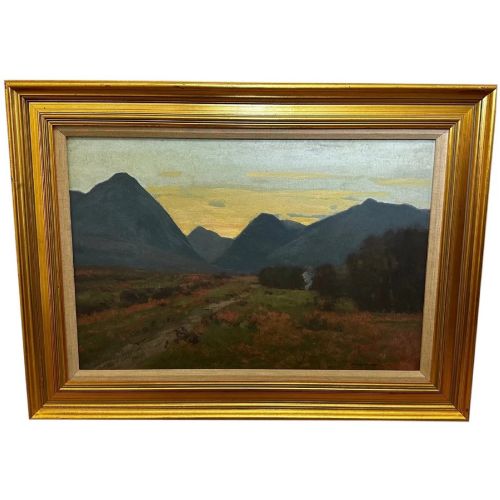
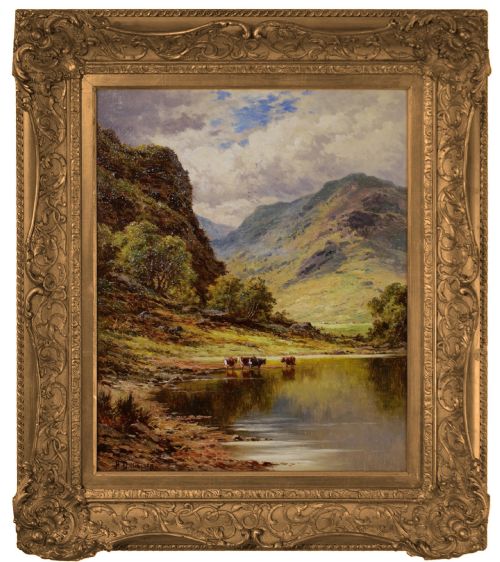
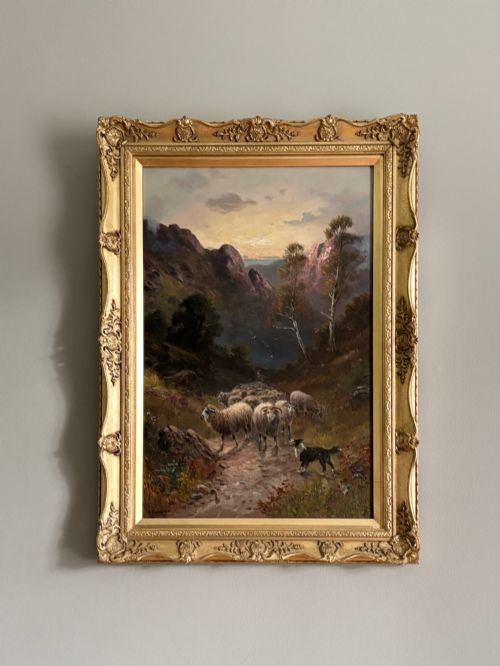
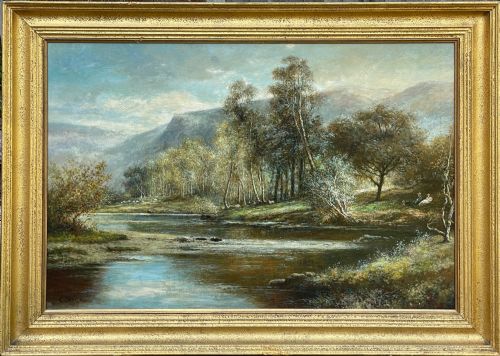
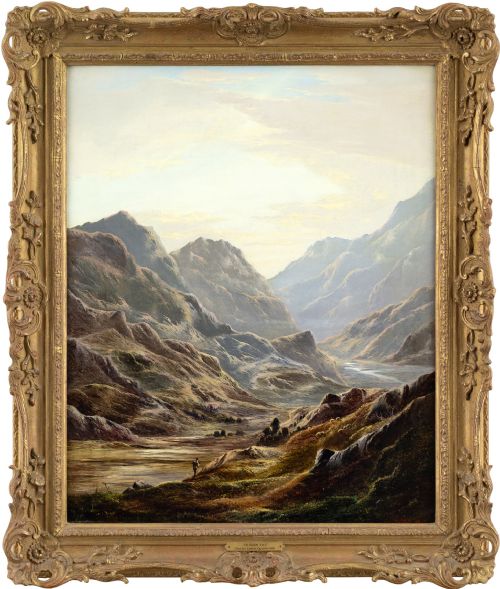
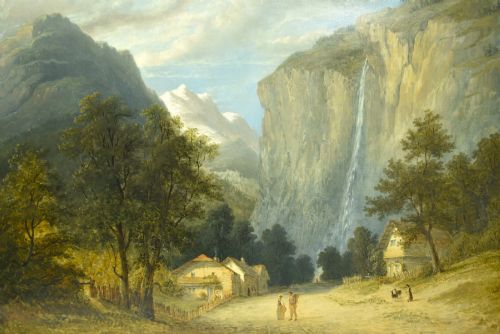
An antique mountain oil painting depicts rugged topographies, placid lakes, and distant summits across canvas and wood panels. These canvases frequently record specific terrain from Scotland, Wales, the Lake District, and the Alps during the Victorian era and early twentieth century.
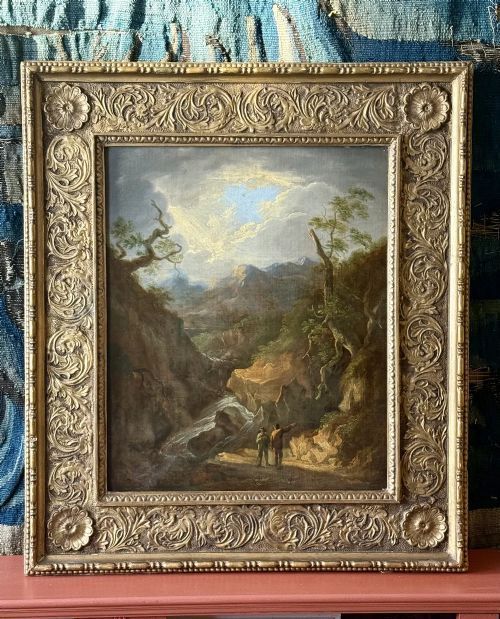
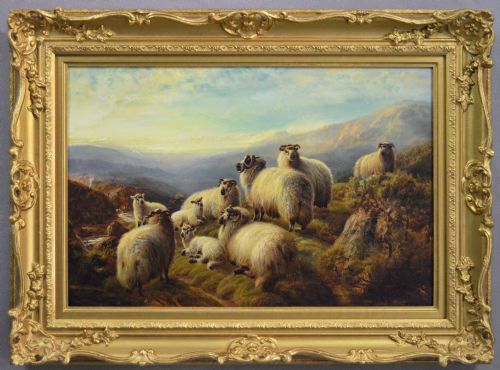
Makers often placed cattle, sheep, or solitary figures in the foreground to establish scale against towering crags and atmospheric skies. The compositions range from intimate pastoral river views to sweeping panoramas of snow-capped peaks.
Surviving examples arrive in various formats, from modest panel studies to large framed salon works produced by regional British and continental schools.
Materials and Construction
Painters applied oil pigments directly onto stretched canvas, prepared wooden panels, or canvas laid onto board. These surfaces received layered coats of oil paint to build depth in shadows and highlights across craggy terrain.
Frames play a crucial role in presentation, utilising moulded wood embellished with gesso and gilt finishes. Many works retain their original giltwood surrounds, which complement the tonal palette of the landscape within.
Several canvases manage to make even Highland cattle look like they are posing for a formal portrait.
Assessing Artistic Merit
Quality rests in the handling of light, atmospheric perspective, and geological accuracy rather than mere scale. Superior works convey the palpable moisture of a passing shower over a mountain range or the crisp stillness of morning mist on a loch.
The precision of brushwork in foliage, water, and stone distinguishes accomplished artists from routine commercial copyists. Furthermore, the harmony between the canvas and its original gilt frame indicates the overall preservation of the piece.
William Beattie Brown·Alfred Fontville de Breanski·George Houston·Benjamin Barker of Bath·Henry H Parker·Sidney Richard Percy·Charles Leslie·Francis E Jamieson
The Antique Mountain Oil Painting Glossary
- Oil on Canvas
- A traditional medium where pigment suspended in drying oil is applied to a woven fabric support stretched over a wooden frame.
- Giltwood
- Wood carved and coated with a thin layer of gold leaf or metal powder, commonly found on period picture frames.
- Gesso
- A paint mixture consisting of a binder mixed with chalk, gypsum, or pigment, used to prepare wood or canvas surfaces.
- Scottish Impressionism
- A painting style characterised by visible brushstrokes and an emphasis on light and landscape vernacular native to Scotland.
- Provenance
- The documented history of ownership of an artwork, tracing its origin and passage through time.
Antique Mountain Oil Painting: Frequently Asked Questions
How do I identify a Scottish mountain scene?
Scottish landscapes often feature distinctive regional flora, highland cattle, and specific geographic landmarks like lochs and glens.
Artists frequently inscribed titles or signatures directly onto the canvas or stretcher bars on the reverse.
Are these paintings usually signed?
Many examples bear the artist's signature in the lower corners, though a significant number remain unsigned or attributed to broader continental and British schools.
Unsigned works are evaluated through stylistic comparison, brushwork technique, and framing.
What is the typical framing for these works?
Period frames generally consist of heavy moulded wood decorated with applied gesso and gold leaf gilding.
These surrounds often show period distress that matches the age of the canvas inside.
How should I care for an oil painting?
Keep the canvas away from direct sunlight, damp environments, and rapid temperature fluctuations to prevent cracking in the paint layers.
Dust the surface gently with a soft, dry brush without applying pressure to the impasto.