




Blue Sky Mountain Painting
A blue sky mountain painting captures vast topography under clear daylight, offering a timeless window into remote highland terrain.
Blue Sky Mountain Painting
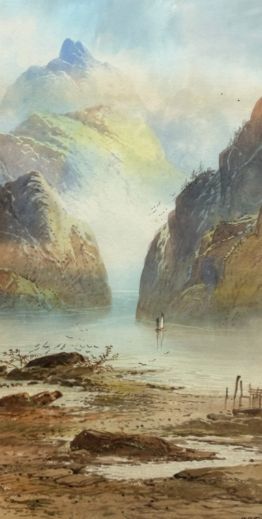
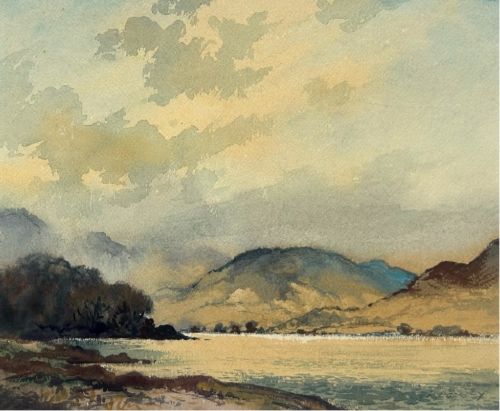
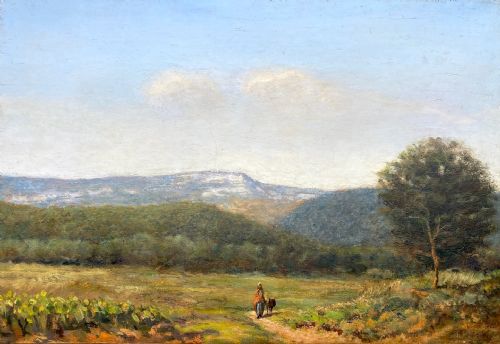
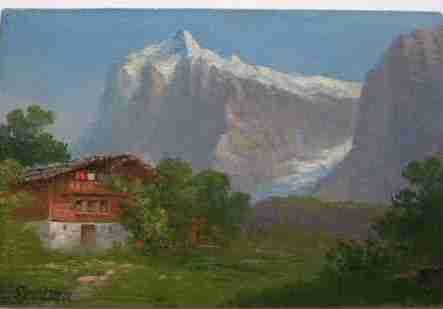
A blue sky mountain painting depicts rugged peaks and elevated topography set against bright, clear daylight. These works span the nineteenth century up to the mid-twentieth century, recording landscapes across Britain, Europe, and the Mediterranean.
The selections available here range from delicate watercolours on paper to substantial oil paintings on canvas. Regional views include Scottish lochs, Welsh valleys, the English Lake District, and Alpine summits.
Makers recorded in these listings include established artists such as William Henry Earp, Robert Leslie Howey, John Grenville Fennell, John Syer, Samuel Towers, Percy Lancaster, and Hubert Sattler. Each creator brings a distinct regional focus, capturing topography through either precise watercolour washes or heavier oil pigments.
Materials and technique
Works in this collection utilise oil paint or watercolour pigment applied to canvas or paper supports. Oil paintings often incorporate wood and gesso frames to house the canvas securely.
Artists built depth through layered brushwork in oil or translucent washes in watercolour. The physical support dictates the surface texture, ranging from the fine tooth of watercolour paper to the woven grain of canvas.
Listings feature works spanning from the nineteenth century to nineteen fifty, executed in oil and watercolour on canvas and paper.
Factors of quality
Quality rests upon the handling of light and atmospheric distance within the mountainous composition. Skilled brushwork defines the contours of crags and clouds without overworking the pigment.
The integrity of the original paper or canvas support influences the longevity of each painting. Strong provenance and clear artist attribution elevate individual works above unsigned academic studies.
William Henry Earp·Robert Leslie Howey·John Grenville Fennell·John Syer·Samuel Towers·Percy Lancaster·Hubert Sattler
The Blue Sky Mountain Painting Glossary
- Watercolour pigment
- Finely ground colour suspended in a water-soluble binder, applied in thin washes to paper. This medium allows for luminous skies and delicate atmospheric effects.
- Gesso
- A plaster mixture applied to wood or canvas as a smooth base for oil painting. It provides a stable white ground that reflects light back through upper layers of paint.
- Oil on canvas
- Pigment mixed with drying oil applied directly to stretched woven fabric. This technique permits rich impasto texture and deep tonal blending.
- Victorian romanticism
- A nineteenth-century artistic movement emphasising emotion, awe, and the sublime power of nature. Works in this style frequently place human figures small scale within vast mountain vistas.
Blue Sky Mountain Painting: Frequently Asked Questions
How do I care for an antique watercolour painting?
Keep watercolours away from direct sunlight to prevent the pigments from fading over time. Ensure they are hung in rooms with stable humidity levels to protect the paper.
Frame them behind glass with acid-free mounts to prevent the paper from touching the glazing directly.
Where were most nineteenth-century mountain scenes painted?
Artists travelled extensively through British uplands such as Snowdonia, the Scottish Highlands, and the Lake District. Continental destinations like the Alps and Italian lakes were equally popular.
Painters set up easels outdoors to capture transient light effects before finishing details in the studio.
What is the difference between oil and watercolour landscapes?
Oil paintings use heavy pigments on canvas, offering rich textures and deep colour saturation. Watercolours rely on transparent washes on paper, emphasising luminosity and paper grain.
Oils are generally more robust, whereas watercolours require protective glass framing.
How can I tell the period of a mountain painting?
Examine the materials, stretcher frames, and paper watermarks where visible. Stylistic cues, such as the brushwork of the mid-century modern era versus nineteenth-century romanticism, also indicate age.
Artist signatures and biographical dates provide the most reliable chronological anchor.