
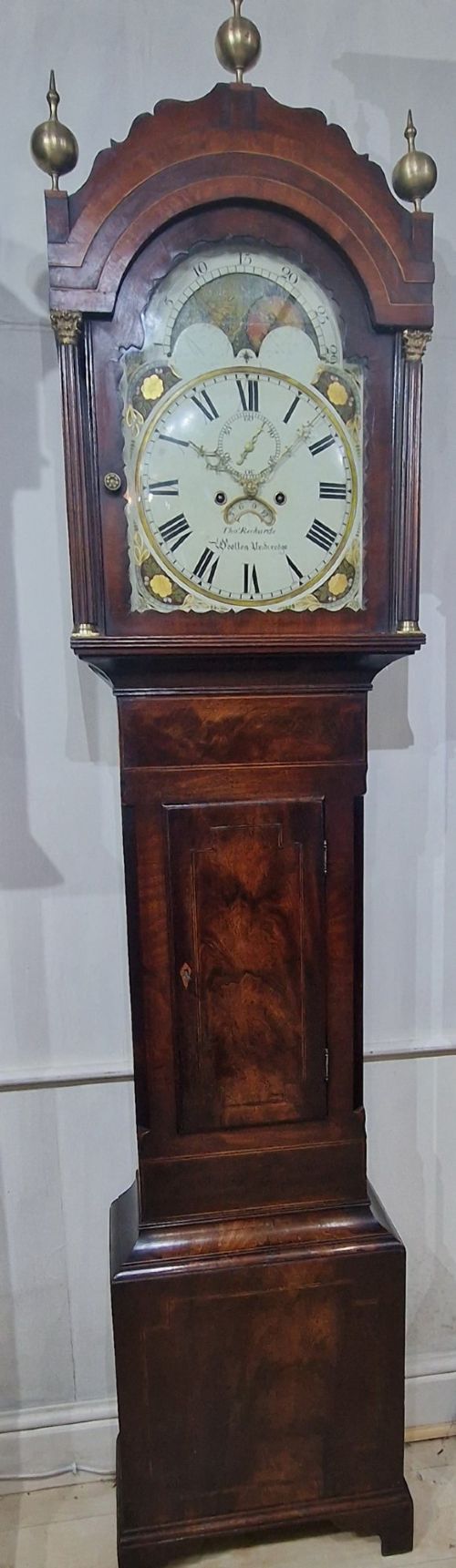
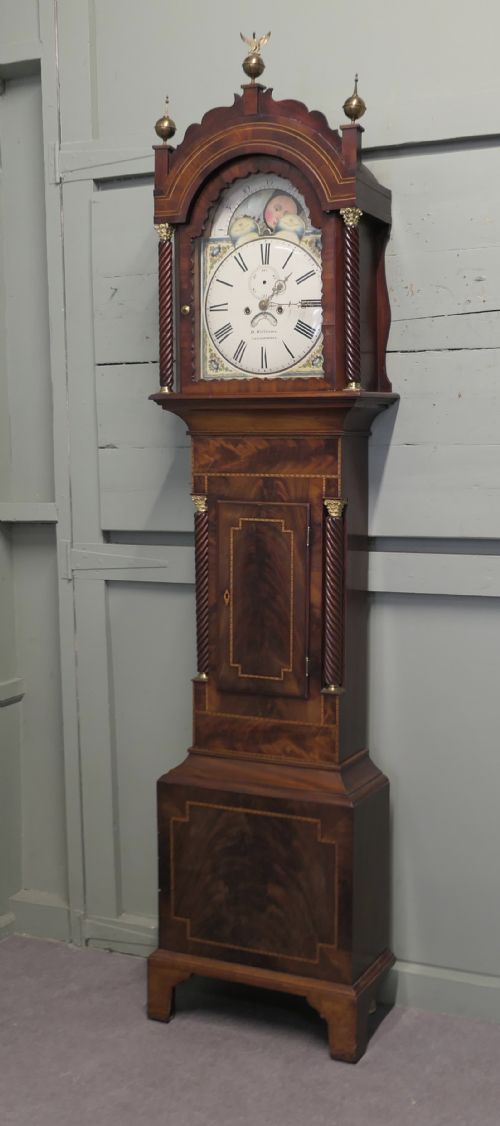


Antique Moonphase Floor Clock
An antique moonphase floor clock stands as a monumental timekeeper, bringing mechanical precision and celestial tracking into a room.
Antique Moonphase Floor Clock
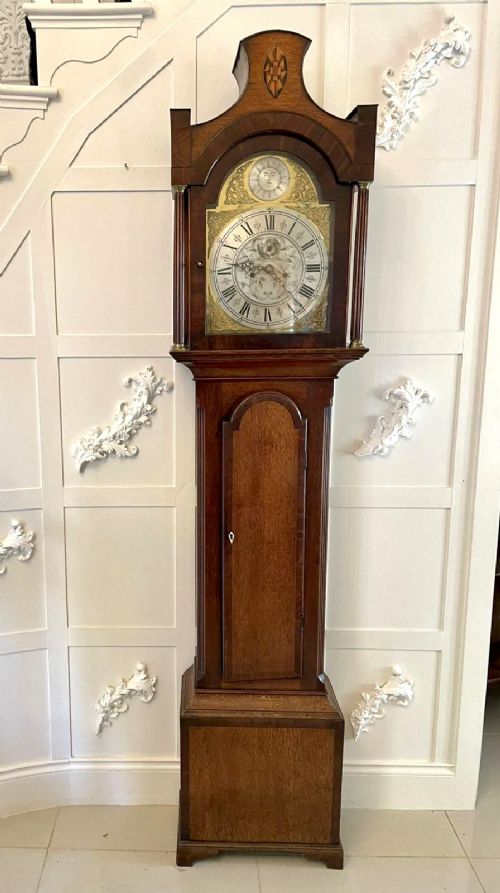
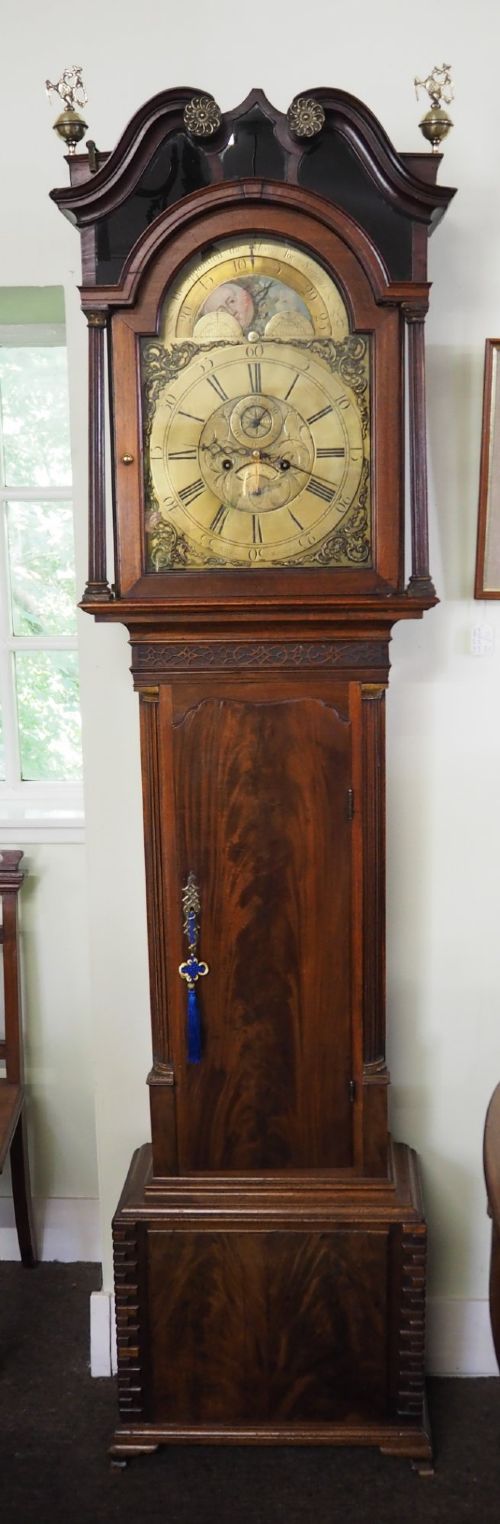
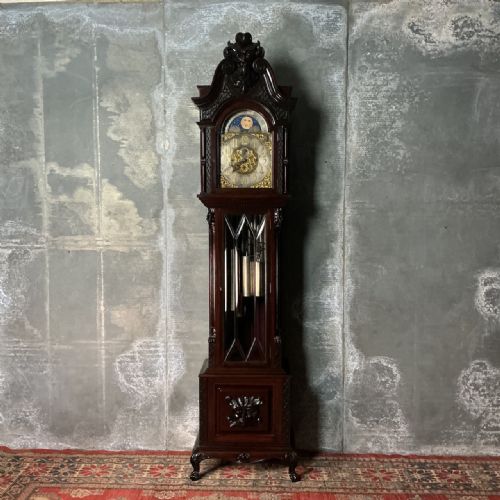
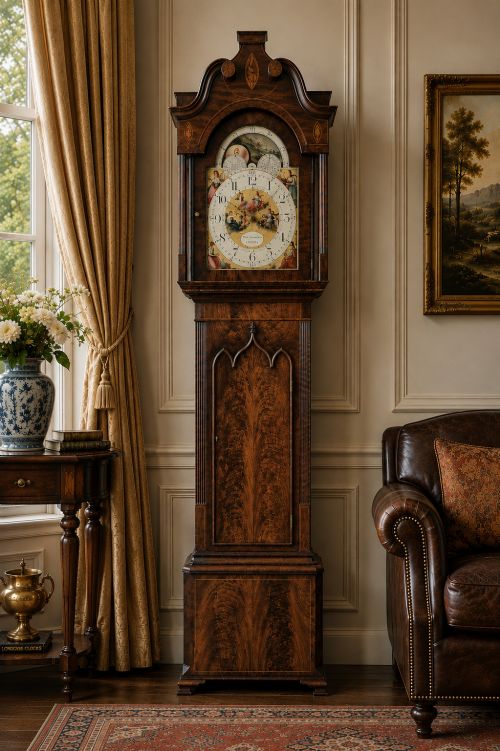
An antique moonphase floor clock combines standard timekeeping with a rotating disc that tracks the lunar cycle, offering a mechanical window to the sky. These grand pieces span the eighteenth and nineteenth centuries, taking the form of tall cabinet clocks that house weight-driven movements.
The versions most commonly met on this page are mahogany and oak longcase clocks from the Georgian and eighteenth-century periods. Many of these traditional grandfather clocks feature painted iron or brass dials inscribed with regional British makers from towns such as Bristol, Manchester, and Liverpool.
Makers often housed these complex movements in tall wooden cases made from walnut, flame mahogany, or plain oak. Cabinets range from simple country furniture to sophisticated city pieces with inlaid details and architectural hoods.
Materials and construction
Cabinetmakers utilised sturdy hardwoods such as mahogany, oak, and walnut to build the tall protective cases, frequently employing flame mahogany veneers for rich visual depth. Glass panels protected the dial faces while allowing a clear view of the painted iron or brass chapter rings.
Clockmakers constructed the internal eight-day or three-train movements using brass wheels, gears, and plates driven by hanging weights. Dials combined hand-engraved brass or painted iron substrates with delicate subsidiary hands for seconds, tidal displays, or calendar work.
Some provincial clockmakers offered tidal dials alongside lunar displays, ensuring coastal owners knew precisely when the tide turned in Liverpool.
Distinguishing quality
The standard of cabinetwork sets the baseline for value, separating plain regional pine-lined carcases from finely figured flame mahogany and walnut cases with intricate stringing and quarter columns. Superior examples display crisp proportions and well-preserved timber patination developed over centuries.
Movement sophistication and dial execution elevate certain pieces above standard production, particularly when signed by notable provincial or metropolitan makers. Finely painted lunar mechanisms and subsidiary dials demonstrate superior horological ambition compared to basic rolling moon displays.
Samuel Kellett of Bredbury·Charles Dowsett Of Canterbury·Thomas Vernon London·Gillows Cased Liverpool·Nevitt of Bristol·John BANKS OLDHAM·FURNIVAL OLDHAM·THOMAS DEAN of LEIGH·Wilshire & Link of Bristol·Nicholas of Birmingham·RICHARDSON OF MANCHESTER·James Rayner of Hull·ROBERT DARLING MELROSE·THOMAS HALL ROMSEY·Iames Richards Liverpool
The Antique Moonphase Floor Clock Glossary
- Longcase clock
- A tall pendulum clock enclosed in a wooden case standing directly on the floor. This traditional form is frequently called a grandfather clock.
- Moonphase
- A rotating mechanism behind the dial showing the phases of the moon through a curved aperture. It tracks the lunar month using a double-rotation disc.
- Flame mahogany
- Timber cut from the branch junction of a mahogany tree to produce a distinct flickering flame pattern. Cabinetmakers used this veneer on prominent hood and trunk surfaces.
- Three train
- A clock movement with three separate gear trains to drive timekeeping, striking, and chiming functions. This complex setup requires additional weight drops inside the trunk.
Antique Moonphase Floor Clock: Frequently Asked Questions
How do moonphase clocks work?
The mechanical moonphase uses a gear train connected to the clock movement that turns a painted disc twice every lunar month. Two identical moons appear sequentially through a painted arched aperture on the dial.
This mechanism requires periodic manual adjustment to match the exact synodic month if the clock remains running continuously for long periods.
What is the difference between longcase and grandfather clocks?
Longcase clock and grandfather clock describe the exact same tall floor-standing timepiece. Longcase is the traditional horological term used by makers and dealers.
Grandfather clock became the popular domestic term following the runaway success of Henry Clay's popular song written in the late nineteenth century.
How do I wind an eight-day clock?
An eight-day movement requires winding every week using a specialised crank key inserted into winding holes on the dial face. Turning the key draws the internal weights back up toward the top of the case.
Careful winding prevents the weights from dropping below their intended operating depth, which would cause the pendulum to stop swinging.
Where were these clocks made?
British provincial towns and cities produced the majority of these longcase clocks, with regional makers signing the painted iron or brass dials. Workshops operated across England, Wales, and major urban centres such as Bristol, Manchester, and Liverpool.
London cabinetmakers and horologists also contributed significant high-end walnut and mahogany examples featuring advanced tidal and astronomical subsidiary dials.