
Antique Monk Carving
These antique monk carving pieces are heavy timber seats and figural sculptures shaped by centuries of craft, offering both practical storage and deep historical presence.
Antique Monk Carving
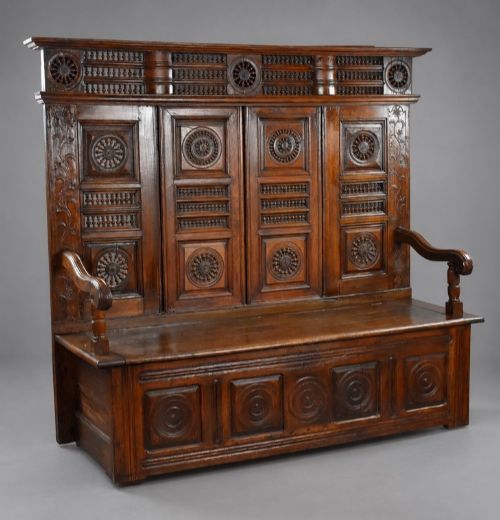
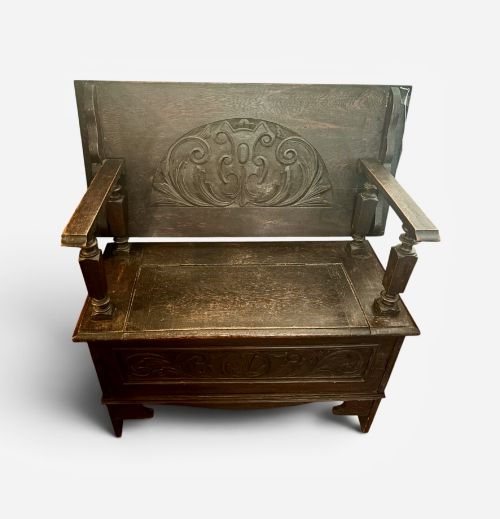
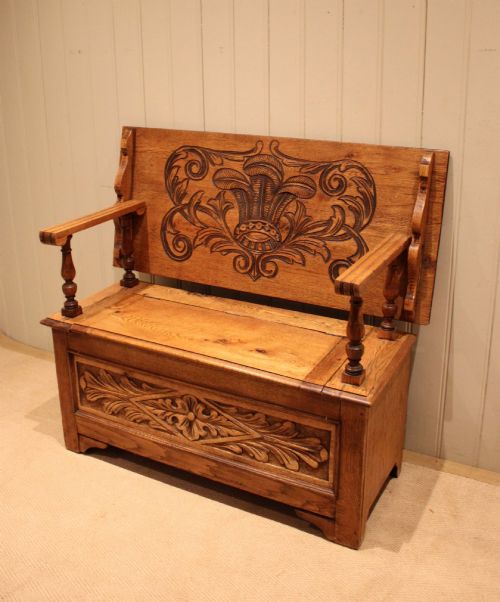
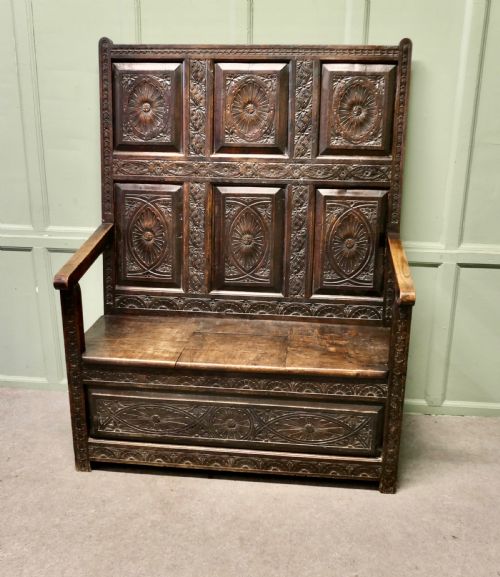
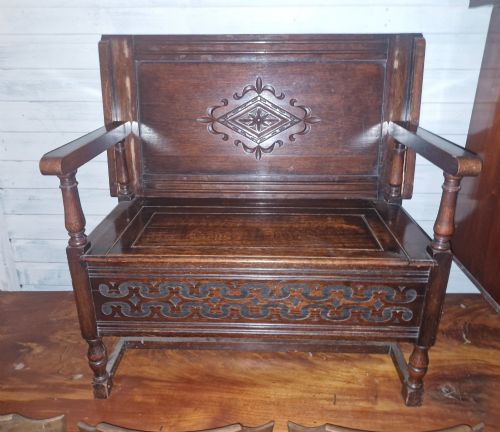
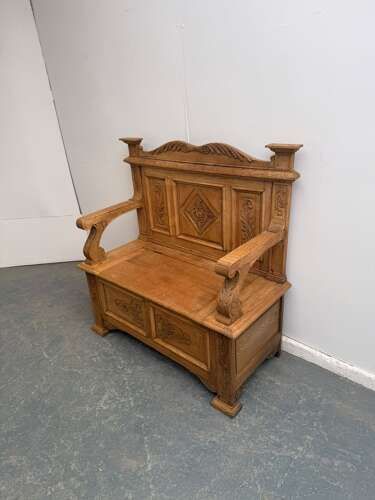
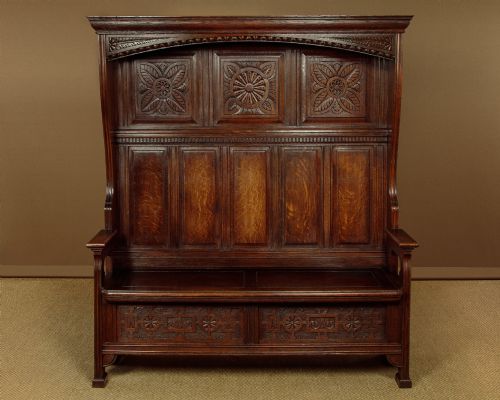
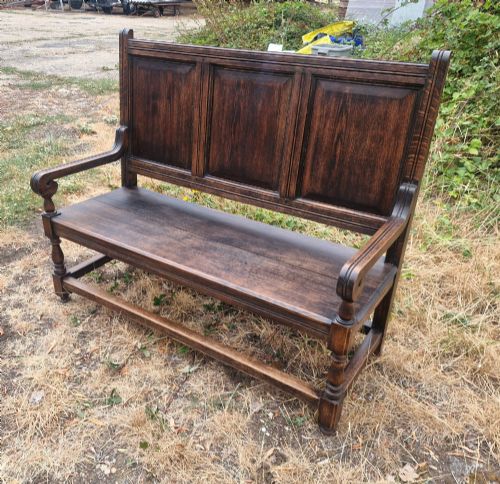
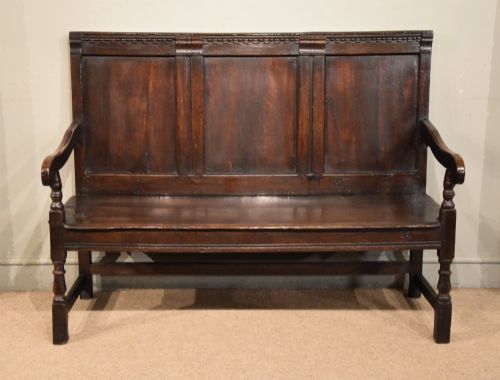
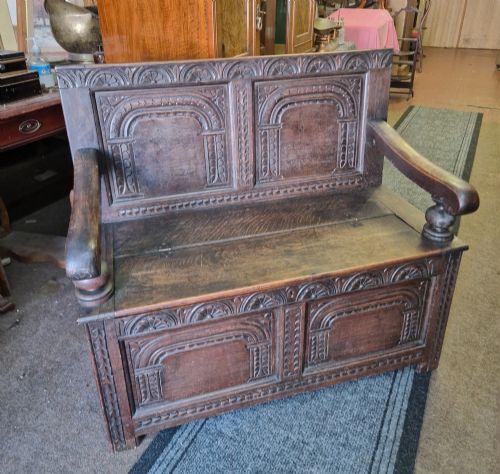
When you search for an antique monk carving, you encounter a range of heavy wooden furniture and figural works primarily built from solid oak. The form most frequently met on this page is the monks bench or box settle, pieces designed with lift-up seats or fold-over tops that served multiple domestic purposes in earlier centuries.
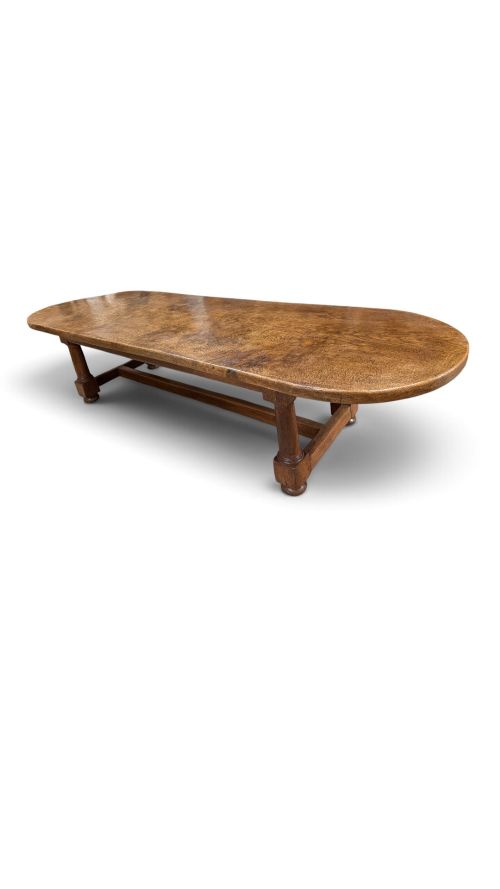
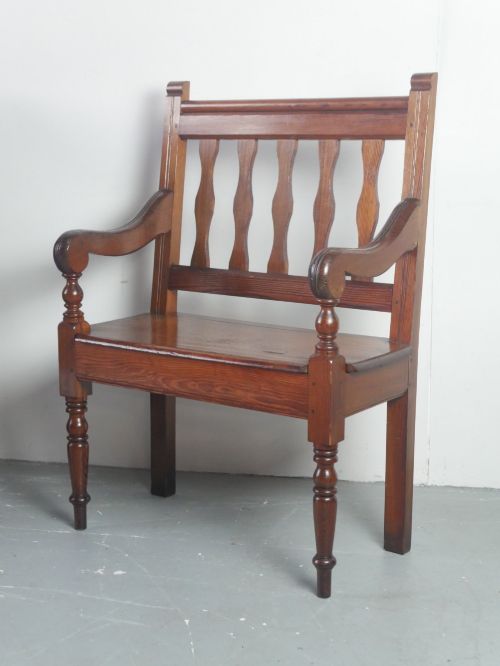
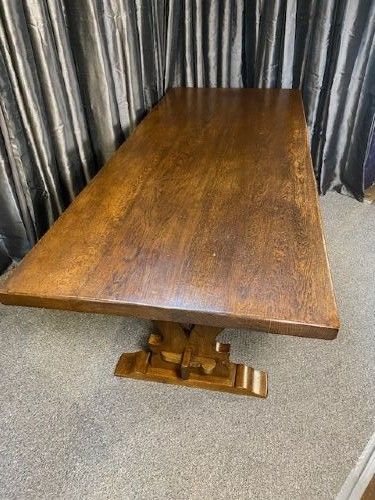
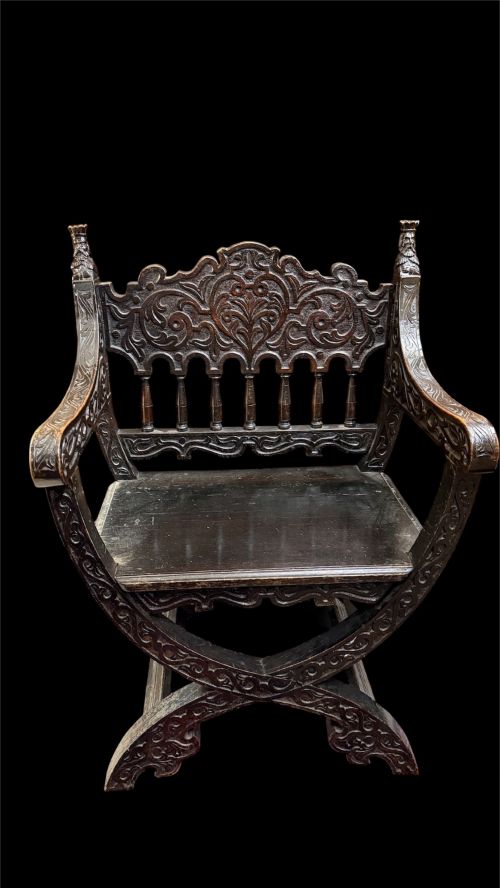
The selection also spans hall benches, refectory dining tables, and wooden statues such as carved studies of saints. These items originate across periods from the seventeenth century through to the Edwardian era, bearing the distinct regional traits of English country furniture alongside continental influences like Renaissance Revival and Flemish carving.
What varies in quality
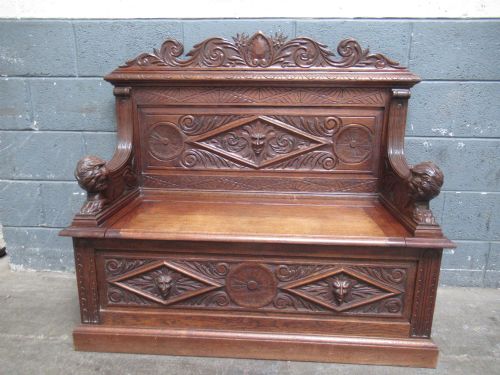
The distinction between ordinary pieces and the finest examples lies in the depth and execution of the hand carving, particularly on figural details like Green Man motifs and panelled backs. Timber selection also dictates standing, with dense, figured solid oak commanding greater regard than plain secondary woods.
Proportion and structural integrity separate robust country pieces from lesser items, with superior examples retaining their original lift-up seats, fold-over tops, and period hardware without intrusive modern alterations.
Several settles double as tables, proving that antique furniture designers invented multi-functional living long before modern apartments did.
The Antique Monk Carving Glossary
- Box settle
- A high-backed wooden bench featuring enclosed storage beneath the seat, often fitted with armrests and a solid panelled back to block draughts in large halls.
- Monks bench
- A convertible form of seating featuring a folding top that transforms the backrest into a table surface, historically utilised in compact spaces.
- Green Man
- A sculptural architectural ornament depicting a human face entwined with leaves, vines, or foliage, frequently carved into Victorian oak furniture.
- Refectory table
- A long, narrow dining table traditionally used in communal monastic dining halls, constructed here from heavy solid oak timbers.
- Polychrome
- A decoration technique involving multiple colours painted onto wood or gesso surfaces, seen on specific folk art statues and figures.
Antique Monk Carving: Frequently Asked Questions
What is a monks bench?
A monks bench is a dual-purpose wooden seat featuring a hinged top that folds down to create a table. They were designed to save space in smaller rooms while providing both seating and a surface for eating or working.
Most surviving examples date from the Victorian era and early twentieth century, though the form draws on much older vernacular traditions. The heavy solid oak construction meant they endured generations of daily domestic use.
How do I use a box settle today?
A box settle works well in an entrance hall or boot room, where the high panelled back blocks draughts and the lift-up seat conceals clutter. They also suit large kitchens or dining spaces as substantial seating against a wall.
Because many include storage compartments or fold-over table tops, they remain as practical for modern living as they were in seventeenth and eighteenth-century homes. Placing them away from direct heat sources protects the old timber from drying out.
How do I date an oak settle?
Dating an oak settle involves examining the joinery methods, tool marks, and style of the carving. Earlier pieces from the seventeenth and eighteenth centuries often display pegged joints, hand-planed surfaces, and vernacular regional characteristics specific to English or continental workshops.
Later Victorian and Edwardian interpretations frequently show revival styles, machine-assisted cuts, or standardised hardware. Comparing the patination and wear patterns across the timber helps confirm the age of the piece.
What is a Green Man carving?
A Green Man carving is a decorative motif representing a face surrounded by or sprouting from foliage. It symbolises rebirth and the cycle of growth, appearing frequently on nineteenth-century revival furniture.
On these pieces, the motif typically adorns the crest rails of hall benches and box settles. Its presence reflects the Victorian enthusiasm for medieval and Gothic revival design.