





Antique Mixing Bowl
An antique mixing bowl is a robust domestic vessel built for kitchen preparation, prized for tactile surfaces and enduring utility.
Antique Mixing Bowl
An antique mixing bowl encompasses various utilitarian vessels designed for culinary work, dairy production, and beverage preparation across past centuries. Buyers encountering this category frequently find substantial dairy bowls, copper pans, and heavy earthenware basins intended for practical domestic service.
The material selection ranges from turned sycamore and terracotta to solid copper and creamware, reflecting the diverse demands of Georgian, Victorian, and Edwardian kitchens. Many examples survive from the nineteenth century alongside select eighteenth-century specimens and later twentieth-century iterations.
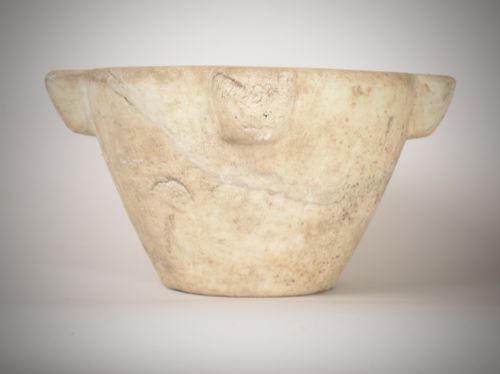
Forms extend beyond standard kitchen basins to include specialised vessels such as tea caddies equipped with original glass mixing bowls and apothecary mortars. Each piece demonstrates the specific regional traditions of English country workshops and continental production centres.
Materials and construction methods
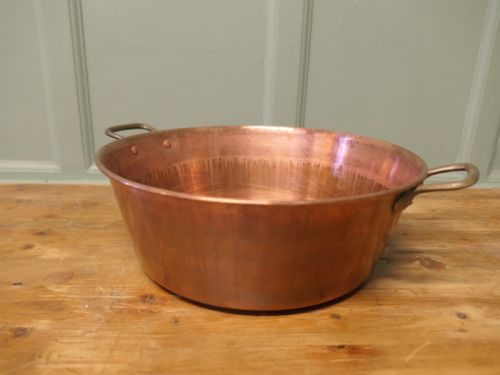
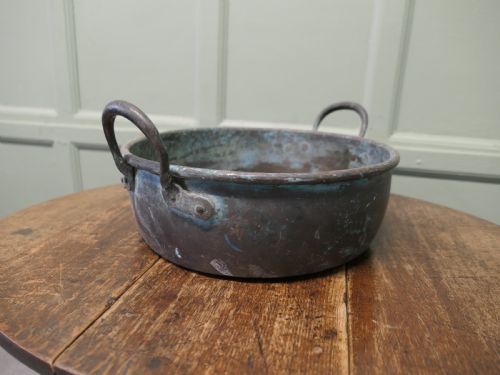
Copper and brass vessels rely on hand-beating and hammering techniques, creating rigid structures designed to withstand heavy kitchen use. Artisans worked sheet metal into deep pans with reinforced rims, often utilising dovetail joints or heavy riveting to secure handles.
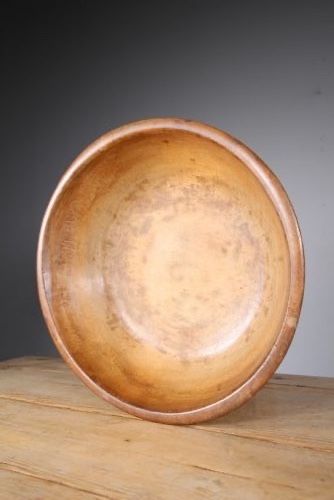
Wooden vessels such as dairy bowls begin as solid blocks of sycamore or beech, shaped on large lathes or carved by hand. This turning process respects the natural grain, resulting in deep, stable basins capable of enduring moisture and regular scraping.
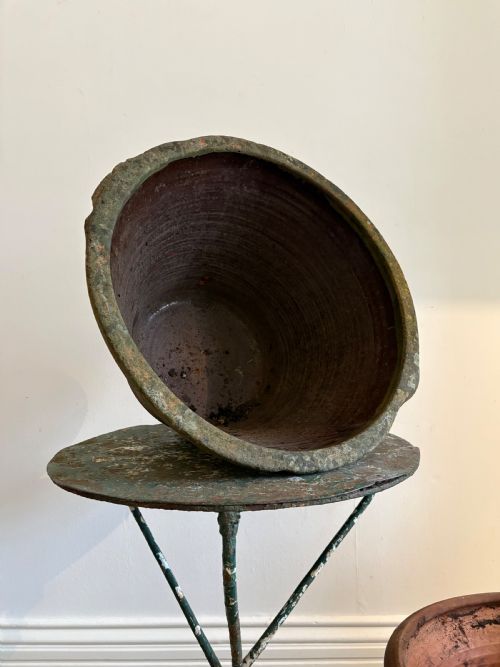
Earthenware and terracotta pieces combine local clay bodies with interior glazes, such as slip glazes or green lead glazes, fired in traditional kilns. Creamware and ceramic examples receive controlled glazes to seal the porous clay against liquids and food acids.
Periods represented across the items stretch from the Georgian era through Victorian and Edwardian times into the mid-twentieth century.
Assessing material integrity and preservation
The standard of a surviving piece rests heavily on the preservation of its original surface and structural stability. Wooden dairy bowls display greater merit when retaining their warm, uncompromised patina without excessive timber shrinkage or deep splits.
Metal vessels demonstrate superior craftsmanship through the thickness of the gauge and the integrity of historical repairs. Heavy copper preserving pans and jam pans hold distinction when bearing honest signs of hearth use alongside firm, original handles.
Ceramic and glass examples achieve higher regard when glazes remain stable and cut-glass bowls preserve crisp facet-cutting without heavy rim bruising. Completeness also dictates standing, particularly in tea caddy sets that retain their original glass mixing bowls and internal components.
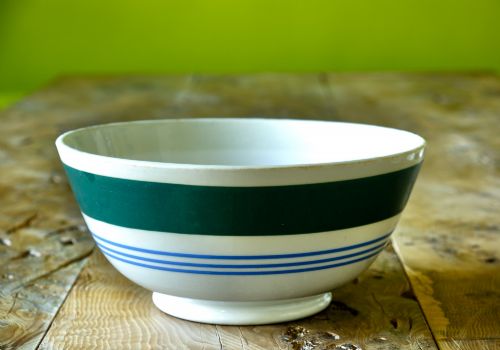
T G Green Pottery
The Antique Mixing Bowl Glossary
- Dairy bowl
- A wide, shallow wooden or terracotta basin utilised historically for setting milk and skimming cream. These vessels provide generous proportions and stable flat bases.
- Creamware
- A refined fine earthenware developed in the eighteenth century with a pale yellowish or cream-coloured glaze. It combines domestic utility with smooth, uniform surfaces.
- Treen
- Small handmade wooden objects and household utensils produced by turners. This category includes turned bowls and utilitarian kitchen items made from native timbers.
- Tian
- A large earthenware mixing or storage bowl originating from the South of France. These vessels typically feature distinctive glazed interiors and robust structural walls.
- Sycamore
- A dense, pale hardwood frequently selected by turners for dairy utensils and kitchen bowls. The timber resists splitting and imparts no taste to food stuffs.
Antique Mixing Bowl: Frequently Asked Questions
What were antique mixing bowls used for?
These vessels served fundamental roles in historic domestic spaces, ranging from beating batters and mixing ingredients to setting milk in dairies. Heavy copper pans managed preserves and jams over open hearths.
Other specialised forms, such as glass bowls housed within mahogany tea caddies, were designed for blending loose teas before brewing.
How do I care for wooden dairy bowls?
Wood requires gentle maintenance to prevent the timber from drying out or splitting in modern centrally heated environments. Periodic treatment with food-safe mineral oil helps preserve the historic patina.
Submerging wooden bowls in water or placing them in dishwashers should be avoided entirely.
How can I tell a Georgian bowl from a Victorian one?
Dating relies on observing material characteristics, potting thickness, and tool marks specific to manufacturing eras. Georgian examples often feature heavier cut glass or distinct cabinet woods like satinwood and mahogany.
Victorian and Edwardian kitchenwares typically lean towards heavier industrial terracotta, banded earthenwares, and hand-beaten copper.
Are copper mixing bowls safe to use today?
Many antique copper pans retain their original unlined metal interior, which requires professional tinning before modern culinary contact with acidic foods. Pure copper reacts directly with certain ingredients if left unprotected.
Many collectors prefer to display historic copper purely for its decorative warmth and craftsmanship.