


Antique Mirrored Shelf Unit
An antique mirrored shelf unit combines display and reflection, bringing warmth and character to any room.
Antique Mirrored Shelf Unit
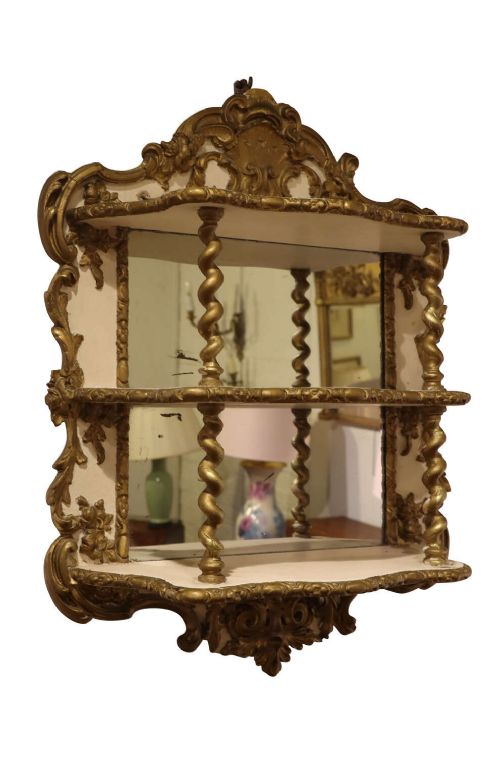
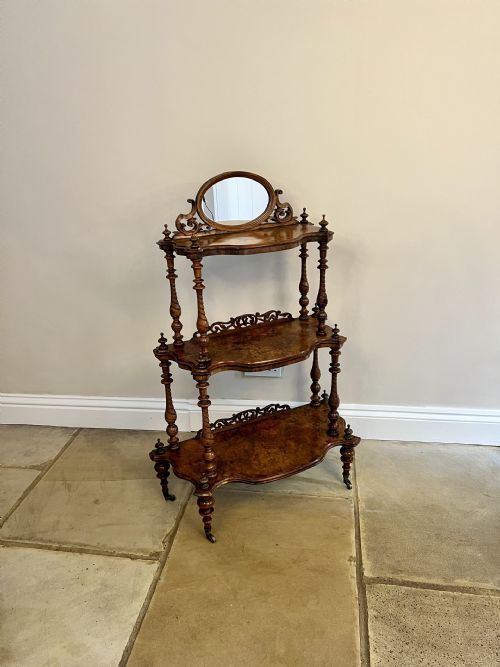
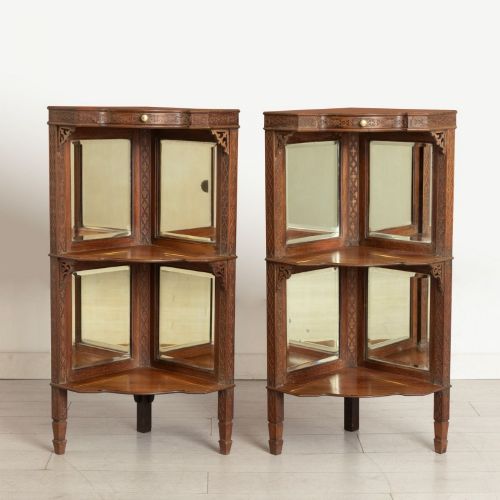
An antique mirrored shelf unit serves as both a practical storage piece and a decorative wall or floor fixture. These items range from Victorian burr walnut whatnots with integrated mirrors to mahogany corner display cabinets.
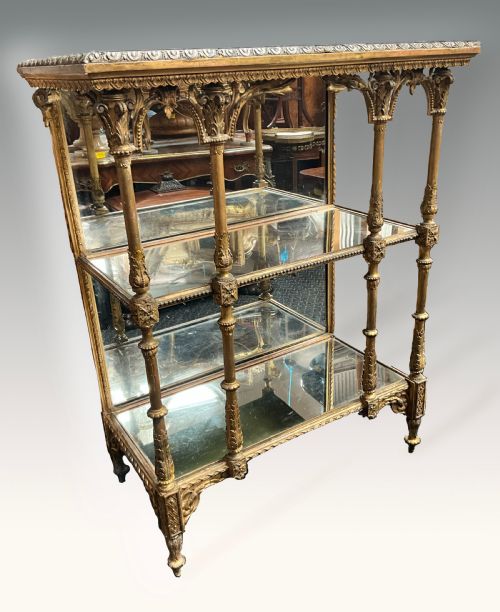
Buyers will encounter various configurations designed for different rooms, from hallway cloakroom mirrors with shelves to elaborate gilt wood and gesso display shelves. Materials span rich timbers like rosewood and mahogany, often paired with brass inlay or ormolu mounts.
How they were made
Cabinet makers utilised dense hardwoods such as mahogany, burr walnut, and rosewood, often selecting timber with pronounced grain patterns for visual impact. These woods were shaped into shelves, cabinets, and structural supports capable of bearing weight.
Mirrored glass was integrated into the back panels or frames, reflecting light and objects placed upon the tiers. Decorative elements such as brass inlay, marquetry, ormolu mounts, and carved gesso added surface texture and ornamentation.
Construction techniques varied by period and form, ranging from floor-standing multi-tier étagères and whatnots to wall-hanging shelves secured with wooden brackets or architectural mouldings.
Some Victorian whatnots feature hollow barley twist columns, offering a surprisingly tactile architectural detail.
What varies in quality
The selection of timber dictates much of the visual appeal, with figured burr walnut and rosewood representing the upper end of cabinet work. Finer examples display meticulous marquetry inlay, detailed ormolu mounts, or intricate barley twist turnings.
Structural integrity depends on the joinery used in the shelves and mirror frames, particularly in multi-tiered whatnots and heavy display cabinets. The clarity and original condition of the mirror glass also influence the overall standard of the piece.
Edwards & Roberts
The Antique Mirrored Shelf Unit Glossary
- Whatnot
- A multi-tiered piece of furniture designed for displaying ornaments, books, or small objects. These often feature slender vertical supports and sometimes incorporate a mirror or drawer.
- Étagère
- A piece of furniture consisting of a set of open shelves for displaying small articles. They are closely related to whatnots and frequently use mirrored backs.
- Ormolu
- Gilded bronze used for decorative mounts and ornamentation on furniture. It gained popularity in high-status pieces during the nineteenth century.
- Marquetry
- Decorative veneer applied to furniture in patterns using different woods, metals, or shell. It creates detailed pictorial or geometric surface designs.
- Gesso
- A plaster-based material applied to wood before gilding or painting. It provides a smooth surface for carved or moulded details on frames.
Antique Mirrored Shelf Unit: Frequently Asked Questions
Where should I place a mirrored shelf unit?
These units suit spaces where light reflection and surface display are beneficial, such as living rooms, hallways, or dining areas.
Floor-standing whatnots and bookcases anchor a room, while wall-hanging shelves utilise vertical space effectively without occupying floor area.
How do I care for antique wood and glass?
Regular dusting with a soft, dry cloth protects timber surfaces from moisture and abrasive particles. Avoid placing pieces in direct sunlight to prevent fading of rosewood and walnut veneers.
Cleaning the mirrored glass requires a mild glass cleaner applied to a cloth rather than sprayed directly onto the surface, protecting the surrounding wood and backing.
What is the difference between a whatnot and a bookcase?
A whatnot is primarily designed for display, featuring multiple open tiers supported by slender columns, often incorporating mirrors. They are lighter in construction and meant for decorative objects.
An open bookcase focuses on storage for books, featuring sturdier shelves and occasionally a mirrored back panel to brighten the contents.
How can I tell the period of a mirrored shelf?
Stylistic indicators help date pieces, such as the heavy proportions and burr walnut of Victorian examples versus the cleaner lines of Regency rosewood. Construction marks, types of screws, and the condition of the mirror glass also provide clues to age.