






Antique Militaria Collectable
An antique militaria collectable carries the physical weight of past campaigns, offering tangible connections to centuries of martial history.
Antique Militaria Collectable
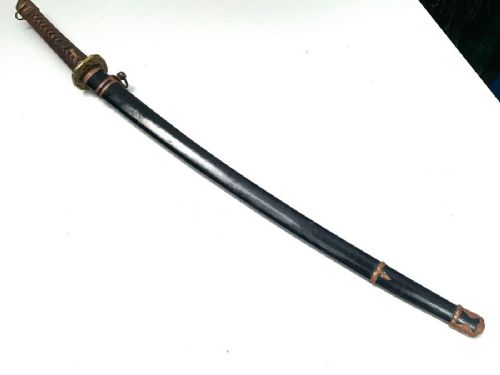
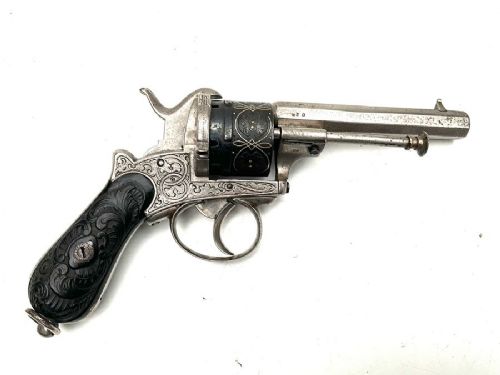
When you search for an antique militaria collectable, you encounter a diverse range of arms, accoutrements and personal gear spanning from the eighteenth century through to the mid-twentieth century. These objects include flintlock and percussion pistols, edged weapons, powder flasks and helmets originating from British, French, German, Japanese and American contexts. Buyers typically seek pieces that document specific technological shifts in military hardware and personal service history.
The selection on this page centres heavily upon nineteenth-century firearms and eighteenth-century flintlocks, alongside military headwear from the first and second world wars. You will find boxlock and pocket pistols, military officers' swords, and field cannons constructed with period metals and woods. Each form reflects the standard regulation patterns or private purchases of its respective era.
Materials and Construction
Makers utilised forged steel and iron for barrels, lockplates and blades, pairing them with brass furniture and mounts for structural and decorative resilience. Stocks and grips relied upon dense hardwoods such as walnut, shaped to fit the hand or carved for specific military applications.
Accessory items incorporate organic materials like leather, horn and cord, while powder flasks combine metal dispensers with measured spouts. Joinery and assembly depended upon traditional hand-fitting techniques, visible in the precise alignment of brass fittings on steel frames and wood stocks.
Listings feature items spanning the eighteenth, nineteenth, and twentieth centuries, incorporating steel, brass, walnut, iron, wood, leather, horn, and cord.
Assessment of Quality
Quality in these pieces rests upon the crispness of maker signatures, proof marks and structural integrity across the metalwork and woodwork. Retaining matching serial numbers on firearms or original brass fittings on helmets distinguishes higher-grade examples from heavily modified items.
The refinement of hand-carving on wooden grips or trench art pipes, alongside the survival of functional mechanical parts like spring-loaded flintlocks and adjustable charges on powder flasks, elevates an object's standing within its period.
Henry Nock·John Rimes·Barber of Newark·Dutton London
The Antique Militaria Collectable Glossary
- Flintlock
- An ignition mechanism for firearms that uses a piece of flint held in a cock to strike a steel frizzen, creating sparks to ignite the priming powder.
- Percussion Cap
- A small metal cup containing priming compound placed on a nipple, struck by the hammer to fire a weapon after the flintlock era.
- Pickelhaube
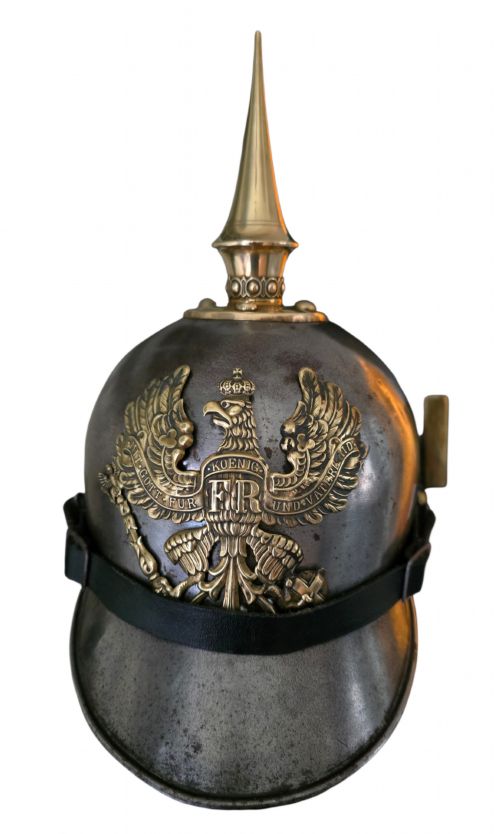
- A spiked helmet worn by nineteenth and early twentieth-century German military and police forces, typically fashioned from steel with brass fittings.
- Blunderbuss
- A muzzle-loading firearm with a flared barrel designed to scatter lead shot at close range.
- Powder Flask
- A container made of metal, horn or leather used to safely carry and dispense gunpowder for muzzle-loading arms.
Antique Militaria Collectable: Frequently Asked Questions
How do I identify a flintlock pistol?
Examine the lockplate on the side of the weapon for the external hammer, flint-holding jaws, and priming pan characteristic of eighteenth-century ignition systems.
Compare the barrel style and wood stock contours against known military or civilian regulation patterns from the Georgian era.
What materials are powder flasks made from?
Powder flasks utilise materials such as brass, copper, leather, and horn, often fitted with adjustable charges or spring mechanisms.
These substances provided durable, spark-resistant containment for gunpowder in the field.
Are helmets marked by period?
Helmets display specific national styles and construction methods tied to their manufacturing decade, such as spiked steel designs from the early twentieth century or painted steel forms from later global conflicts.
Interior leather liners and brass insignia further help anchor the piece to a distinct military campaign.
What is a percussion pistol?
A percussion pistol employs a hammer that strikes a percussion cap on a nipple to ignite the powder charge inside the barrel.
This system replaced the earlier flintlock mechanism during the nineteenth century.