



Desk Cannon Model
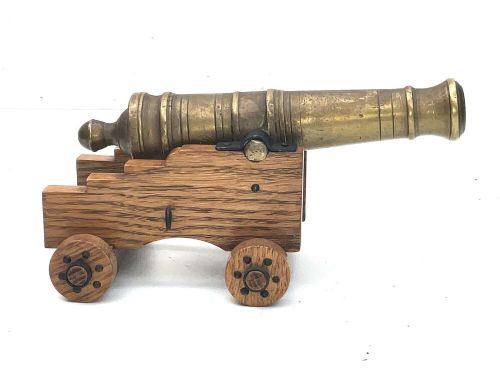
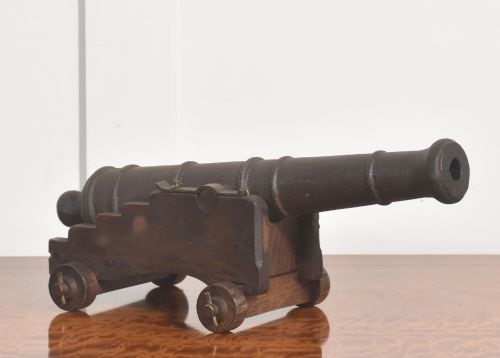
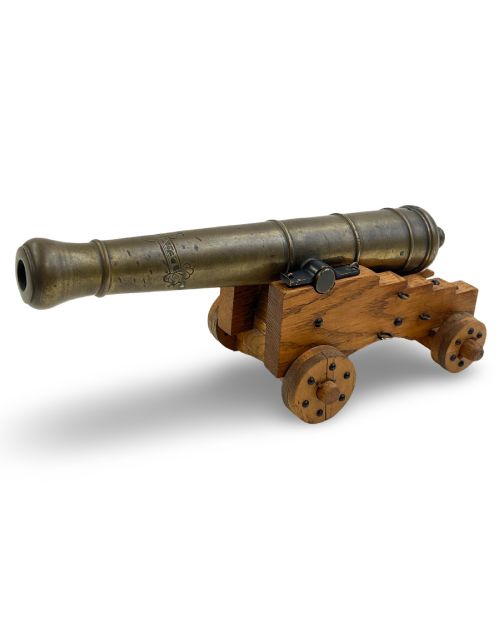
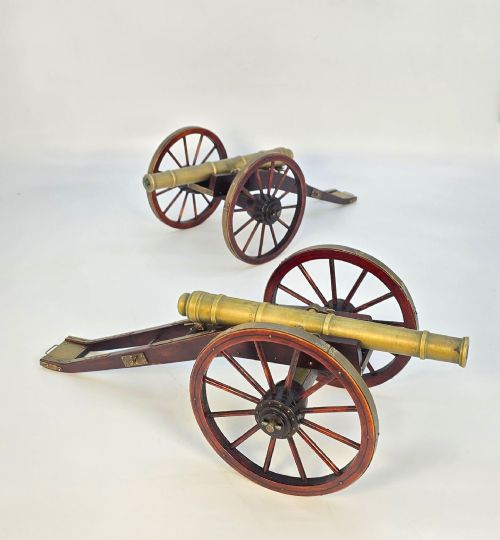
These desk cannon model pieces are heavy maritime and military ornaments cast in bronze, brass, iron, and wood, built for display and tactical novelty.
Desk Cannon Model
A desk cannon model is a decorative object or signal cannon designed for tabletop display, originating from periods spanning the eighteenth, nineteenth, and early twentieth centuries. These models take the form of scale models, field guns, and maritime signal cannons mounted on wooden carriages made from oak, mahogany, or hardwood.
The versions most commonly met on this page include nineteenth-century brass and bronze signal cannons, alongside Victorian and French maritime examples. Makers produced pairs as well as single pieces, utilising cast iron, polished steel, and painted finishes to replicate historical artillery pieces.
Forms range from small desktop models inscribed with names like Le Tonnant to larger field gun replicas and fortified colubrina designs. They serve as decorative objects that reflect military and maritime history through miniature engineering.
Distinctions in quality
Quality in these models rests on the crispness of the metal casting and the fidelity of the proportions relative to historical artillery. Finely rendered examples display sharp detail in the barrel inscriptions and clean joints in the wooden carriages.
Materials also separate the range, with heavy solid bronze and brass barrels mounted on dense hardwood or cast iron undercarriages sitting at the upper end compared to simpler iron or painted models. The presence of matching pairs adds distinction to surviving examples.
Desk Cannon Model Retail Price Guide 2026
Typical asking prices for desk cannon model among the pieces listed under this phrase on Sellingantiques today, from the lower quarter to the upper quarter. They describe what is for sale here now, not the wider market.
Materials recorded across the archive include brass, bronze, cast iron, oak, mahogany, iron, and polished steel.
The Desk Cannon Model Glossary
- Signal cannon
- A small cannon utilised to fire blank charges for signaling or saluting rather than combat. These items often appear as heavy desk ornaments.
- Gribeauval system
- A standardised system of artillery design introduced in France during the eighteenth century. Models replicating this style feature specific military configurations.
- Colubrina da fortiezza
- A type of historic fortress cannon reproduced in miniature scale models. These pieces reflect specific fortification artillery designs.
- Undercarriage
- The supporting wooden or metal mount upon which the cannon barrel rests. These often feature wheels or stepped block designs.
- Muzzle loaded
- A firearm or cannon loaded through the front muzzle opening rather than the breech. Most models on this page replicate this historical loading mechanism.
Desk Cannon Model: Frequently Asked Questions
What is a desk cannon model used for?
These models served historically as functional signal cannons or ornamental desk pieces for maritime and military enthusiasts.
Today, they are collected as decorative antiques that highlight nineteenth-century and earlier artillery design.
How do I date a brass desk cannon?
Dating relies on examining the materials, carriage construction style, and any inscribed details or period characteristics.
Nineteenth-century examples frequently feature heavy cast brass or bronze barrels mounted on oak or mahogany undercarriages.
Are these model cannons functional?
Some pieces are built as signal cannons designed to discharge blank loads, though many survive purely as decorative scale models.
Testing functionality requires careful inspection of the touchhole and barrel integrity by a specialist.
What metals were used for these models?
Makers cast the barrels using brass, bronze, cast iron, and polished steel for a durable and weighty finish.
Carriages frequently combine these metals with hardwoods such as oak and mahogany.