





Antique Sporting Accessories
Antique sporting accessories bring the character of the field and the pavilion directly into the room through functional objects shaped by past games.
Antique Sporting Accessories
When you search for antique sporting accessories, you encounter a varied assortment of items designed for past pastimes, field sports, and games rooms. These pieces originate from periods spanning the nineteenth century through to the mid-twentieth century, capturing the material culture of cricket, shooting, hunting, and equestrian pursuits.
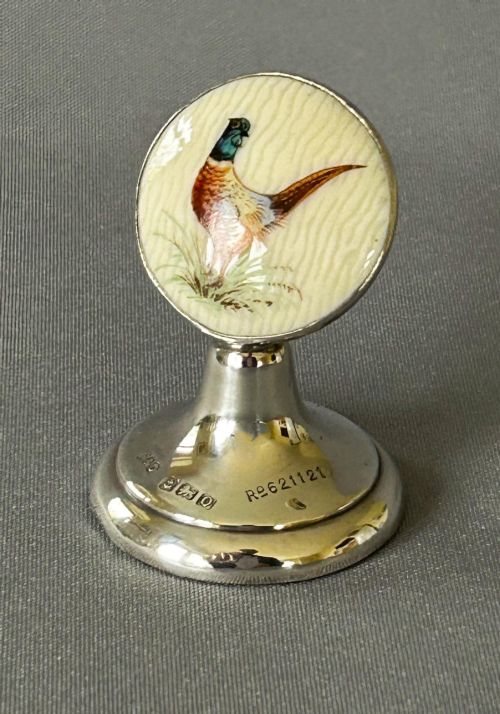
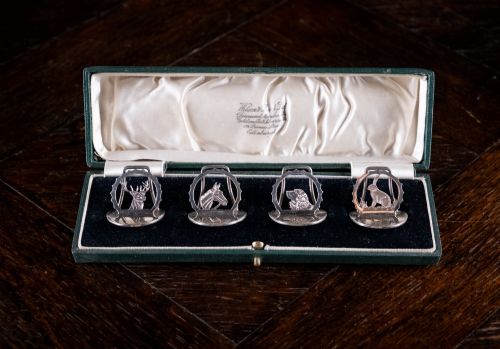
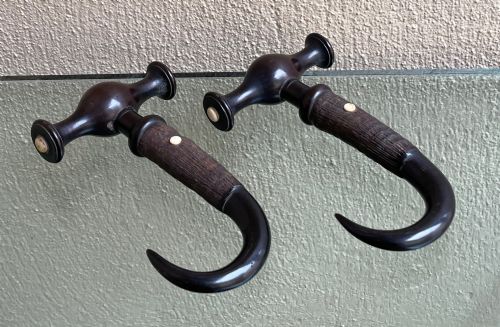
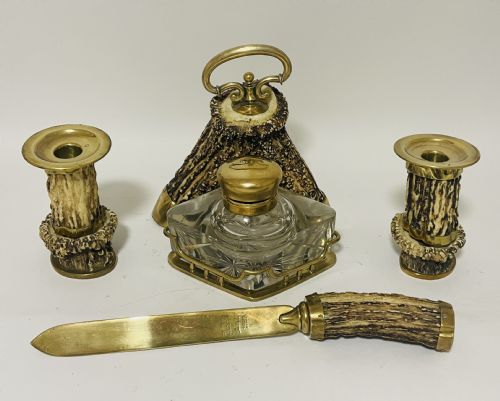
The selection here encompasses everything from desk accessories and place card holders to inkwells and bookends. You are most likely to meet practical items reinterpreted through sporting motifs, such as brass-mounted antler desk sets, boot pulls, and novelty pieces shaped like cricket bats or rugby balls.
Originating across the Victorian, Edwardian, and George VI eras, these items reflect the social history of leisure and sport. Makers utilised familiar materials from the clubhouse and the estate to produce objects that served both utilitarian and decorative purposes.
Materials and construction
The pieces rely on a robust combination of traditional materials drawn from nature and the workshop, including brass, sterling silver, copper, and plated metals. Natural elements such as horn, antler, bone, and various woods like mahogany, oak, and fruitwood appear frequently across the items.
Craftsmen employed techniques appropriate to each medium, combining metalcasting and silversmithing with woodwork, leatherworking, and stoneware shaping. Novelty items often required careful carving and modeling to replicate the exact forms of cricket bats, footballs, and rugby balls in miniature or full scale.
Antique Sporting Accessories Retail Price Guide 2026
Typical asking prices for sporting accessories among the pieces listed under this phrase on Sellingantiques today, from the lower quarter to the upper quarter. They describe what is for sale here now, not the wider market.
A copper powder flask from 1838 bears the name of the Honourable E. Coke, preserving the exact firepower of a Victorian gentleman's shoot.
Assessing quality and execution
Quality in these items rests upon the fidelity of the sporting representation and the choice of materials. Finer examples display crisp casting in silver or brass, precise carving in bone and hardwood, and authentic detailing that captures the specific mechanics of the sport.
Provenance and maker attribution elevate certain pieces, particularly when items bear hallmarks or signatures from established firms and retailers. The integration of functional utility with sculptural novelty distinguishes the more ambitious pieces from standard workshop output.
Thornton Smith Co.·A. Barrett Piccadilly London·Orme & Sons Manchester
The Antique Sporting Accessories Glossary
- Victorian
- Relating to the reign of Queen Victoria, spanning from 1837 to 1901. Pieces from this era often feature ornate brass mounts and natural materials.
- Edwardian
- Pertaining to the period of Edward VII's reign from 1901 to 1910. Design during this time favoured both refined elegance and sporting practicality.
- George VI
- Relating to the period of the 1930s and 1940s. Items from this time include hallmarked sterling silver table pieces and novelty items.
- Novelty
- An object designed in a whimsical or amusing form that conceals its primary function, such as an inkwell shaped like a rugby ball.
- Cricketiana
- Collectable items and memorabilia associated specifically with the sport of cricket. This includes items modelled as bats, balls, and wickets.
Antique Sporting Accessories: Frequently Asked Questions
What are antique sporting accessories?
These are historical objects and decorative items linked to pastimes, field sports, and games rooms, produced during the nineteenth and early twentieth centuries.
They encompass practical desk gear, inkwells, bookends, and place card holders shaped around motifs from cricket, shooting, tennis, and rugby.
How were these accessories used originally?
Many served functional roles in studies, offices, and country houses, acting as inkwells, letter openers, desk sets, and scoreboards.
Others held domestic purposes as picture frames, menu holders, or decorative lidded boxes intended for display in games rooms.
What materials are commonly found?
The pieces utilise a mixture of metals and natural substances sourced from the field and the traditional workshop.
Common materials include sterling silver, brass, copper, leather, stoneware, and organic elements like antler, horn, bone, mahogany, and fruitwood.
How do I identify a Victorian piece?
Victorian items often display the heavier, more robust forms and ornamentation characteristic of the nineteenth century.
Look for traditional construction methods, natural horn and antler components, and early dates or style markers associated with the reign.