


Antique Metalware Measure
These antique metalware measure pieces are practical tavern and household vessels collected for their heavy weight and tactile surfaces.
Antique Metalware Measure
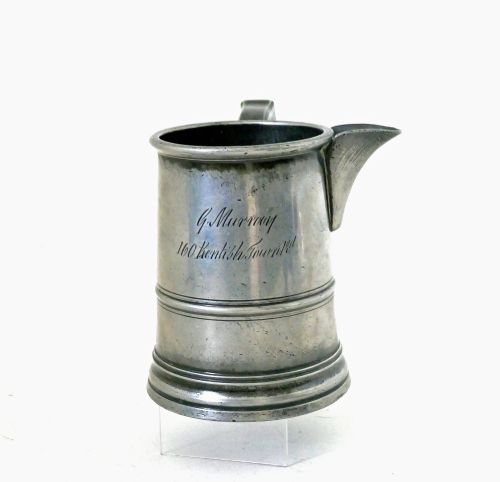
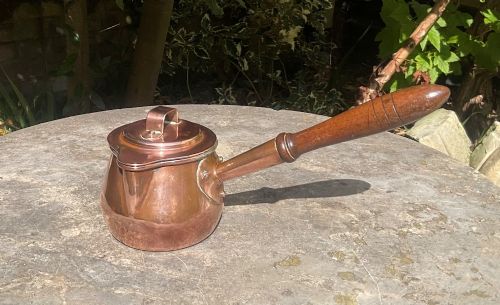
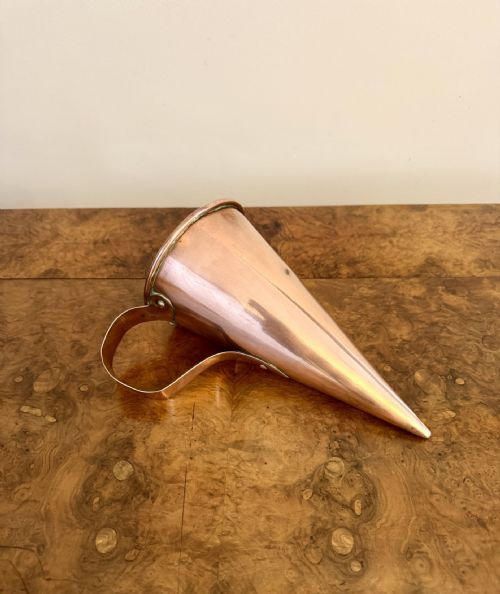
An antique metalware measure is a utilitarian vessel designed for liquids, spirits or grain, originating from domestic and commercial settings like taverns and kitchens. Buyers searching this phrase typically encounter sturdy copper and pewter jugs, flagons and spirit measures spanning the eighteenth, nineteenth and early twentieth centuries.
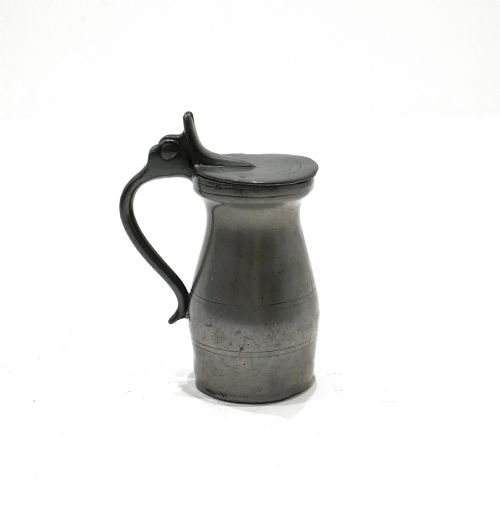
The selection ranges from small half-gill lidded vessels and noggin capacities to large multi-pint jugs, bell metal sets and graduated sets of three or more. Origins vary from English and Scottish workshops to Jersey and Anglo-Indian production, reflecting diverse regional capacities and domestic requirements.
Form follows function closely in these objects, with flat lids, thumbpieces, spouts and engraved tavern details serving daily pouring and measuring tasks. Most surviving examples display the knocks, surface marks and mellow patinas earned through generations of actual use.
What varies in quality
Quality rests in the integrity of the metalwork, the crispness of maker or verification stamps and the retention of original surface texture without excessive modern intervention. Heavy gauge metal retains its structural strength and weight, whereas thin or over-polished examples lose their historical character.
Sets that remain complete and graduate correctly together command higher regard than assembled groups. The subtlety of hand-finished details, such as well-fitted lids and clear engravings, separates standard utilitarian wares from superior examples.
Listings span the eighteenth, nineteenth and early twentieth centuries, featuring copper, pewter, brass, bell metal and toleware.
Joseph Sankey·Loftus of Oxford Street London
The Antique Metalware Measure Glossary
- Pewter
- A malleable alloy primarily of tin mixed with copper and lead. It was widely used for tavern measures and jugs due to its resistance to corrosion.
- Bell metal
- A hard alloy of copper and tin traditionally used for casting bells. It provides exceptional resonance and durability for graduated measures.
- Tappit hen
- A traditional Scottish pewter measuring jug featuring a distinctive lid with a knob or tap on top. These heavy vessels held specific regional liquid quantities.
- Noggin
- A small historical measure of capacity, often holding a quarter of a pint. Noggin measures appear in both pewter and copper forms.
- Imperial
- Relating to the official system of weights and measures established in the British Empire. Imperial stamps help date and authenticate nineteenth-century vessels.
Antique Metalware Measure: Frequently Asked Questions
What were antique metalware measures used for?
These vessels served to dispense precise quantities of ale, spirits, wine or milk in domestic kitchens and commercial taverns.
They functioned as working tools rather than decorative items, which explains the robust handles, spouts and capacity stamps found across them.
How do I identify a pewter measure?
Pewter measures have a dull grey metallic lustre that darkens gracefully over time. They often feature verification stamps, capacity marks or maker initials punched directly into the metal.
Lidded versions typically include a thumbpiece to lift the cover easily with one hand while pouring.
Are these copper jugs safe to use?
Most antique copper measures are intended for display and collection rather than daily food preparation or consumption. Historic solders and interior surfaces may contain lead or lack modern food-safe linings.
Gentle cleaning with a soft cloth preserves the aged patina without damaging the metal.
How can I tell the age of a measure?
Age is determined by a combination of material composition, manufacturing techniques, maker marks and capacity standards like pre-imperial or imperial markings. Eighteenth-century pieces often display hand-beated construction and simpler touchmarks, while Victorian examples carry standard verification ciphers such as VR.