

Antique Metal Taper Holders
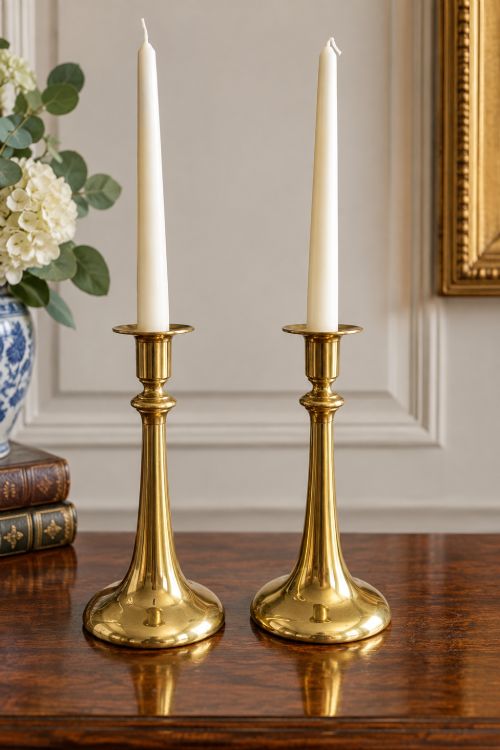
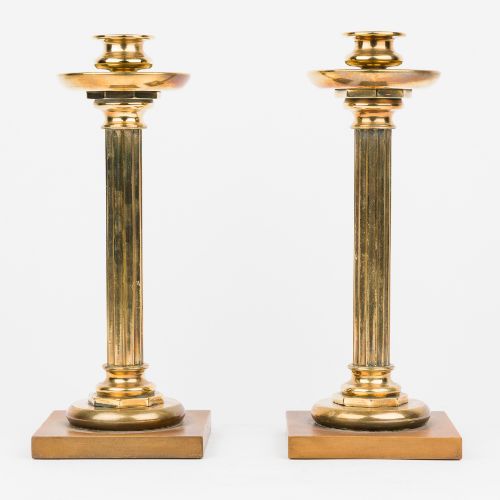
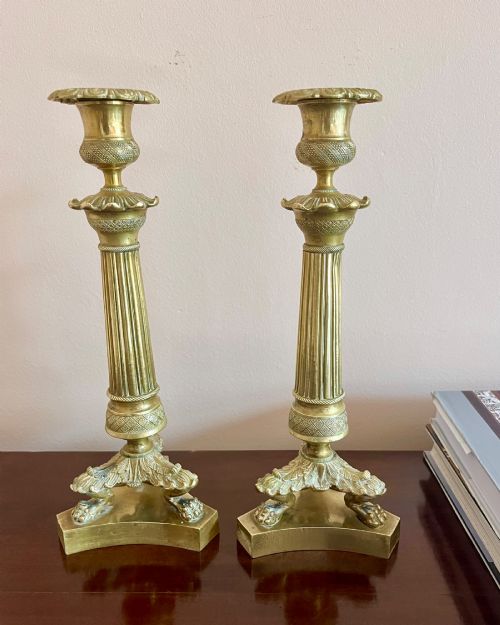
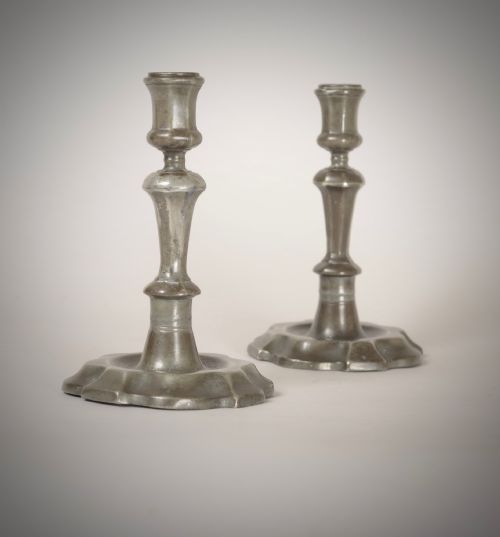
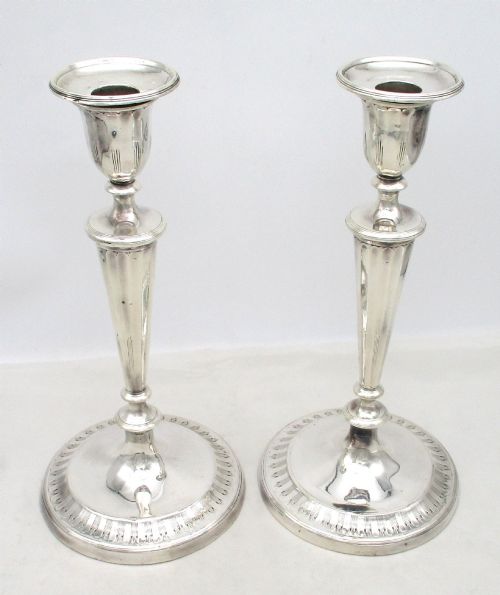
Antique metal taper holders are small domestic lighting pieces fashioned in brass, pewter, bronze and silver plate, prized for their proportion and detail.
Antique Metal Taper Holders
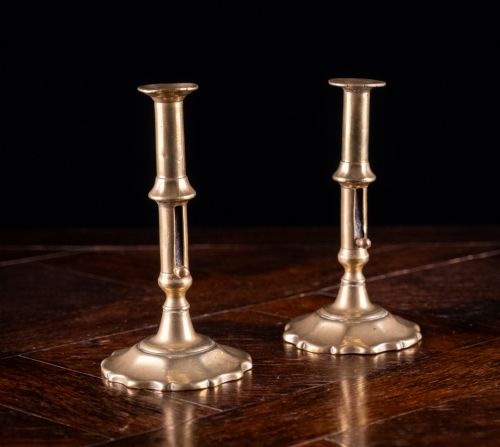
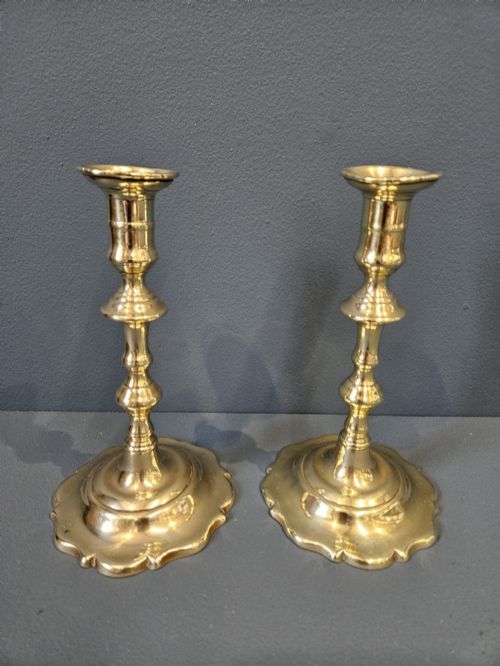
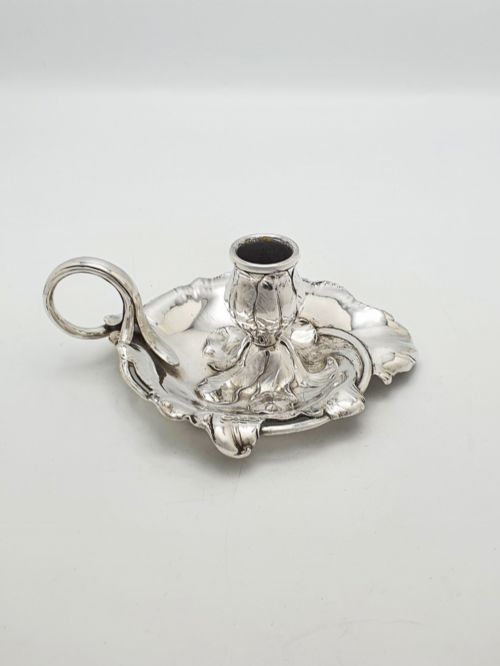
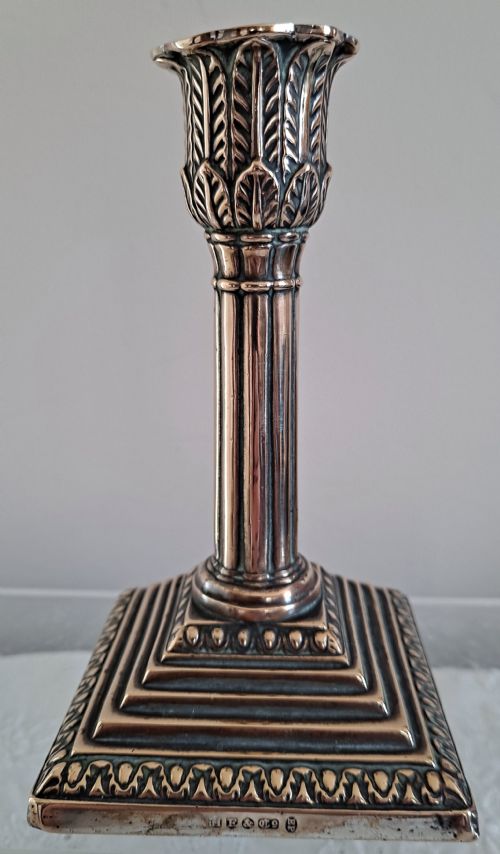
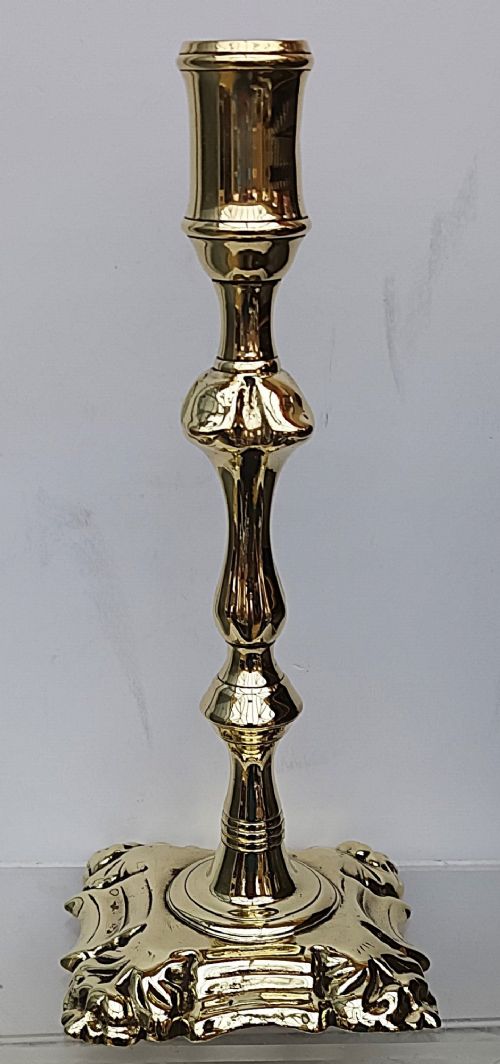
When searching for antique metal taper holders, buyers encounter small candlesticks and chambersticks designed for short wax candles or tapers rather than large floor or table lighting. These domestic accessories appear in forms spanning the seventeenth through the early twentieth centuries, including Georgian petal bases, Victorian chambersticks, and later modernist designs.
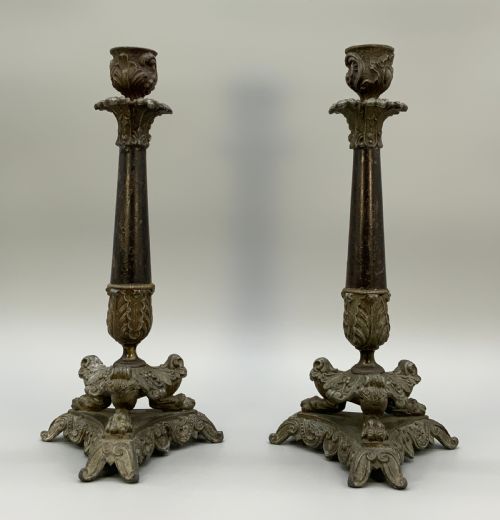
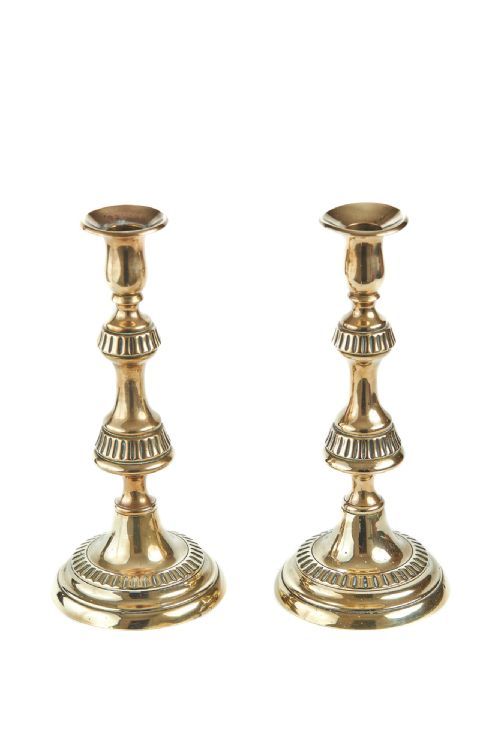
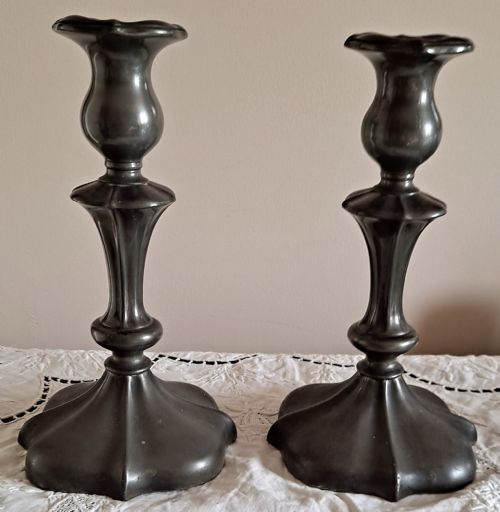
The pieces on this page are predominantly constructed in brass and pewter, though silver plate, bronze, copper, gun metal and tortoiseshell also feature. Most examples survive as pairs, reflecting their original use on writing desks, mantelpieces and dressing tables.
Origins range across English, French and continental European workshops, moving from early seamed brass and heavy cast forms through to the flowing organic lines of Art Nouveau and the geometric profiles of Art Deco.
Materials and construction methods
Makers utilised casting and seaming techniques to form the columns, bases and nozzles of these lighting pieces. Brass and bronze examples frequently employ cast components or visible seams where metal was joined during fabrication.
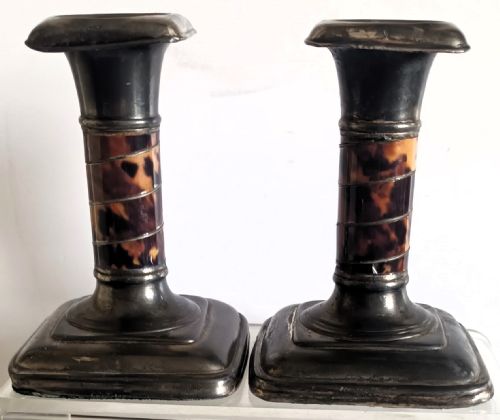
Pewter and silver plate offer different tactile qualities, with pewter often paired with materials like tortoiseshell in Victorian decorative items. Copper and gun metal appear in specific regional and period styles, showing the variety of metalworking traditions available to historical founders.
Listings feature brass, silver plate, pewter, bronze, copper and tortoiseshell across periods from the seventeenth century to the 1930s.
Distinctions in quality and finish
The distinction between standard domestic wares and superior examples rests in the crispness of casting detail and the heft of the metal. Higher quality pieces display well-defined mouldings on petal bases, clean turning marks on columns, and robust construction without excessive solder or repair.
Proportion and decorative harmony also separate the better examples from routine production. Items incorporating integrated drip pans, leaf-form details, or sophisticated surface patination demonstrate greater skill from the maker.
WMF
The Antique Metal Taper Holders Glossary
- Chamberstick
- A low candlestick fitted with a saucer base and a loop handle for carrying about a house. These items were designed for illuminating bedchambers and passages.
- Ejector
- A mechanism inside the candlestick shaft that pushes out the remaining candle stump. This clever addition aids cleaning and practical use.
- Petal base
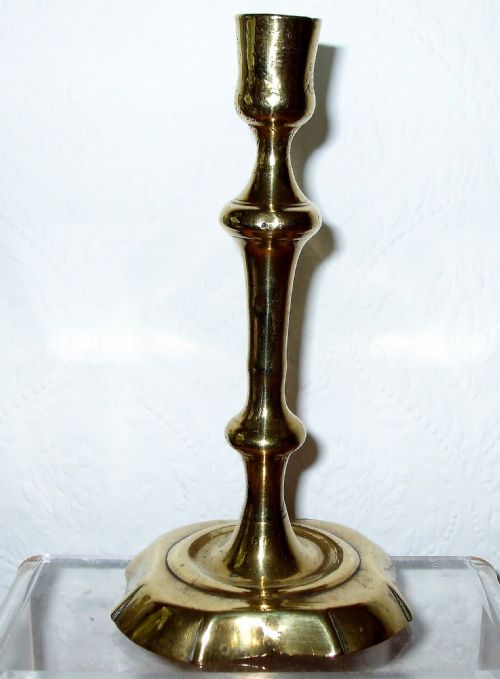
- A candlestick foot shaped like overlapping flower petals, commonly found on mid-eighteenth-century brass examples. This decorative outline provides a stable footprint.
- Seamed brass
- Metal rolled into a cylinder and joined along a vertical seam rather than cast as a single solid tube. This technique indicates older manufacturing methods before advanced extrusion.
- Patinated bronze
- Metal surfaces altered by age, oxidation or intentional chemical treatment to produce a darkened, rich finish. This colouration adds depth to the sculptural details.
Antique Metal Taper Holders: Frequently Asked Questions
What is a taper holder?
A taper holder is a compact candlestick designed to hold thin wax tapers rather than standard household candles. They were used for tasks requiring small flames, such as melting sealing wax on letters.
These pieces typically feature low bases and narrow nozzles to suit slender tapers safely.
How do I date an antique candlestick?
Dating relies on examining the manufacturing technique, metal composition and stylistic details. Early pieces often show seamed construction and simple turnings, while Victorian and Edwardian examples incorporate ornate cast ornamentation or specific revival styles.
Comparing the base profile and socket shape against known period designs helps establish the era of manufacture.
Were these items used for dining?
Most smaller metal holders were intended for desks, dressing tables or bedchambers rather than main dining tables. Their compact size made them portable and suitable for personal illumination.
Desk candlesticks often included matching snuffers or matchbox holders for convenience.
How should I clean antique brass?
Cleaning should be minimal to preserve the historical surface and natural oxidation accumulated over centuries. Gentle dusting with a soft cloth is usually sufficient for daily maintenance.
Avoid harsh chemical dips or abrasive polishes that strip away the authentic patina and diminish the character of the metal.