



Antique Metal Dog Paperweight
An antique metal dog paperweight brings character to a desk, holding papers down while showing the sculptor's eye for breed and pose.

Antique Metal Dog Paperweight
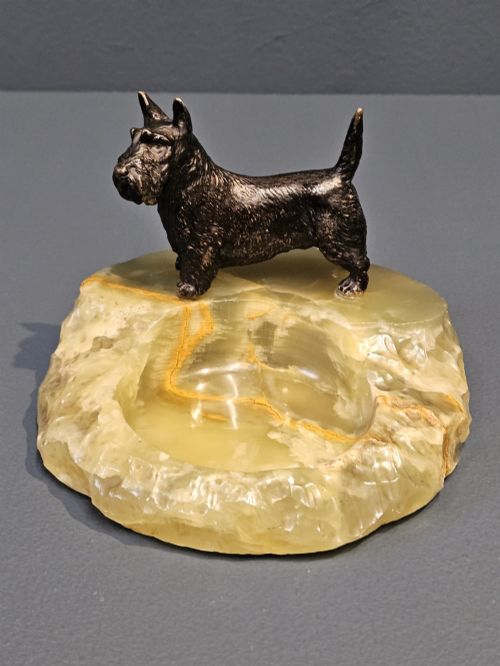
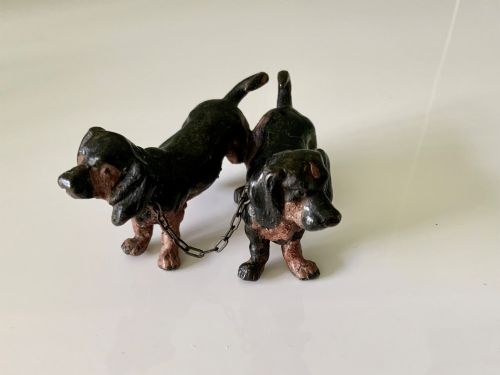
An antique metal dog paperweight takes several forms on this page, including desk inkwells, car mascots, and small animal figurines. These pieces span the nineteenth century through the 1940s, capturing breeds from dachshunds and pugs to terriers and greyhounds.
Makers shaped these items in bronze, spelter, and cast iron, often applying cold-painted enamel to finish the surface. Collectors encounter both French animalier sculpture and Austrian Vienna bronze workshops among the listed items.
How they were made
Foundries cast these figures in bronze or spelter, sometimes mounting the heavier metal models onto marble bases. Artisans utilised the lost-wax casting method for detailed sculptures, capturing fur texture and anatomical proportion.
Colour came through cold-painting, where craftsmen applied enamel paint directly onto the cooled metal without a high-temperature second firing. This technique allowed for intricate markings on breeds like pugs and dachshunds.
Antique Metal Dog Paperweight Retail Price Guide 2026
Typical asking prices for metal dog paperweight among the pieces listed under this phrase on Sellingantiques today, from the lower quarter to the upper quarter. They describe what is for sale here now, not the wider market.
Some mischievous dogs nod their heads or peer out of inkwells, keeping watch over desks and car radiators alike.
What varies in quality
Quality rests in the precision of the casting and the preservation of the cold-painted surface. Finer examples show crisp details in the dog's coat and expression, whereas lesser pieces lose definition in the mould.
Signatures from notable founders or artists elevate certain figures above unsigned workshop productions. The integrity of the original paint finish remains central to the piece's standing.
P.de Soete·LOUIS LEJEUNE·FRANZE BERGMAN
The Antique Metal Dog Paperweight Glossary
- Cold-Painted Enamel
- A decorative technique where enamel paint is applied to cold metal without firing. This finish is delicate and prone to rubbing over time.
- Vienna Bronze
- Small, highly detailed Austrian bronze sculptures produced around 1900. These pieces are famous for their realistic animal subjects and polychrome paintwork.
- Animalier
- A nineteenth-century artistic movement focused on the realistic portrayal of animals. Sculptors in this style studied anatomy closely to capture movement and posture.
- Spelter
- A zinc-based alloy used as a cheaper alternative to bronze. It was frequently cast into decorative figures and painted to resemble more expensive metals.
- Car Mascot
- An ornament mounted on the radiator cap of a motor car, particularly popular during the Art Deco period. Many metal dog figures served this dual purpose on the road.
Antique Metal Dog Paperweight: Frequently Asked Questions
What metals were used for these dogs?
Foundries cast these figures primarily in bronze, spelter, and cast iron, sometimes adding chrome finishes. Each metal offers a distinct weight and surface texture.
Some pieces also incorporate marble for bases or glass components for inkwell inserts.
Were these always paperweights?
Many metal dog figures served multiple purposes beyond holding down paper on a desk. Artisans designed several models as inkwells or as mascot ornaments for car radiators.
Smaller castings functioned purely as cabinet figures or desk ornaments.
How do I spot a Vienna bronze?
Vienna bronzes typically feature meticulous detailing and specific cold-painted enamel colour palettes. Many originate from Austrian workshops active around the year 1900.
Some bear founder marks or stylistic similarities to Bergman productions.