



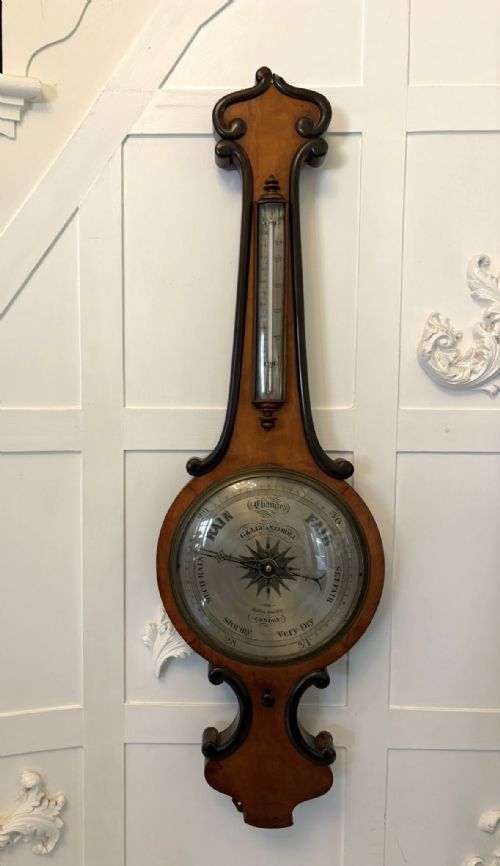


Antique Mercury Scientific Instrument
An antique mercury scientific instrument brings the precision of Georgian and Victorian physics into a room.
Antique Mercury Scientific Instrument
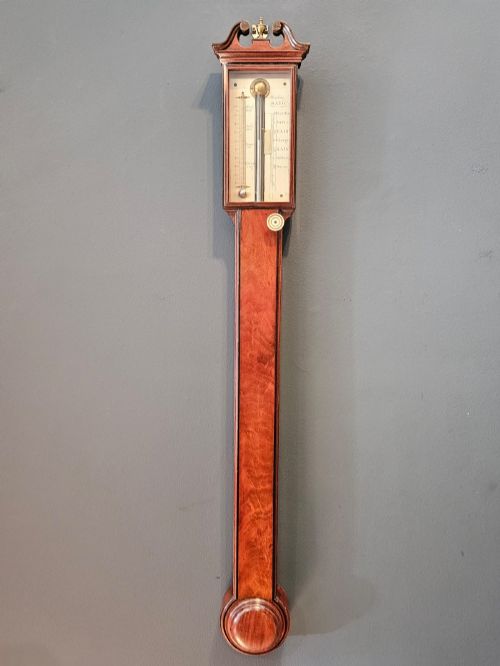
When you search for an antique mercury scientific instrument, you are looking at barometers and thermometers spanning the Georgian, Regency, and Victorian eras. These functional objects recorded atmospheric pressure and temperature for domestic, marine, and agricultural use.
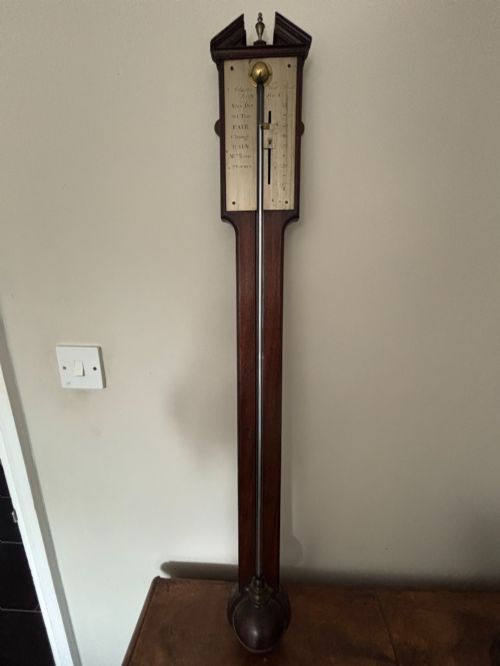
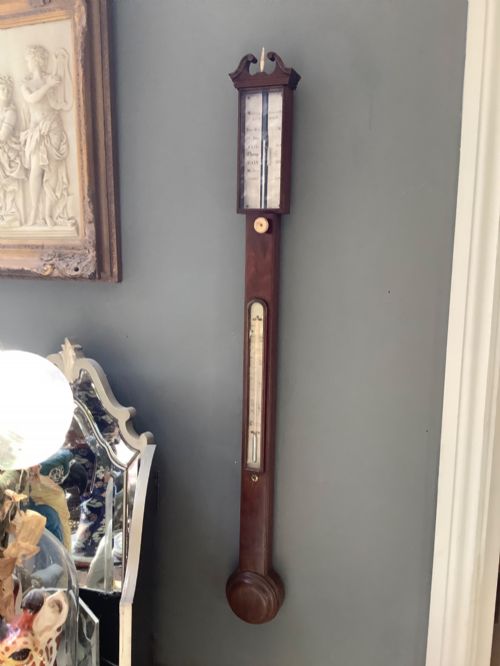
The stick barometer appears most frequently on this page, often housed in mahogany or rosewood cases. Alongside these tall instruments, you will encounter wall thermometers, wheel barometers, and specialised travel pieces.
Originating largely from British workshops and makers working in London and provincial towns, these instruments combine practical science with cabinetmaking traditions.
Materials and construction methods
Makers housed sensitive glass mercury tubes within dense timbers such as mahogany, oak, rosewood, and walnut. Cases often incorporated brass fittings, silvered brass dials, and bone or mother-of-pearl inlay.
Woodworkers turned, carved, and veneered the housings, sometimes adding marquetry or parquetry patterns. Instrument makers engraved scales onto metal plates and calibrated the mercury columns by hand.
Listings feature mahogany, rosewood, oak, and walnut cases housing glass mercury tubes alongside bone, mother-of-pearl, and silvered brass components.
Distinguishing factors in instrument quality
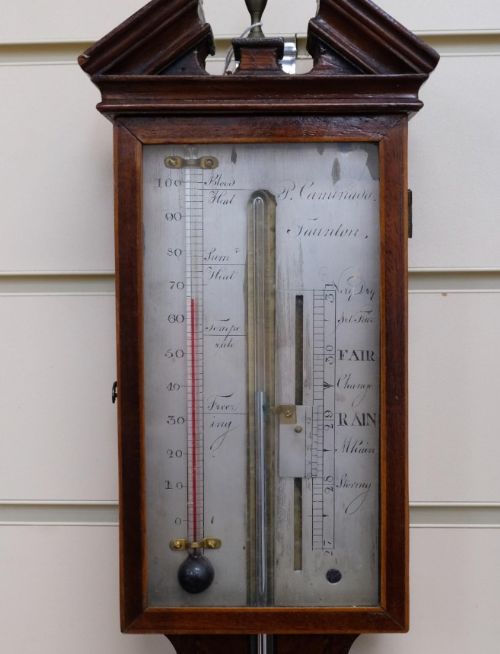
Quality rests in the legibility and execution of the engraved scale and the fidelity of the maker's signature. Signed dials by noted instrument makers elevate an example above anonymous workshop production.
The cabinetwork defines the outer tier, where finely figured veneers, original brass cistern covers, and intact maritime gimbals distinguish a superior domestic or marine stick barometer.
George Adams London·Negretti and Zambra·Dollond of London·Alexander Wright·Ronchetti Of Holborn
The Antique Mercury Scientific Instrument Glossary
- Stick barometer
- A vertical instrument containing a mercury-filled glass tube that measures atmospheric pressure directly. These tall wall-hanging cases represent the traditional form of barometric observation.
- Wheel barometer
- A dial instrument utilising a siphon tube and a float to turn a pointer on a circular face. Often housed in banjo-shaped wooden frames with accompanying hygrometers or thermometers.
- Marine barometer
- A specialised stick barometer fitted with gimbals to counteract the motion of a ship at sea. These robust instruments often feature enclosed cisterns and secure mountings.
- Fortin barometer
- A precision mercury barometer featuring an adjustable leather-bottomed cistern to set the mercury level to a zero point. This design allowed for highly accurate scientific readings.
- Silvered brass
- A metal dial plate treated with a silver compound to create a bright, readable surface for engraved graduations. This finish tarnishes gracefully with age.
Antique Mercury Scientific Instrument: Frequently Asked Questions
How do I read a mercury barometer?
Observe the height of the mercury column inside the glass tube against the engraved scale to note current atmospheric pressure. Rising mercury typically indicates improving weather conditions, while falling levels suggest approaching storms.
Many instruments include a manual vernier scale and a separate thermometer to adjust readings for ambient temperature. Comparing the current reading to previous observations helps track meteorological shifts.
Were these instruments used at sea?
Marine stick barometers and specific pocket thermometers were standard equipment on nineteenth-century vessels. These pieces utilised gimbals to keep the instrument vertical despite the rolling of a ship.
Specialised designs protected the sensitive glass tubes from sudden shocks and maritime humidity. Captains relied on these readings to anticipate coastal weather changes and gales.
How should I hang a stick barometer?
Mount the wooden case securely to a stable interior wall away from direct sunlight and artificial heat sources. Temperature fluctuations near radiators can affect the mercury and warp the timber housing.
Ensure the instrument hangs perfectly plumb so the glass tube remains vertical and the internal components function correctly. Use appropriate wall fixings suited to the weight of dense hardwoods like mahogany or rosewood.
How do I identify the period of an instrument?
Examine the timber, dial design, and casework style alongside any signature engraved on the metal plate. Georgian pieces often feature plain mahogany stick cases, while Victorian examples introduce walnut, rosewood, and heavier carving.
Makers frequently signed the brass scales, allowing you to cross-reference working dates. The presence of specific dial layouts, such as early wheel configurations or Admiral Fitzroy scales, also points to a distinct decade.