



Antique Mechanical Box
An antique mechanical box brings together period craftsmanship and moving parts, offering a tangible piece of engineering history for your room.
Antique Mechanical Box
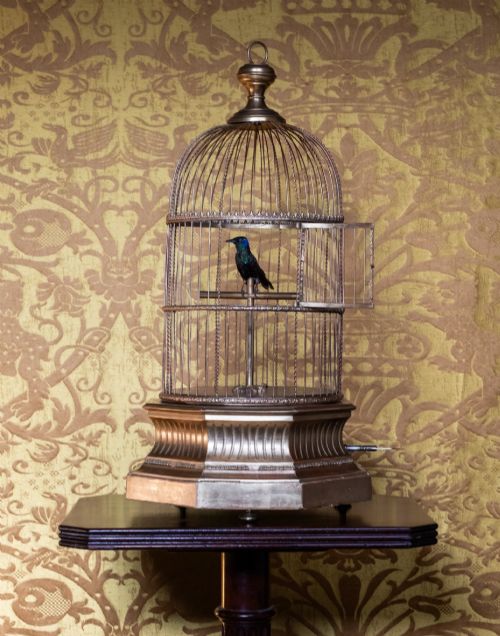
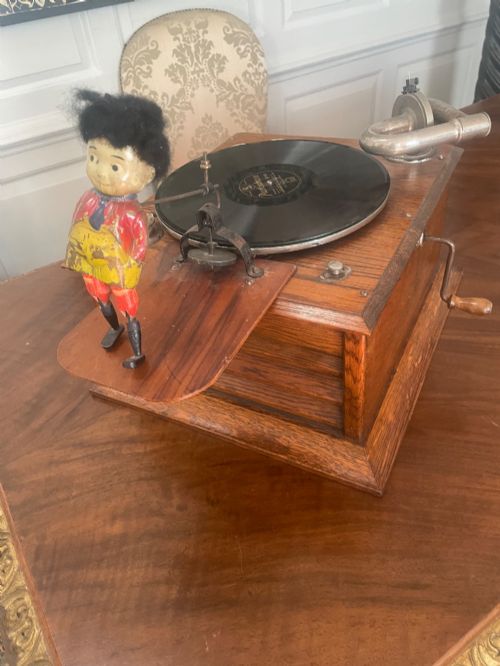
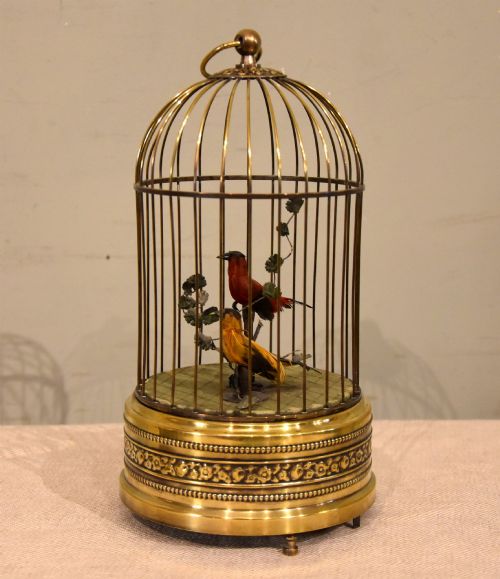
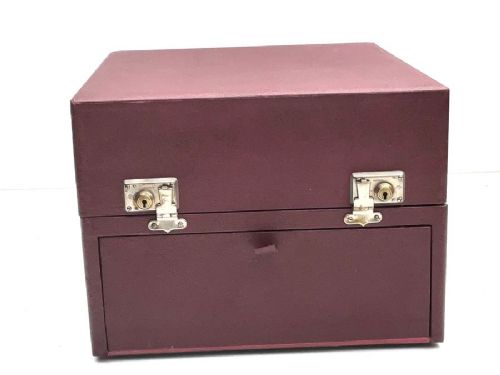
When you search for an antique mechanical box, you encounter items that perform physical actions or produce sound through internal mechanisms. These range from traditional wooden music boxes to singing birds in cages, cast iron money boxes, and table top disc players.
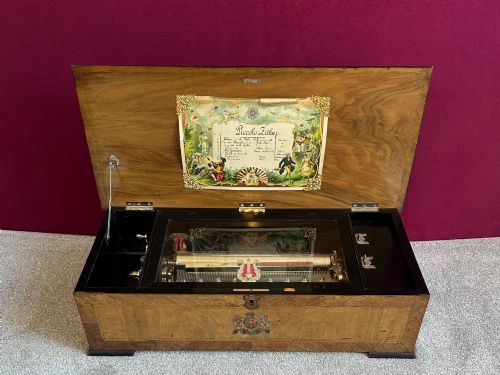
The version you are most likely to meet on this page is the Victorian cylinder music box, often housed in a walnut or rosewood case with marquetry inlay. Swiss makers feature prominently among these musical pieces, alongside larger disc-playing instruments and animated automata.
Beyond musical items, the selection includes mechanical banking devices and musical chairs from the nineteenth century. Each object relies on a spring-driven or hand-cranked mechanism to operate.
How they were made
Cases utilise dense timbers such as walnut, rosewood, and mahogany, frequently finished with marquetry inlay or ebonised details. Metal components in brass and steel form the internal combs, gears, cylinders, and discs that govern the movement.
Mechanical assemblies require precise alignment of pins, teeth, and levers to ensure correct timing for musical airs or mechanical actions. Hand-assembly by specialist makers dictated the construction of both the exterior housing and the internal works.
Antique Mechanical Box Retail Price Guide 2026
Typical asking prices for mechanical box among the pieces listed under this phrase on Sellingantiques today, from the lower quarter to the upper quarter. They describe what is for sale here now, not the wider market.
Some nineteenth century musical chairs were built to play a tune the moment an unsuspecting guest sat down.
What varies in quality
The standard of an antique mechanical box rests on the complexity of its movement and the fidelity of its output. Pieces with multiple airs, additional bells, or disc-playing capabilities demonstrate a higher degree of initial manufacture.
Cabinetwork also defines the grade of the object, distinguishing standard production boxes from those featuring intricate marquetry and superior timber selection. Original components and intact housing preserve the integrity of the piece.
Nicole Freres·Lochmanns·Langdorff And Fils·John Harper Co·Karl Griesbaum
The Antique Mechanical Box Glossary
- Cylinder
- The rotating brass barrel set with pins that pluck the teeth of a steel comb in a music box. This cylinder determines the specific tunes the mechanism plays.
- Air
- A distinct musical tune or melody played by the pinned cylinder. Boxes are often described by how many airs they hold.
- Automaton
- A self-operating machine or figure designed to perform a predetermined motion. Examples include singing birds within brass cages.
- Comb
- The tuned steel plate with multiple teeth that vibrates when struck by the pins on a rotating cylinder or disc. Its condition governs the acoustic quality.
- Marquetry
- Decorative inlay work using various coloured wood veneers applied to the surface of the case. This technique creates geometric or pictorial patterns.
Antique Mechanical Box: Frequently Asked Questions
How do cylinder music boxes work?
A wound spring turns a brass cylinder set with tiny metal pins. These pins pluck individual teeth on a tuned steel comb to create notes.
Changing the tune involves shifting the cylinder slightly so the pins strike different sections of the comb.
What is the difference between cylinders and discs?
Cylinder boxes play a fixed set of tunes pinned directly onto a rotating barrel. They offer limited repertoires specific to that cylinder.
Disc players use flat metal plates that can be swapped out to change the music entirely. This format emerged later in the period.
How should I care for a mechanical box?
Keep the mechanism clean and free from dust by keeping the lid closed when not in use. Avoid over-winding the spring to prevent internal strain.
Maintain a stable room temperature away from direct sunlight and dampness to protect the wooden case and metal parts.
How can I identify the date of a music box?
Examine the style of the wooden case, the complexity of the comb, and any maker marks stamped on the brass bedplate. Victorian examples from the mid to late nineteenth century often feature hand-written tune sheets inside the lid.
Design shifts from simpler wooden barrels to heavier cast iron beds and disc systems help narrow down the production era.