





Antique Match Spill Holder
These antique match spill holders are small domestic vessels designed to hold tapers for lighting fires and pipes, offering period charm for the mantelpiece.
Antique Match Spill Holder
When you search for an antique match spill holder, you encounter a variety of small vessels designed to hold wooden spills or tapers used for transferring a flame to candles, fires, and pipes. The selection on this page spans from the Georgian and Regency periods through the Victorian era into the twentieth century.
You are likely to meet vernacular wooden examples alongside ceramic pieces modelled as animals or architectural structures. These items reflect the domestic habits of earlier centuries when keeping a ready flame required specialised receptacles.
How they were made
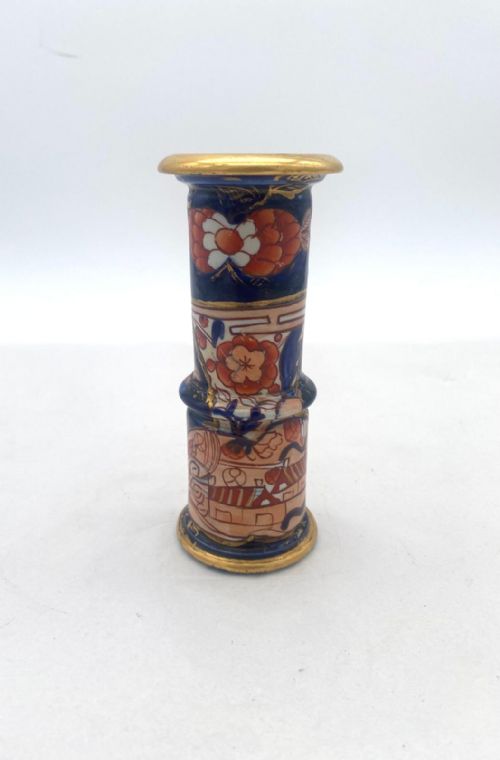
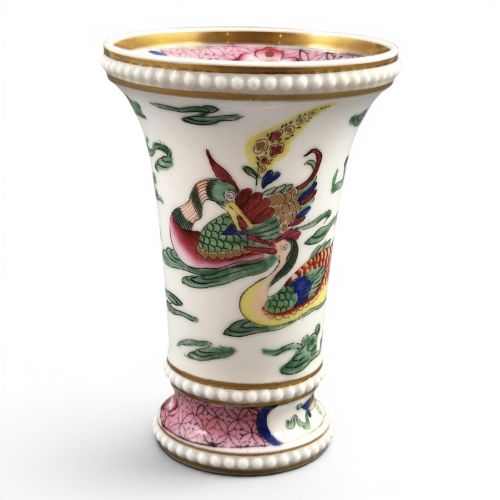
The makers of these items utilised a range of traditional materials, most notably earthenware, bone china, and pearlware, alongside turned hardwoods such as oak and yew. Ceramic bodies were shaped, glazed, and often hand-painted with detailed motifs like birds, flowers, and pastoral scenes.
Wooden examples demonstrate precision turning on a lathe, resulting in clean urn and stem forms that highlight the natural grain of the timber. Earthenware and porcelain pieces frequently feature applied gilding, colourful enamel decoration, and specialised lead glazes.
Moulding and casting techniques allowed potters to create figurative designs, including Staffordshire animals and architectural turret forms. These methods combined structural utility with decorative appeal suited to period parlours.
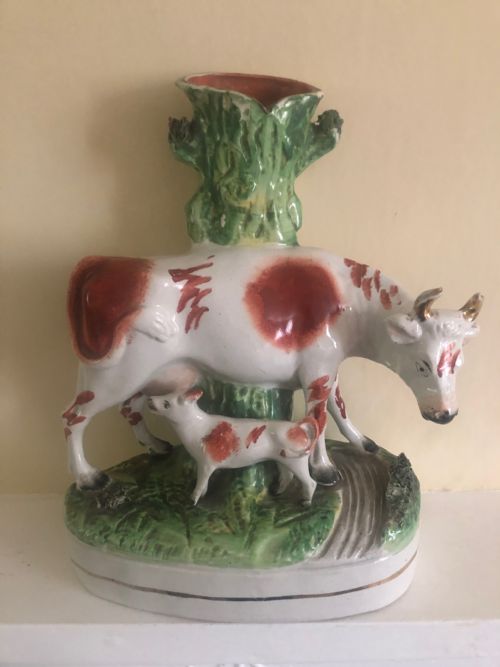
Cow and calf figures stood ready on the mantelpiece, offering a domestic pastoral calm while holding tapers for the evening pipe.
What varies in quality
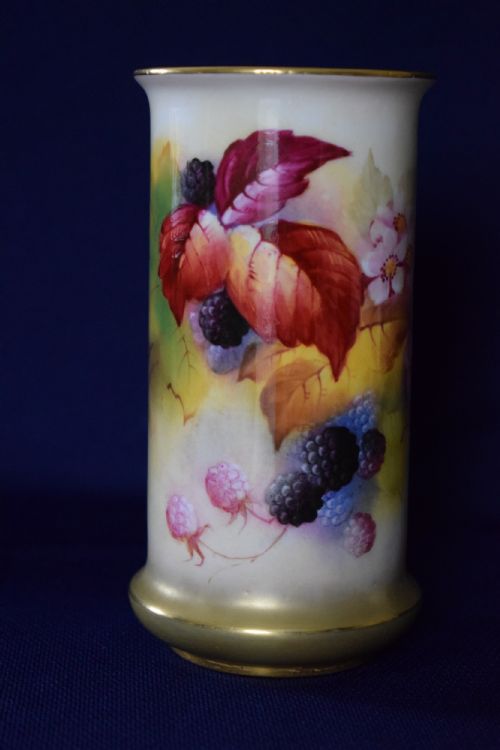
Quality in these domestic pieces rests upon the crispness of the modelling and the care taken in hand-decoration. Finely painted details by notable artists distinguish standard production wares from superior cabinet pieces.
The choice of material and the skill of the turning or moulding process dictate the overall refinement of the object. Heavier, well-balanced timber vessels and intricately finished porcelains demonstrate a higher standard of craftsmanship.
Preservation of original glaze, enamel, and gilding significantly influences the character of each piece. Subtle variations in execution reflect the individual hand of the maker or pottery.
Ernst Wahliss·Royal Worcester
The Antique Match Spill Holder Glossary
- Spill
- A thin slip of wood or paper used for transferring a flame from a hearth to a candle or pipe. These holders were specifically made to keep such tapers close at hand.
- Pearlware
- A refined earthenware developed by Josiah Wedgwood in the late eighteenth century, featuring a bluish glaze that pooled slightly in recesses to mimic Chinese porcelain.
- Staffordshire pottery
- Earthenware produced in the industrial area of Staffordshire, known for popular figures and animals that decorated nineteenth-century mantels.
- Lead glaze
- A glossy coating applied to ceramic bodies before firing, containing lead oxide to create a smooth, waterproof surface that enhances painted decoration.
- Taper holder
- An alternative term for a small vessel designed to support wax or wooden lights, often synonymous with a spill vase.
Antique Match Spill Holder: Frequently Asked Questions
How were spill holders used?
Users placed slender wooden spills inside the vessels so they remained dry and ready for action near a hearth or stove. When a flame was needed, a spill was drawn out, touched to the fire, and carried to candles or tobacco pipes.
This method saved matches and made lighting lamps efficient before the widespread availability of safety matches.
How do I date a wooden spill vase?
Dating timber examples relies on identifying the wood species, such as oak or yew, and observing the turning marks left by the lathe. Georgian and Regency pieces often exhibit simpler, hand-turned proportions compared to later Victorian items.
Construction methods and surface patination provide further clues to the age of turned wooden stems.
What ceramic styles are common?
The ceramic selections include Staffordshire earthenware figures of animals and architectural structures, alongside porcelain vases painted with botanical or pastoral motifs. Art Nouveau and Edwardian pieces introduce flowing lines and different glazing techniques.
Many incorporate gilt highlights and hand-painted details typical of their respective manufacturing eras.