




Antique Match Holder Vase
These antique match holder vase items combine a domestic vessel with a practical receptacle for spills, offering a charming touch of Georgian and Victorian utility.
Antique Match Holder Vase
An antique match holder vase brings together the functional spill vase and the vessel for household matches, designed to stand near a hearth or desk. When searching for an antique match holder vase, collectors encounter diverse forms spanning the Georgian, Regency, and Victorian periods.
The selections on this page include earthenware, porcelain, and turned wood examples such as oak and yew. Makers fashioned these pieces as spill holders, spill vases, and urn spill stems to hold the thin wooden splints used for lighting fires before safety matches became common.
How they were made
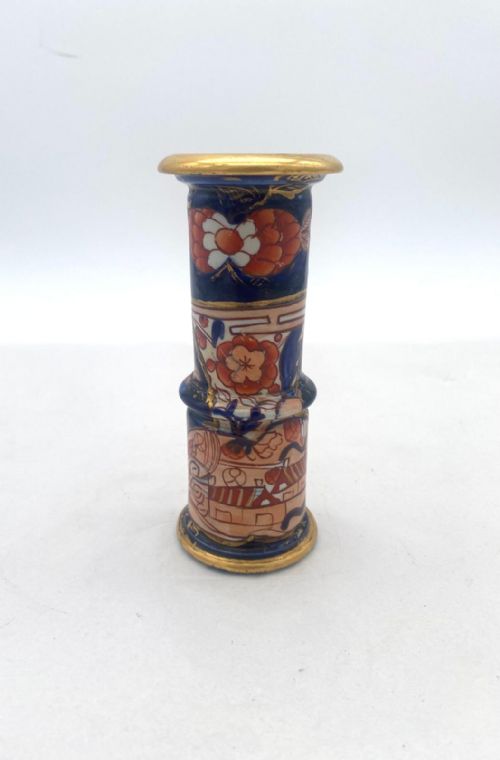
Ceramic versions rely on earthenware, porcelain, and pearlware, shaped by hand or in moulds before receiving hand-painted enamel, gilt, and lead glaze. Potters applied detailed decoration such as lotus patterns and school house scenes directly onto the wet clay or fired body.
Wooden examples utilise turned oak and yew, shaped on a lathe to create urn and stem forms that highlight the natural grain of the timber. Craftsmen combined these turned wooden bodies with metal liners or simple wooden sockets suited to holding tapers and spills near a fireplace.
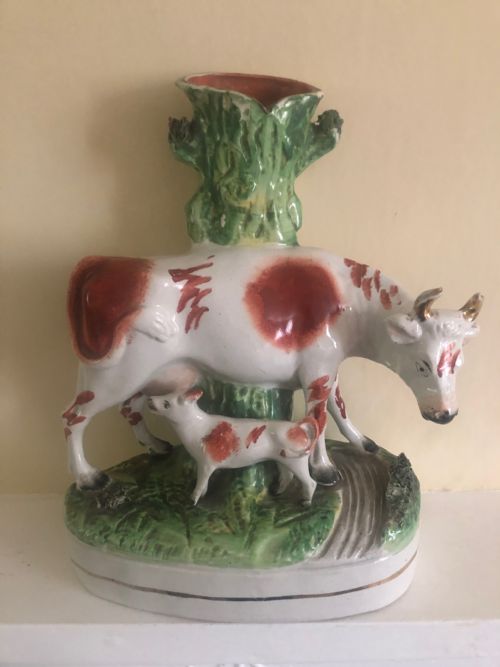
Victorian cows and calves peer out from mantelpieces, holding matches where milk once belonged.
What varies in quality
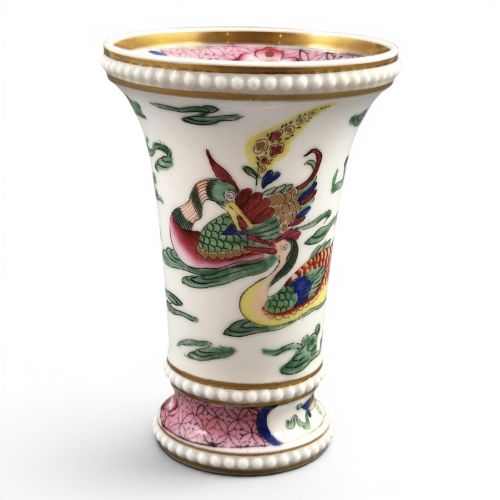
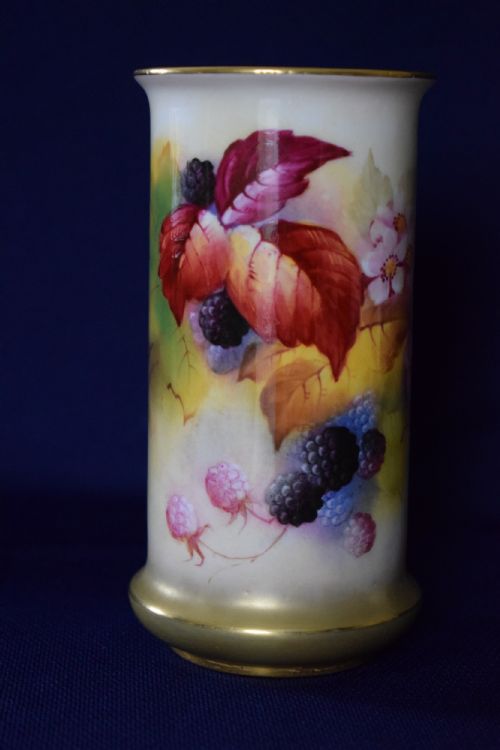
The distinction between standard domestic production and superior output rests upon the crispness of the moulding and the execution of the hand-painted decoration. Finer ceramic examples display precise hand-applied enamels and carefully controlled gilding that resist fading and wear.
In wooden pieces, quality reveals itself in the balance of the turning and the selection of figured timber with steady grain patterns. The integration of decorative motifs, whether painted bird and floral scenes or figural animal modelling, dictates the artistic merit of each vessel.
Spode·Walton·Ernst Wahliss·Kitty Blake·Royal Worcester
The Antique Match Holder Vase Glossary
- Spill Vase
- A small tall container designed to hold thin wooden spills used for transferring a flame from a fire to a candle or pipe. These vessels sat on mantelpieces for daily household use.
- Pearlware
- A refined earthenware developed in the late eighteenth century featuring a bluish glaze that pooled in recesses to create a whiter appearance. It served as a popular base for transfer-printed and hand-painted figures.
- Lead Glaze
- A glossy coating containing lead oxide applied to ceramics before firing to provide a smooth, waterproof surface. It gives early earthenware pieces their characteristic lustrous finish.
- Bone China
- A type of porcelain incorporating bone ash that results in a strong, milky-white body capable of holding delicate painted details. It allowed makers to produce thinner walls without losing structural integrity.
- Flat Back
- A ceramic figure modelled with detail primarily on the front and sides while the reverse remains flat and unglazed. This technique allowed figures to sit flush against a wall or mantelpiece.
Antique Match Holder Vase: Frequently Asked Questions
What is an antique match holder vase?
These pieces are small decorative vessels designed to hold wooden tapers or matches near a fireplace or desk for lighting candles and fires.
They combine practical household utility with the decorative ceramic and wooden styles of the Georgian and Victorian eras.
How were spill vases used?
Households kept them on mantelpieces filled with thin wooden splints known as spills.
When a fire was needed, a person pulled a spill, lit it from the hearth, and carried the flame to lamps, candles, or pipes.
What materials are these vases made from?
Makers utilised earthenware, porcelain, bone china, pearlware, and turned woods like oak and yew.
Surfaces often feature lead glaze, hand-painted enamel decoration, and gilding.
How do I date a spill vase?
Dating relies on stylistic markers, ceramic bodies such as pearlware or bone china, and known factory marks.
Nineteenth-century pieces frequently show hand-painted motifs or figurative animal designs characteristic of Staffordshire potteries.