


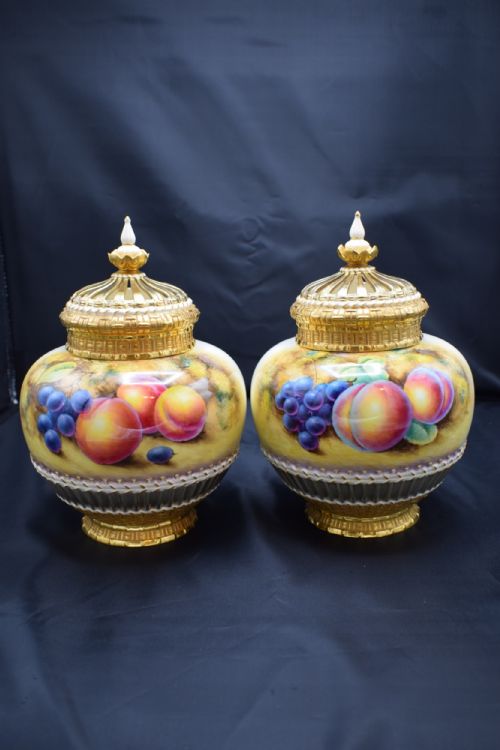


Worcester Fruit Vase
These porcelain pieces form the traditional worcester fruit vase selection, bringing hand-painted garden and autumnal studies into domestic interiors.
Worcester Fruit Vase
A worcester fruit vase appears in several distinct forms across this page, ranging from covered pot pourri jars and ginger jars to slender spill vases, two-handled vessels and decorative ewers. The selection spans the Victorian era through the Edwardian period and into the mid-twentieth century, capturing decades of studio output.
Most examples originate from the early to mid-twentieth century, including pieces dated to the nineteen-twenties, thirties, forties, fifties and sixties. Covered urns and pot pourri vessels with pierced lids share space with open vases, each carrying naturalistic depictions of peaches, grapes, berries and apples painted by named studio artists.
Materials and Technique
Makers shaped these vessels from fine bone china and standard porcelain bodies before applying smooth white grounds to receive detailed watercolour-style pigments. Skilled painters worked by hand directly onto the glazed surface, building up layered compositions of fruit surrounded by foliage and subtle shadows.
Finishing touches involved extensive application of gilding, gold leaf and gilt accents around rims, handles and foot rings. Many pieces received protective enamel glazes before final kiln firing to seal the painted fruit panels and metal highlights.
Current listings feature fine bone china and porcelain forms spanning Victorian production to nineteen-sixties studio output.
Assessing the Standard
Quality rests upon the skill of the individual artist whose signature appears on the painted panel, with works by recognised painters commanding greater artistic recognition. The density and precision of the surrounding gilding also distinguish finer items from simpler production pieces.
Form complexity influences the overall standard, as pierced pot pourri covers, sculptural handles and paired ewers require advanced manufacturing techniques. The clarity of the porcelain body and the vibrancy of the fruit pigments determine the visual impact of each vessel.
Chivers·Ayrton·William Hawkins·John Smith·Freeman·William Ricketts·HH Price·K Blake·Kitty Blake·Richard Seabright·Harry Ayrton·D.J. Scyner·W. Bee·F. Parker
The Worcester Fruit Vase Glossary
- Pot pourri
- A decorative vase featuring a pierced lid designed to diffuse dried scented petals into a room. These vessels often include internal liners and elaborate covers.
- Ewer
- A large jug-shaped vase with an arched spout and looped handle, frequently produced in matched pairs for decorative display.
- Gilding
- The application of gold leaf or powdered gold paint to ceramic surfaces, particularly rims and handles, to create metallic embellishment.
- Spill vase
- A tall, narrow cylindrical vessel historically used to hold thin tapers for lighting candles or fires from a hearth.
Worcester Fruit Vase: Frequently Asked Questions
How were these painted vessels used?
These decorative items served primarily as mantelpiece ornaments, drawing room displays and table centrepieces within formal homes. Versions with pierced covers functioned to hold scented botanical mixtures for room freshening.
Owners displayed them singly or in matched pairs alongside matching jars and ewers. Their primary purpose remained aesthetic rather than utilitarian.
How do I date a piece?
Dating relies upon factory date ciphers stamped underneath the base, alongside stylistic clues such as Edwardian shapes or mid-century forms. Victorian and early twentieth-century examples often feature specific artist signatures that help narrow the production decade.
Changes in porcelain bodies and gilding patterns across the decades also provide reliable chronological markers for collectors. Comparing the style of the fruit painting against known artist active periods assists verification.
How should I clean my porcelain?
Dusting requires only a soft, dry lint-free cloth to remove surface particles without disturbing delicate enamel or gilt edges. Water immersion should remain minimal to protect older ceramic bodies and painted panels.
Harsh chemical cleaners and abrasive cloths will damage the hand-painted glazes and gold leaf highlights. Gentle maintenance preserves the original lustre of the painted fruit scenes.
Are painted fruit designs standard?
While the overarching theme centres on naturalistic fruit studies, individual artists brought distinct colour palettes and brushwork styles to each panel. Some compositions emphasise autumnal berries and foliage while others focus on summer peaches and grapes.
Background treatments vary from neutral shadows to elaborate tonal gradients that frame the fruit. This individual hand painting ensures no two decorative vessels are identical.