
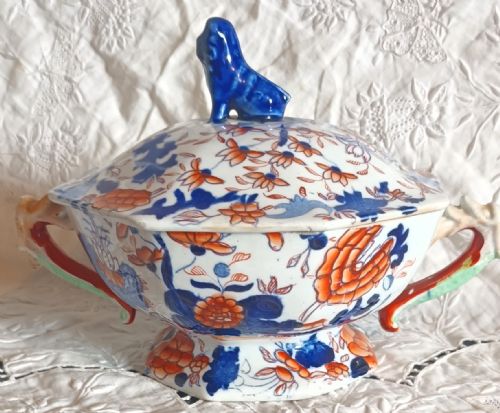


Antique Masons China Tureens
These antique masons china tureens bring heavy ironstone bodies and vivid transfer-printed enamels to the dining table.
Antique Masons China Tureens
When you search for antique masons china tureens, you find heavy ceramic vessels designed for serving soup, sauce or vegetables at the nineteenth-century dining table. These pieces range from large soup tureens with covers to pairs of smaller sauce tureens complete with matching ladles.
The examples available here stretch across the Georgian, Regency and Victorian periods, showcasing the robust forms produced by the Staffordshire pottery. English chinoiserie and Imari motifs dominate the decorative styles, reflecting a nineteenth-century taste for bold oriental patterns.
Most items on this page utilise durable ironstone ceramic bodies finished with hand-painted enamel and gilt details. Buyers encounter forms such as vegetable tureens and large covered bowls alongside traditional soup vessels.
Materials and construction
Potters built these vessels using dense ironstone ceramic, a heavy earthenware body patented to withstand the rigours of formal dining while offering a smooth white surface for decoration. This sturdy material allowed makers to shape deep soup tureens and wide serving dishes without losing structural integrity.
Makers applied intricate patterns through a combination of transfer printing and hand-painted enamel colours, often finished with touches of gold leaf. Clear glaze sealed the ceramic body, while gilt highlights accentuated handles, finials and rim borders.
Listings feature ironstone ceramic bodies decorated with enamel, glaze and gold leaf across the Georgian, Regency and Victorian periods.
Assessing quality and craftsmanship
The fineness of the hand-painted enamel work separates standard production from superior examples. Skilled artists added depth to patterns like the Green Mandarin or Japan Basket designs with precise brushwork over the transfer print.
The preservation of the original gold leaf and clear glaze dictates the visual impact of each vessel. Crisp moulding on handles and crisp definition in the chinoiserie motifs indicate superior manufacturing standards in the Staffordshire works.
The Antique Masons China Tureens Glossary
- Ironstone
- A heavy ceramic body patented in the nineteenth century for its durability and resistance to chipping. It provides the thick walls typical of these serving vessels.
- Tureen
- A deep covered bowl designed for serving soup, sauce or vegetables at the table. These vessels often include matching underdishes or ladles.
- Gilt
- A thin layer of gold applied to the ceramic surface for decoration. It is frequently found highlighting handles and rims on finer pieces.
- Imari
- A decorative style borrowing from Japanese export porcelain palettes of blues, reds and gold. Victorian iterations adapted these bright hues for ironstone body shapes.
Antique Masons China Tureens: Frequently Asked Questions
What were ironstone tureens used for?
These covered vessels served soup, sauce and cooked vegetables at formal nineteenth-century dinner tables. Their heavy ceramic walls helped retain heat during long meals.
Larger soup tureens sat centrally on the dining board, while smaller sauce tureens accompanied specific meat or vegetable dishes.
How do I date an ironstone tureen?
Dating relies on stylistic clues, pattern names and factory marks stamped into the ceramic base. Georgian and Regency pieces often display rich chinoiserie hand-enamelling.
Later Victorian iterations tend to feature denser transfer printing and different colour palettes associated with late nineteenth-century production.
Are lids and ladles common?
Many surviving tureens retain their original fitted covers, which protected the contents and kept food warm at the table. Surviving ladles are less common due to their fragile nature.
Finding a pair of sauce tureens complete with matching ladles represents a particularly intact set for a dining collection.
How do I care for antique ceramic tureens?
Wash these pieces gently by hand using mild soap and warm water to protect the delicate enamel and gold leaf. Avoid soaking them in water for extended periods.
Display them away from direct sunlight to prevent fading in the hand-painted green, blue and red enamel colours.