




Antique Maritime Diorama
An antique maritime diorama brings the movement of nineteenth-century sailing vessels indoors through layered painted canvas and carved wooden hulls.
Antique Maritime Diorama
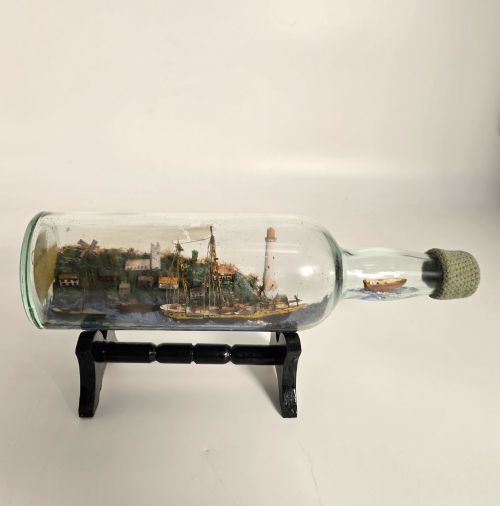
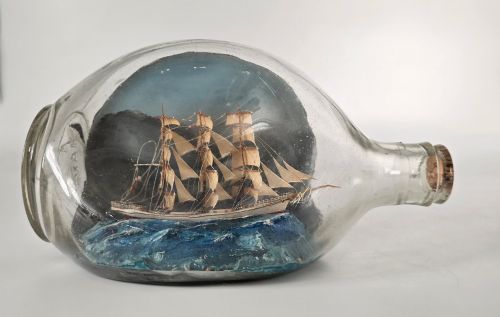
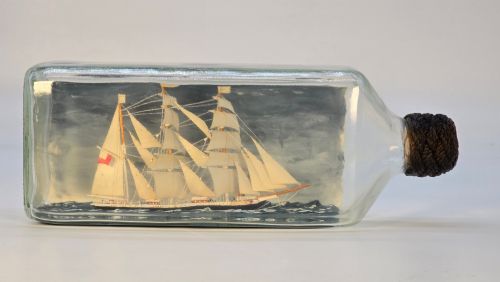
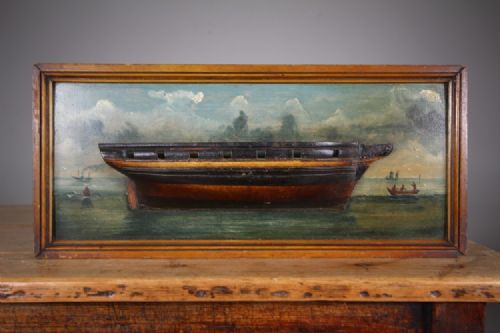
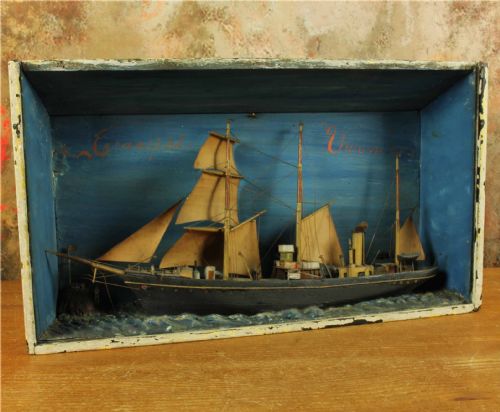
When you search for an antique maritime diorama, you encounter three-dimensional framed boxes and bottles depicting sailing ships at sea. These pieces span the nineteenth century and the early twentieth century, showing clippers, barques, and steam vessels under sail.
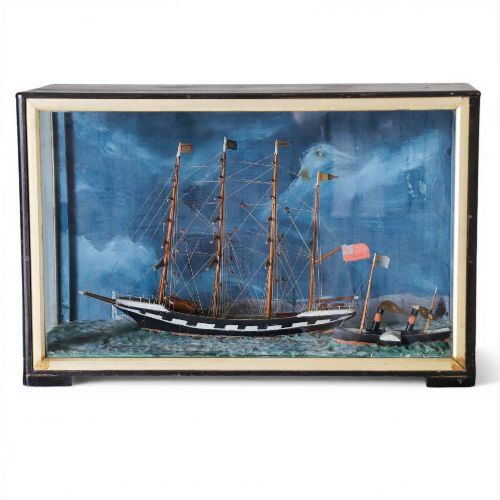
The version you meet most often on this page is the Victorian shadow box or cased diorama, framed in wood with glass fronts protecting the handmade models inside. Makers constructed these scenes using painted canvas backgrounds and carved wooden hulls.
Folk art examples dominate the selection, showing the hand of sailors and local craftsmen working with simple materials. These range from Cornish and English regional pieces to French handmade boat models and bottle dioramas.
Materials and construction
Makers built these pieces using wood for frames and hulls, paired with canvas and paper for the painted seascapes and skies. Oil paint provides the depth on background panels, while plaster and fabric often shape the rolling waves beneath the model vessels.
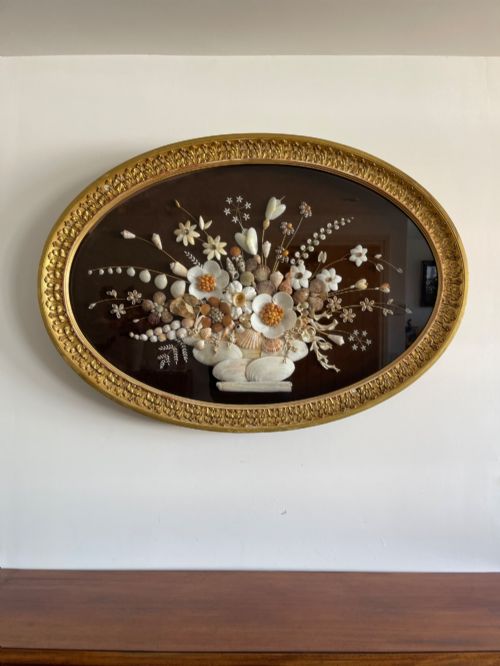
Construction relied on scratch-built techniques, utilising scraps of wood, carved cork, and intricate rigging made from thread and wire. Some makers incorporated natural elements such as shells and straw work to decorate the interior shadow boxes.
Listings feature pieces spanning the 19th century through the 1930s, constructed from wood, glass, canvas, and shellwork.
Judging quality in maritime dioramas
Quality depends on the precision of the ship model and the artistry of the painted background. Superior pieces display accurate rigging, carefully proportioned masts, and a painted sea that creates a convincing sense of perspective and depth.
The integration of the model with the painted backdrop separates standard works from exceptional ones. Better examples blend the physical hull and canvas seamlessly, whereas lesser pieces show harsh transitions between the three-dimensional elements and the flat background.
The Antique Maritime Diorama Glossary
- Shadow Box Diorama
- A deep, glazed frame enclosing a three-dimensional scene built out from a flat background. This format protects delicate ship models from dust while allowing side lighting.
- Scratch-Built
- Made entirely from raw materials by hand rather than from a commercial kit. These pieces reflect the individual maker's skill and available resources.
- Barque
- A sailing vessel with three or more masts having the fore- and mainmasts square-rigged and the mizzenmast fore-and-aft rigged. This rig appears frequently in nineteenth-century marine art.
- Automaton
- A mechanical moving figure or device integrated into a scene. Some marine displays include clockwork mechanisms that create the illusion of waves rolling or ships moving.
Antique Maritime Diorama: Frequently Asked Questions
How do I clean the glass on a diorama?
Use a soft cloth dampened slightly with water or standard glass cleaner, applying it to the cloth rather than directly onto the wood or frame.
Keep moisture away from the joins and the interior surfaces, as old paper, canvas, and painted plaster react poorly to dampness.
Were these made by sailors?
Many marine dioramas and ship models originated with sailors passing time on long voyages using basic tools and whatever materials were to hand.
Other examples came from coastal folk artists and local craftsmen working in port towns who specialised in bespoke ship portraits.
How are ships dated in these boxes?
Datation relies on the vessel type, the costume or rigging details, and construction methods characteristic of periods like the Victorian era or the 1920s.
Inscribed names or commissioning dates written on the backing boards or hulls occasionally provide direct evidence of origin.
Where should I hang a shadow box?
Choose a wall away from direct sunlight and steady moisture to protect the delicate oil paint, canvas, and paper components inside.
Ensure the wall fixings can support the combined weight of the heavy wooden frame, glass, and internal wooden model.