


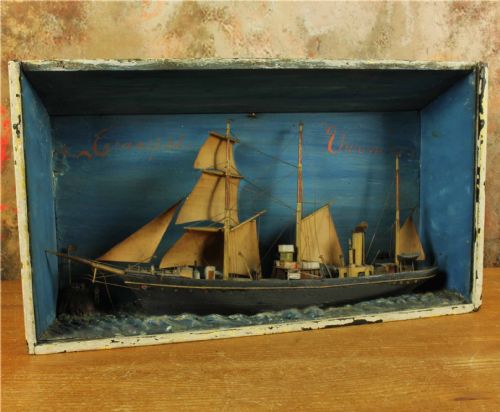


Nautical Wall Art Diorama
A nautical wall art diorama brings the maritime world indoors with miniature vessels and painted seascape backdrops set beneath glass.
Nautical Wall Art Diorama
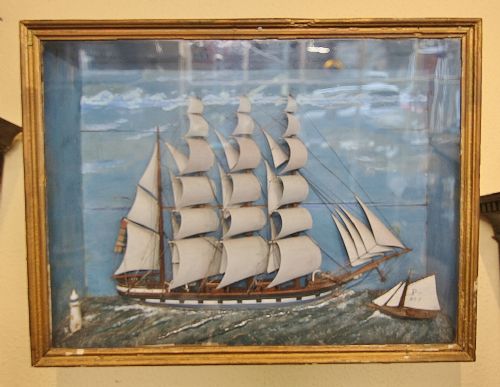
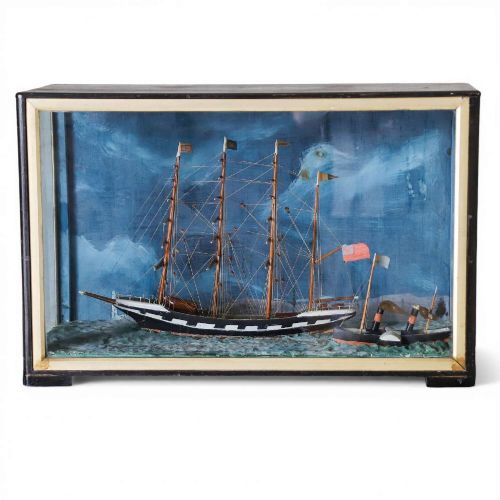
A nautical wall art diorama captures the drama of the sea inside a three-dimensional wooden shadow box designed to hang upon a wall. You are looking at maritime folk art and shadow box dioramas originating primarily from the nineteenth century and the early twentieth century.
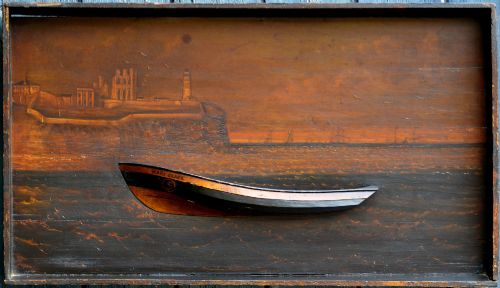
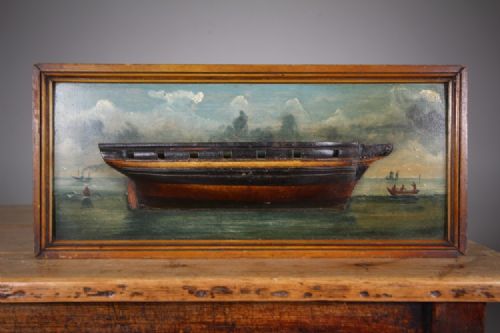
The most common forms you will encounter on this page include framed ship models, racing vessels, and half-model hulls set against painted coastal backgrounds. These works range from French handmade boat models in boxes to large naive wooden dioramas depicting British sailing ships.
Originating largely from British and French maritime traditions, these pieces reflect the craftsmanship of sailors and local artisans. They combine carved wooden hulls with canvas, paper, and fabric to create layered coastal scenes.
Materials and construction methods
Makers constructed these pieces primarily using wood for the frames, hulls, and shadow boxes, complemented by glass fronts to protect the delicate interior. Scratch-built ship models and half-model hulls demonstrate intricate carving and assembly.
Artists utilised oil paint on canvas, paper, and plaster to render Turneresque seascapes, coastal castles, and rolling waves behind the primary vessel. Fabric and paper often contributed to the rigging, sails, and secondary details within the maritime diorama.
Nautical Wall Art Diorama Retail Price Guide 2026
Typical asking prices for nautical wall art diorama among the pieces listed under this phrase on Sellingantiques today, from the lower quarter to the upper quarter. They describe what is for sale here now, not the wider market.
Listings feature works from the nineteenth century, the Victorian period, circa eighteen sixty, nineteen hundred, and the nineteen twenties, constructed from wood, glass, canvas, and plaster.
Assessing quality in maritime dioramas
The distinction between standard and superior pieces rests upon the precision of the carved rigging, the detail of the painted backdrop, and the overall depth of the perspective. Finer examples display meticulous craftsmanship in the scratch-built ship model and the realism of the painted seascapes.
The Nautical Wall Art Diorama Glossary
- Diorama
- A three-dimensional scene enclosed in a box with a glazed front, designed to display miniature models against a painted backdrop. These shadow boxes create an illusion of depth.
- Half-model
- A three-dimensional representation of the hull of a ship cut along the centerline, often mounted on a backboard. Makers used these for design purposes or as wall-hung folk art.
- Folk art
- Artistic work created within a traditional culture by self-taught or untrained makers, often utilising accessible local materials. These pieces carry regional maritime character.
- Automaton
- A moving mechanical device designed to actuate figures or vessels within a diorama. Such pieces utilise hidden mechanisms to create motion in the displayed scene.
- Clipper
- A very fast nineteenth-century merchant sailing ship with multiple masts and square sails. These vessels frequently form the central subject of maritime wall art.
Nautical Wall Art Diorama: Frequently Asked Questions
How were these dioramas displayed originally?
These pieces were built specifically to hang on walls in homes, maritime offices, and seafarers' quarters. The shallow wooden boxes project outward while keeping the intricate models secure.
Their wall-hanging format allowed owners to display detailed marine scenes without requiring shelf space. The glass front shielded the painted canvas and textile rigging from dust and sea air.
How do I date a maritime diorama?
Dating relies on the materials, the style of the ship depicted, and construction methods visible in the frame and hull. Nineteenth-century examples often feature naive wooden carvings and oil-painted seascapes on canvas or paper.
Later pieces from around nineteen hundred or the nineteen twenties show shifts in folk art construction and vessel types. Comparing the rigging style to historical ship designs helps narrow the period further.
What subjects appear in these maritime scenes?
Subjects range from single clippers in full sail to multi-vessel races and steam barges navigating coastal waters. Some pieces incorporate specific locations, such as Tynemouth Castle and Priory painted in the background.
Others focus purely on the craftsmanship of a scratch-built sailing ship or a French handmade boat model. The variety reflects both specific commissions and general maritime folk traditions.