


Sailing Ship Shadow Box
A sailing ship shadow box brings the maritime world indoors through detailed craftsmanship, offering collectors a tangible piece of naval history.
Sailing Ship Shadow Box
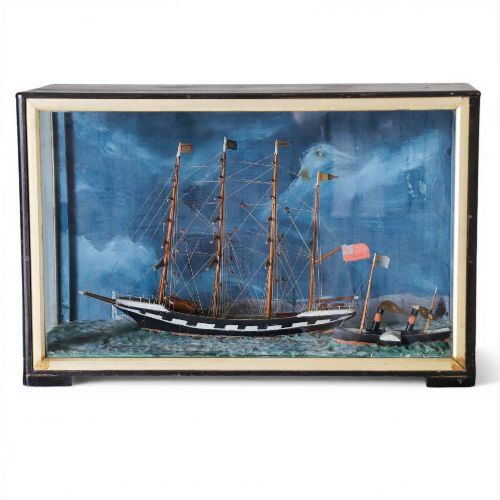
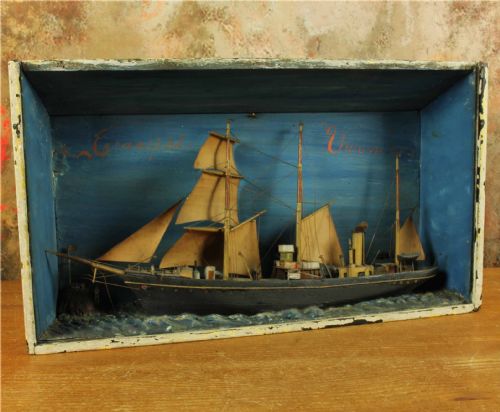
A sailing ship shadow box presents a three-dimensional maritime scene housed within a glazed wooden frame, capturing vessels under full sail upon textured seas. When you search for a sailing ship shadow box, you encounter items predominantly originating from the nineteenth century, including the Victorian era and the year nineteen hundred.
The objects take several forms on this page, appearing as maritime dioramas, shadow box dioramas, and scratch-built ship models. Pieces such as the four-masted sailing ship diorama and the clipper model reflect the diverse ways makers chose to depict vessels like the Glynllifon and Queen Anne.
Makers constructed these works within the tradition of British and French maritime folk art, utilising simple materials to create immersive coastal scenes. You meet pieces depicting single vessels, racing ships, and even straw work designs that demonstrate distinct regional origins from Cornwall to France.
Materials and construction methods
Makers constructed the primary enclosures using wood and glass to protect the fragile interior models from dust and damage. Within these shadow boxes, hulls and rigging were fashioned by hand, sometimes utilising scratch-built components alongside painted backgrounds.
Makers built up the dimensional seas using plaster, canvas, fabric, and paper, shaping surfaces to mimic the movement of waves. Paint and gilt added surface colour and detail to the skies, hulls, and decorative frames of the completed dioramas.
The listings demonstrate a strong concentration of nineteenth-century Victorian maritime folk art, utilising wood, glass, and canvas.
Evaluating quality and execution
Quality in a sailing ship shadow box rests on the precision of the model work and the depth of the surrounding seascape. Pieces that incorporate detailed rigging, painted Turneresque seascapes, or specialised techniques like straw work demonstrate greater maker ambition.
The structural integrity of the wooden case and the clarity of the original glass pane also influence the overall character of the piece. Well-preserved examples maintain the original relationship between the model ship and its painted backdrop without intrusive later repairs.
The Sailing Ship Shadow Box Glossary
- Shadow box diorama
- A shallow display case featuring a three-dimensional scene built up in layers behind glass. This format protects intricate folk art models while providing a framed view of the subject.
- Maritime folk art
- Decorative and utilitarian objects created by self-taught or community makers with nautical themes. These works reflect local traditions rather than formal academic training.
- Clipper
- A very fast nineteenth-century merchant sailing ship with multiple masts and deep canvas sails. Makers frequently chose these vessels for their dramatic profiles.
- Scratch-built
- A model constructed entirely from raw materials without the aid of a commercial kit. This method highlights the individual resourcefulness of the maker.
Sailing Ship Shadow Box: Frequently Asked Questions
What is a sailing ship shadow box?
A sailing ship shadow box is a framed three-dimensional display containing a handmade model of a vessel set against a painted background. These pieces were created to preserve the likeness of specific ships or general maritime scenes.
They combine model-making with framing techniques, utilising materials like wood, glass, and canvas to construct a lasting coastal tableau.
How were these dioramas used?
These boxes served as decorative wall art in homes, particularly in coastal communities and seafaring households. They allowed owners to display a connection to maritime trades and specific vessels.
Over time, they transitioned from personal mementos to collected examples of folk art, valued for their representation of nineteenth-century naval subjects.
How do I date a shadow box?
Dating relies on the materials, construction methods, and stylistic cues present in the framing and the ship model. Nineteenth-century examples often feature specific hull designs and hand-mixed paints characteristic of the period.
Inscribed names or references to known vessels, such as the Queen Anne or the Glynllifon, provide additional historical context for the piece.
Where were these pieces made?
The listings show origins spanning English, Cornish, and French workshops, reflecting broader European maritime traditions. Folk art pieces often emerged from coastal ports where makers had direct access to nautical subjects.
Regional differences appear in the choice of materials, such as French straw work or specific regional framing styles.