
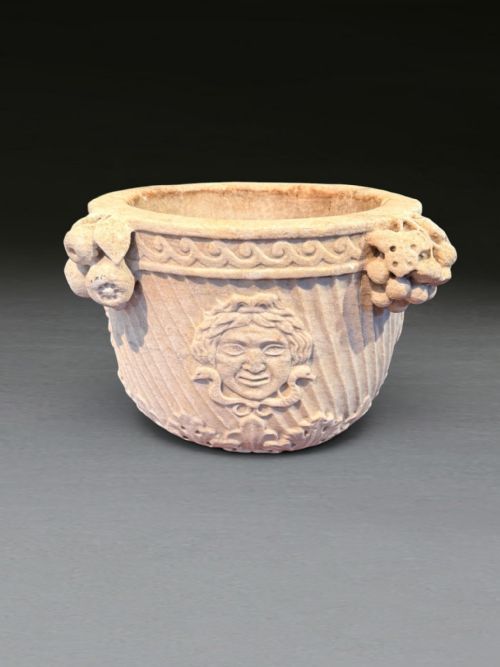


Antique Marble Planter
An antique marble planter brings classical stone into a room or garden, holding plants or standing alone as sculptural form.
Antique Marble Planter
An antique marble planter takes the form of heavy stone urns, carved cisterns, and elevated plant stands designed to hold foliage or water. The pieces found here range from Italian Renaissance and Neoclassical garden urns to Victorian and Edwardian jardiniere tables fitted with stone tops.
Buyers meet everything from grand Grand Tour bronze and marble vases to Chinese Export carved hardwood stands inset with marble panels. The selection spans the sixteenth century through the early twentieth century, encompassing both monumental architectural pieces and domestic plant stands.
Many examples draw on classical antiquity, presenting campana shapes, tazza urns, and decorative cisterns carved in white or Carrara marble. Others combine dense stone with rosewood, walnut, or other hardwoods to support heavy botanical arrangements indoors.
What varies in quality
Quality rests in the crispness of the stone carving and the geological depth of the marble itself, where sharp, undercut foliage and harmonious veining elevate a piece far above mechanical or shallow work. The proportion between vessel and base dictates the visual weight, separating masterworks from provincial copies.
In mixed-material stands, the integration of marble with carved hardwood or bronze mounts reveals the maker's hand; tight joints and substantial timber weight distinguish superior domestic furniture from lighter utility items.
Age and provenance also shape standing, particularly where sixteenth-century Italian Renaissance work or documented Grand Tour pieces retain their original surface patination and unblemished structural integrity.
Listings feature materials spanning white marble, Carrara marble, alabaster, stone, bronze, and hardwoods including rosewood and walnut.
The Antique Marble Planter Glossary
- Carrara marble
- A type of white or blue-grey marble from the city of Carrara in Italy, prized since antiquity for its fine grain and subtle veining.
- Campana urn
- A bell-shaped classical vessel with a flaring rim and a pedestal foot, frequently rendered in marble or bronze.
- Jardiniere
- An ornamental stand or container designed specifically to hold plants or flowers, often incorporating a marble top or inset panel.
- Grand Tour
- A cultural trip undertaken by wealthy young Europeans in the eighteenth and nineteenth centuries, bringing home classical sculpture and bronze vases.
- Tazza
- A shallow saucer-shaped vessel mounted on a stem and foot, used historically for display or planting.
Antique Marble Planter: Frequently Asked Questions
Can antique marble planters stay outdoors?
Some dense stone and marble garden cisterns withstand frost and weather, while softer alabaster and interior plant stands require indoor protection.
Checking the specific stone density and historical use helps determine if a piece belongs in a garden or a drawing room.
How do I clean an old marble planter?
Warm water and a soft cloth suffice for removing dust from carved surfaces, avoiding acidic cleaners that etch stone.
Harsh chemicals strip the historic patination that accumulates on centuries-old marble and bronze.
What is the difference between a jardiniere and an urn?
A jardiniere typically functions as a plant holder or stand with a flat or recessed top for pots, while an urn takes a closed, classical vase form.
Many nineteenth-century pieces blur this line by serving as both decorative sculpture and functional plant housing.
How do I date a marble planter?
Carving style, tool marks, and the supporting woodwork offer the clearest clues to age, aligning with neoclassical, Renaissance, or Victorian design periods.
Materials such as imported Chinese hardwoods or specific Italian marbles help narrow the geographic origin and era.