


Antique Marble Gueridon Table
An antique marble gueridon table brings French elegance to a room, offering a sturdy stone surface supported by fine timber or gilt frames.
Antique Marble Gueridon Table
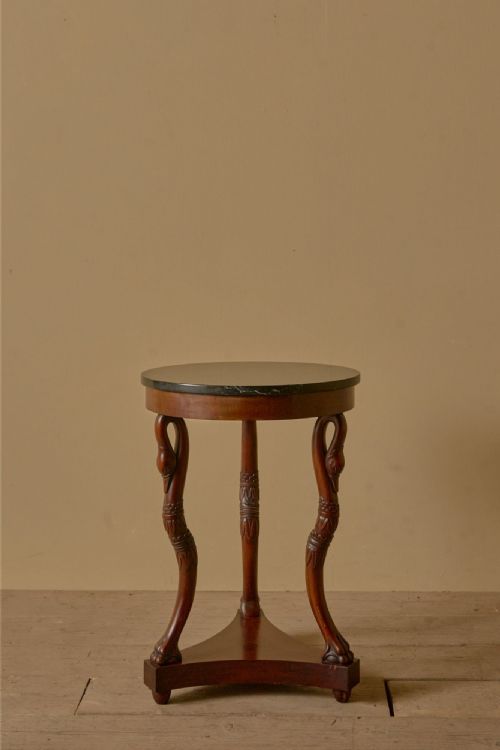
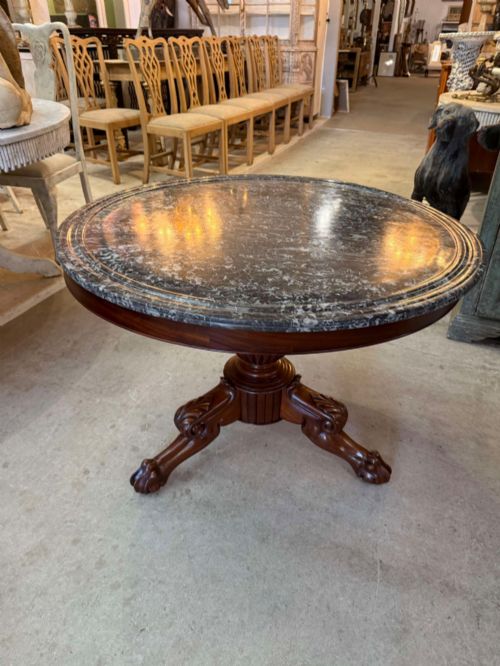
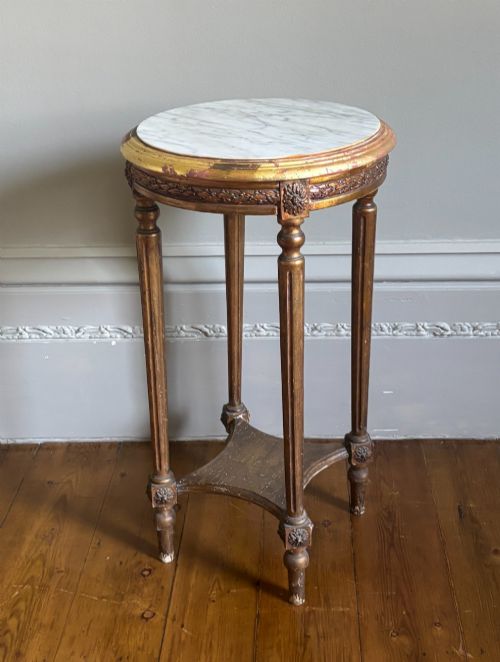
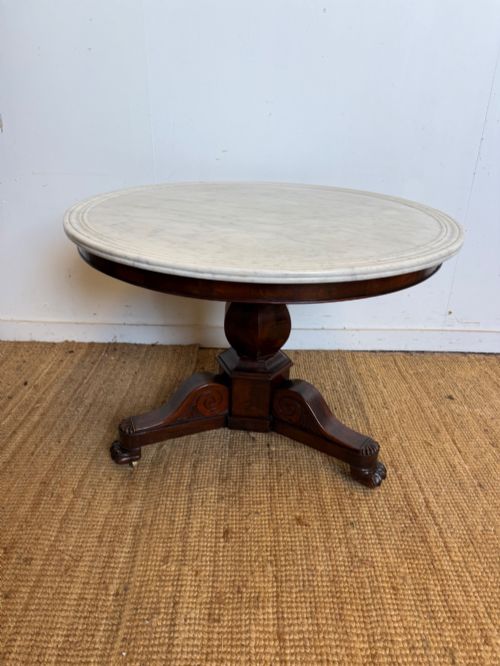
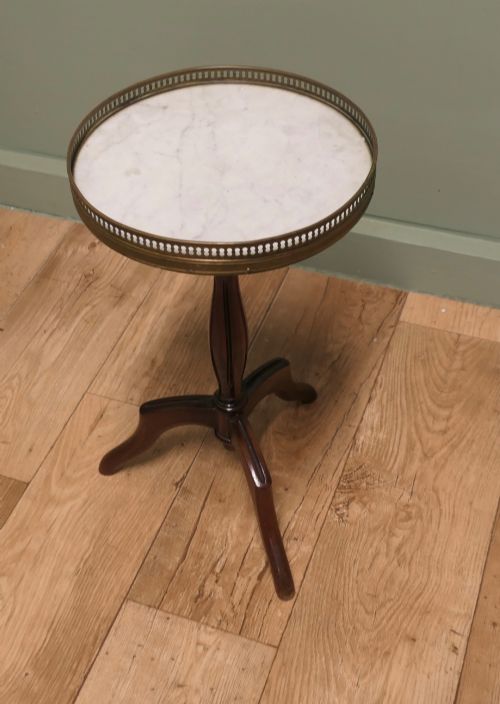
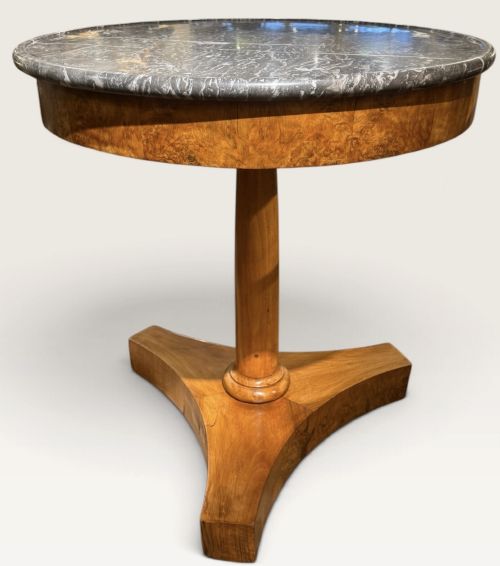
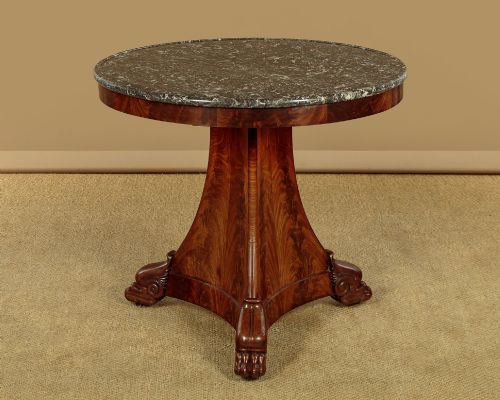
The version most commonly met on this page is a nineteenth-century French mahogany or walnut pedestal table topped with veined marble. Makers often designed these tables to stand freely in the middle of a room or serve as lamp and side tables.
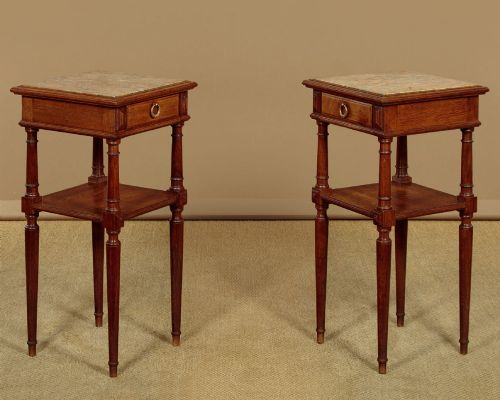
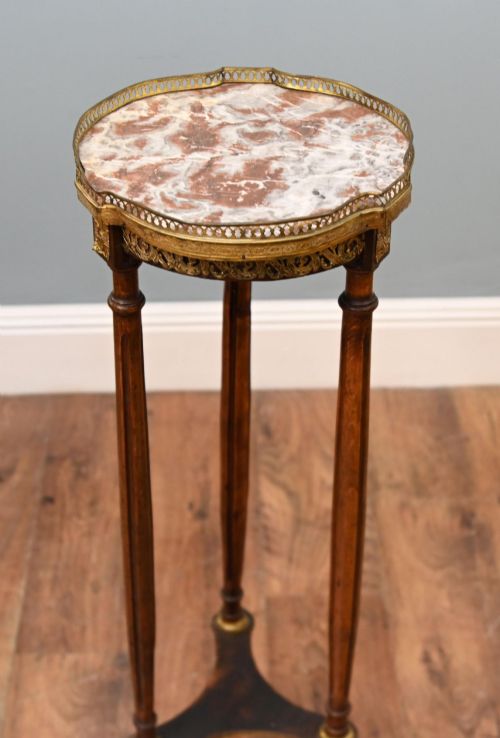
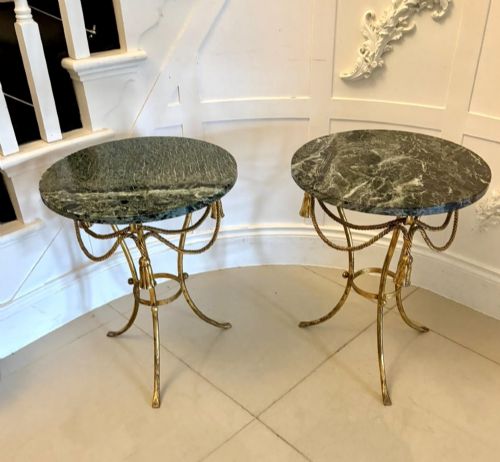
Beyond standard centre tables, the selection includes related forms such as console tables, plant stands, and wine tables. Buyers will also encounter Italian variants featuring gilt metal or lime wood alongside the standard French specimens.
Materials and Construction Techniques
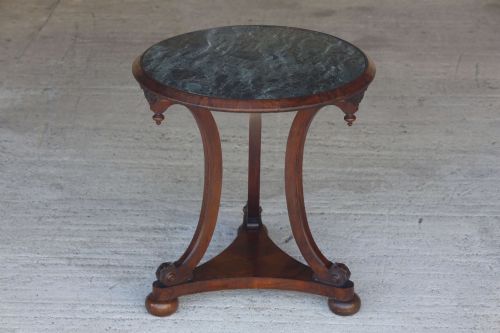
The construction relies heavily on native and exotic timbers including mahogany, walnut, kingwood, and burr elm, paired with heavy slabs of natural marble. Cabinetmakers shaped the timber bases into pedestals, tripods, or column supports, frequently employing flame mahogany veneers to create rich surface patterns.
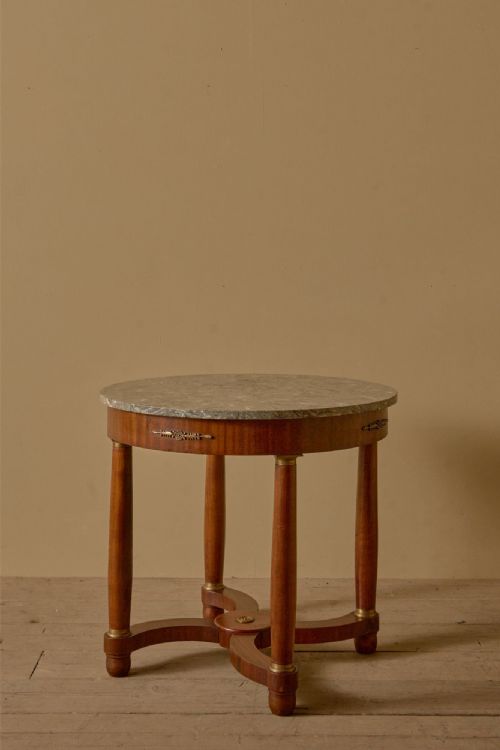
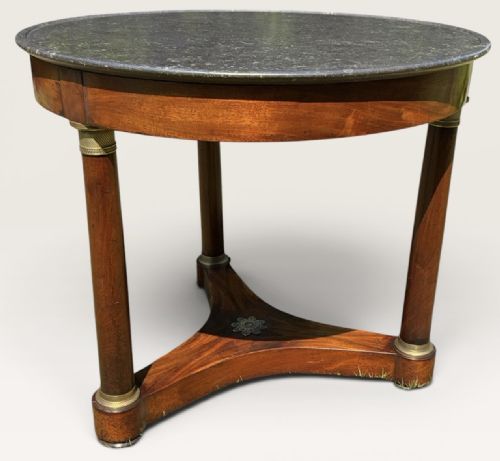
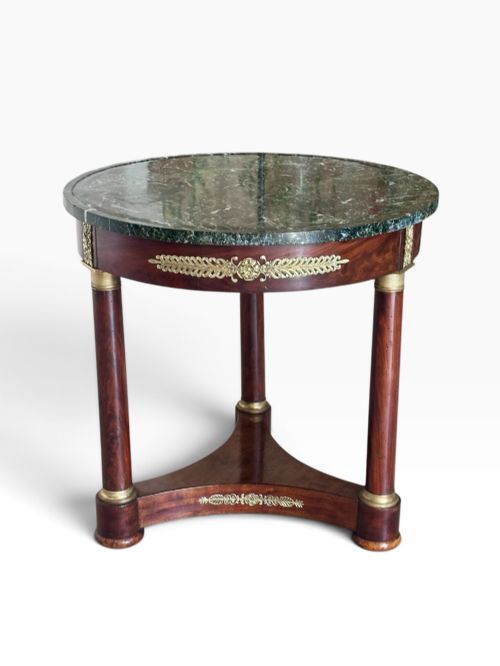
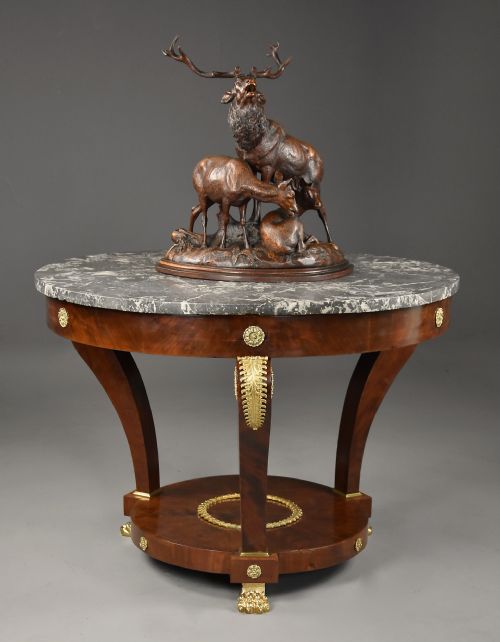
Metal components such as ormolu, gilt bronze, and gilded brass appear frequently as mounts, collars, and gallery rails. These metal elements accent the timber frames and secure the inset marble tops, which display various natural veining and colours from grey to rouge.
Antique Marble Gueridon Table Retail Price Guide 2026
Typical asking prices for marble gueridon table among the pieces listed under this phrase on Sellingantiques today, from the lower quarter to the upper quarter. They describe what is for sale here now, not the wider market.
Listings feature nineteen-century French mahogany and walnut woods alongside varied marble types including grey, rouge, and verde varieties.
Distinctions in Quality
Quality in these tables rests primarily on the selection of materials and the crispness of the joinery and metalwork. Superior examples feature heavily figured timber veneers, finely chased ormolu mounts, and thick, well-polished marble tops with tight original seams.
The engineering of the base structure dictates stability; better tables employ solid internal framing and robust pedestal connections that prevent wobble. Finer specimens also exhibit superior hand-carved details on wooden frames and giltwood elements rather than cast substitutes.
François Linke·L.Martin of Paris·Adam Weisweiler
The Antique Marble Gueridon Table Glossary
- Gueridon
- A small French round table supported by a central pillar or tripod base. Originally introduced in the seventeenth century, these tables serve various domestic functions.
- Ormolu
- Gilded bronze applied to furniture as decorative mounts and trims. This technique involves coating bronze with a finely ground mercury and gold amalgam.
- Kingwood
- A dense, hard timber native to Brazil with rich dark brown and violet stripes. Cabinetmakers utilised this wood for fineveneered nineteenth-century French tables.
- Console table
- A table designed to stand against a wall, often secured with brackets. These pieces share stylistic traits with freestanding gueridons.
- Tripod base
- A support structure resting on three legs or feet. This configuration provides stability for round marble-topped tables.
Antique Marble Gueridon Table: Frequently Asked Questions
How were antique gueridon tables used?
These tables served primarily as movable stands for lamps, decorative objects, or drinks within nineteenth-century salons. Their compact round footprint allowed them to sit centrally in a room or beside seating.
Over time, their domestic role expanded from candle stands into versatile centre tables and side furniture. Today, buyers use them in similar ways as accent pieces in hallways, drawing rooms, or bedrooms.
How do I identify a French Empire gueridon?
French Empire pieces usually display architectural symmetry, dark mahogany timbers, and classical bronze or gilt metal mounts. Look for column supports and heavy tripod bases featuring claw feet.
These tables often date from the early nineteenth century and reflect Napoleonic design tastes. The marble tops on Empire examples are typically recessed into the wooden frame.
Are the marble tops original to the tables?
Original marble tops fit snugly within the wooden or gilt collars and display appropriate signs of age and wear matching the base. The veining and thickness should align with the specific period of the woodwork.
Replacements often sit too high or lack the subtle patina found on nineteenth-century stone. Examining the underside reveals whether the marble rests on period timber blocking.
How do I care for a marble top table?
Marble is a porous stone that requires cleaning with mild, pH-neutral soap and warm water rather than acidic household cleaners. Using coasters and mats prevents liquid rings and scratching on polished surfaces.
Periodic waxing preserves the wooden base, while the stone top benefits from a dedicated marble sealer. Avoid placing heavy impacts on the edges to protect the stone from chipping.