



Antique Marble Clock Timepiece
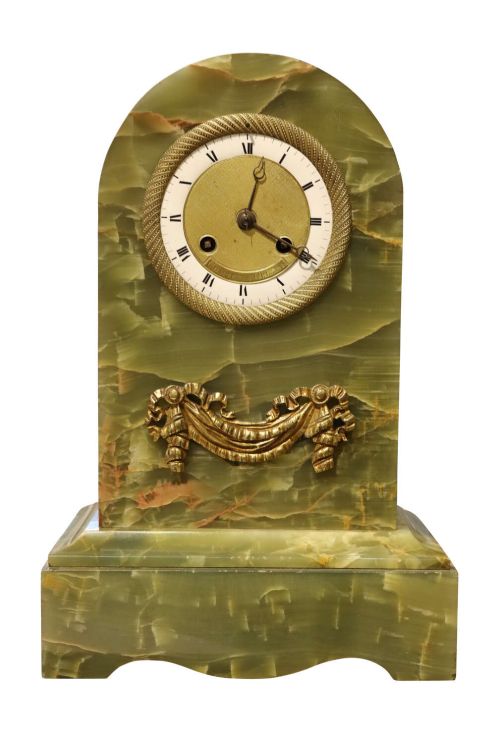
These heavy, striking antique marble clock timepiece designs bring nineteenth-century substance and French architectural presence to a mantelpiece.
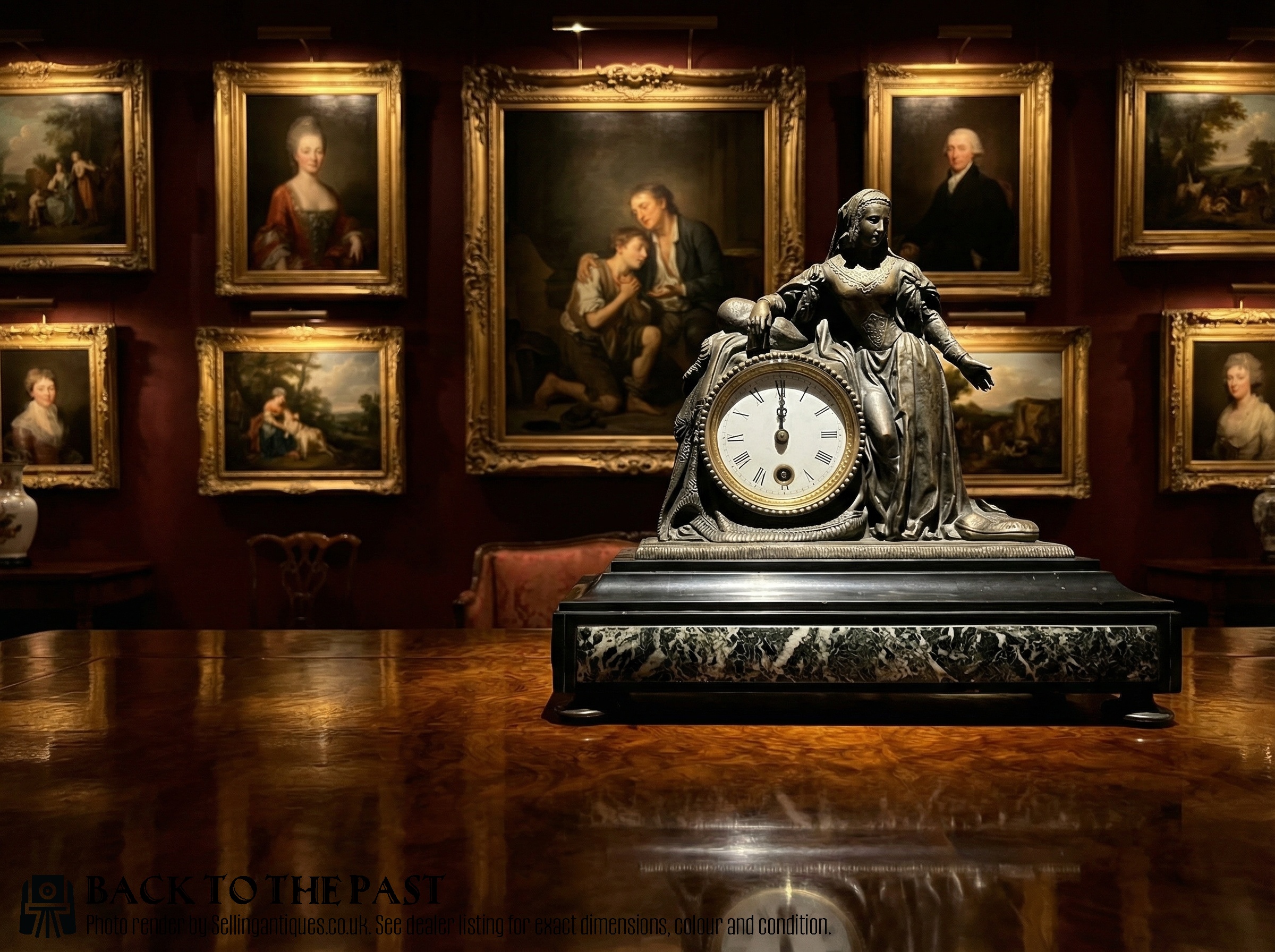
Antique Marble Clock Timepiece
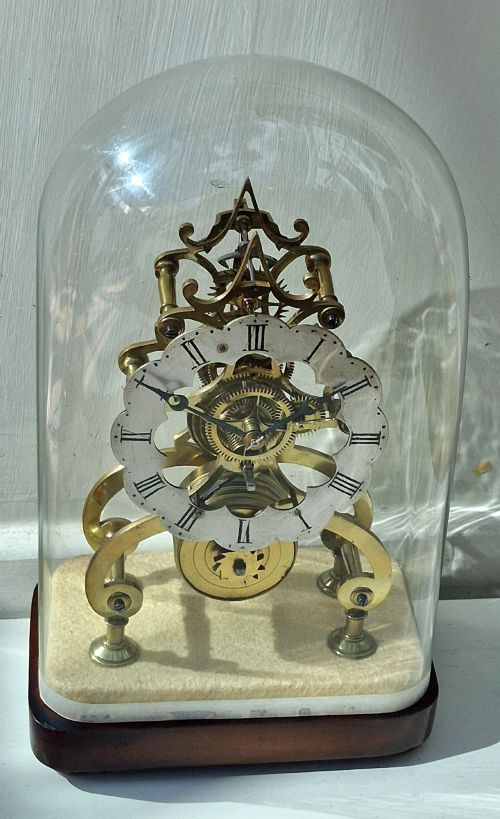
An antique marble clock timepiece serves as a substantial centrepiece, combining heavy stone housing with precise mechanical movement. You will encounter various forms here, ranging from simple drumhead designs to large garnitures flanked by matching urns or figural sculptures.
The pieces on this page span the nineteenth century into the art deco period of the 1920s and 1930s. Victorian interpretations and French models dominate the selection, often utilising contrasting black slate alongside green, red, or sienna marble.
Materials and construction
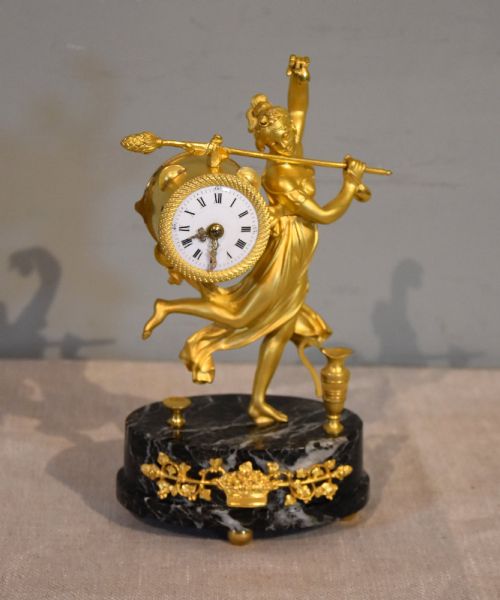
Makers shaped solid blocks of marble and slate into architectural cases, frequently mounting them with cast ormolu, gilt bronze, and brass details. Enamel dials protected by glass bezels display the hours, driven by brass mechanical movements.
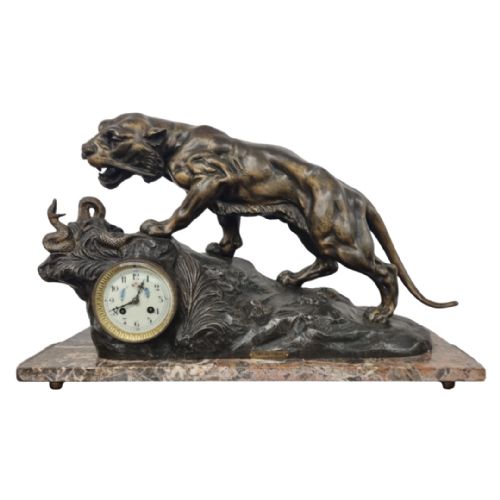
Casting techniques allowed workshops to incorporate intricate figural bronzes depicting animals, classical figures, or mythical motifs directly onto the marble plinths. The heavy stone cases required precise stonemasonry to house the complex clockworks securely.
Listings feature black slate, sienna marble, green onyx, and red marble alongside bronze and ormolu mounts.
Assessing quality and execution
The distinction between standard production and top-tier pieces rests on the choice of stone and the crispness of the bronze mounts. Richly figured sienna or green onyx marbles and finely chased ormolu elevate a piece well above plain utility.
A signed movement by a known maker adds considerable merit to the clock, demonstrating superior clockmaking craft. The integration of sculptural elements, such as cast animals or lyre frames, also signals ambitious workshop production.
Charles à Orléans·R Varnier·Philippes Paris·Louis Goret·Achille Brocot·William Hardy London·Michel Decoux
The Antique Marble Clock Timepiece Glossary
- Timepiece
- A clock that indicates the time without striking the hours or quarters. These movements focus purely on the continuous running and display of the time.
- Garniture
- A set consisting of a central clock accompanied by matching side ornaments such as urns or vases. They create a balanced, symmetrical arrangement on a mantelpiece.
- Ormolu
- Finely ground high-carat gold applied to bronze through a mercury-gilding process. This technique imparts a rich, lasting metallic lustre to decorative mounts.
- Slate
- A fine-grained metamorphic rock frequently utilised alongside marble in Victorian cases. It provides a heavy, dark foundation that contrasts sharply with gilt brass mounts.
- Fusee
- A conical pulley used in spring-driven clocks to maintain even power as the mainspring unwinds. This mechanism ensures more accurate timekeeping across the duration of the wind.
Antique Marble Clock Timepiece: Frequently Asked Questions
How do I wind an antique clock?
Most mechanical clocks require a specialised key inserted into the dial holes to tension the springs. Turn the key gently until you feel resistance, taking care not to over-wind the movement.
Ensure you stop immediately when the spring holds firm to prevent snapping the internal components. Regular, careful winding keeps the movement functioning smoothly.
Where should I place a marble clock?
These heavy timepieces require a sturdy, level surface such as a mantelpiece, sideboard, or heavy console table. The substantial weight of marble and slate demands solid support.
Keep the clock away from direct sunlight, damp areas, and extreme temperature fluctuations. A stable environment protects both the stone housing and the delicate brass movement inside.
How do I date a marble clock?
Look to the overall style, the materials used, and any signatures stamped on the movement plates or dials. French Empire and Neoclassical designs typically point to earlier periods, while Victorian slate and later art deco geometric forms suggest the turn of the century.
Maker signatures and registration marks often provide specific decade markers. Comparing the cast mounts and marble colours against known period aesthetics helps narrow the date further.
What is a clock garniture?
A clock garniture is a matched set comprising a central timekeeper flanked by two matching decorative objects, such as urns or candelabra. These sets were designed to be displayed together as a unified decorative scheme.
Originally popular in grand nineteenth-century interiors, they create a balanced focal point on large mantelpieces. The side pieces repeat the marble and bronze motifs found on the main clock case.