
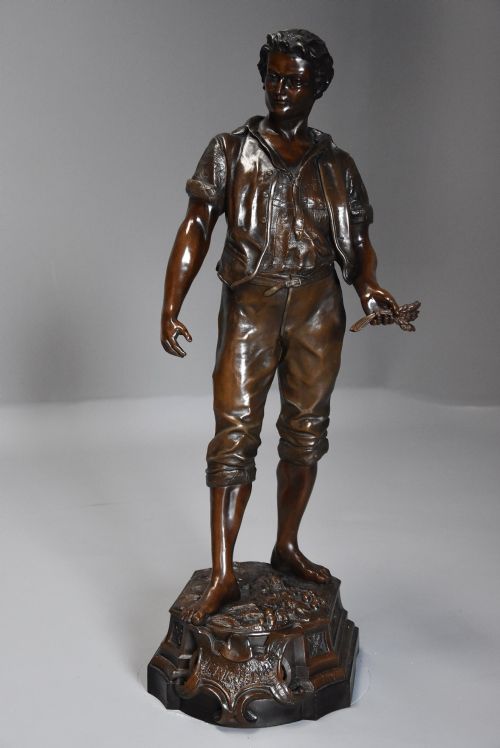


Victorian Bronze Figure Clock
These Victorian bronze figure clocks combine sculptural bronze figures with precise timekeeping, bringing classical French and Victorian craft into a room.
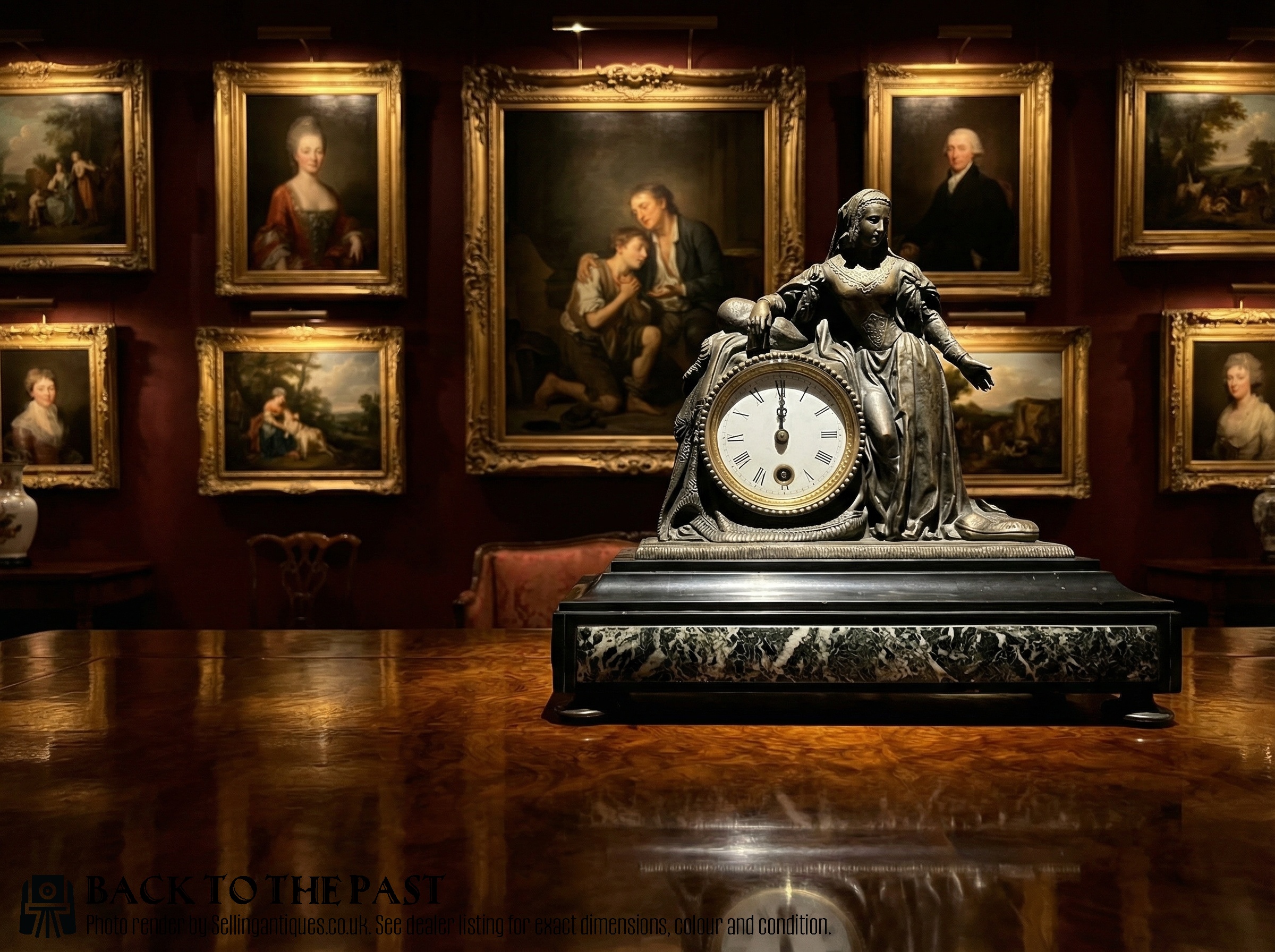
Victorian Bronze Figure Clock
A victorian bronze figure clock typically pairs a cast metal or bronze sculptural subject with a traditional dial, housed within mantel clock forms from the nineteenth century. These objects frequently originate from French workshops following revival styles like French Rococo and Louis XVI, alongside domestic Victorian productions.
Buyers encounter mantel clocks featuring figures ranging from farm labourers and cherubs to putto with dogs and Arab statues. Many examples incorporate side garnitures or marble bases, reflecting the formal interior design tastes of the nineteenth century.
Materials and Construction
Makers cast these pieces using bronze, gilt bronze, or ormolu, frequently combining them with marble bases and enamel dials. Some pieces utilise bronzed spelter or gilt metal as alternatives to solid bronze, paired with glass dial covers.
Workshops employed detailed casting and chasing techniques to render the sculptural figures, from human labourers to mythological putti. Movements typically provided eight-day striking capability, mounted within heavy metal and stone housings.
Judging Quality
The sophistication of the cast figure largely dictates the distinction between standard and superior pieces. Finer examples display crisp chasing on the bronze or ormolu surfaces and bear signatures from established makers or artists.
The integration of materials also separates works, where genuine marble and heavy gilt bronze outclass lighter metal alloys and simpler wooden or mixed housings. The presence of matching garniture sets further elevates a piece.
F.Milliot·Lemerle Charpentier·Phillipe H. Mourey·F Marti·Louis Hottoot
The Victorian Bronze Figure Clock Glossary
- Ormolu
- Gilded bronze, where a mercury-gilding technique coats the bronze base with a rich gold layer. This finish appears frequently on French revival mantel clocks.
- Spelter
- A zinc alloy used as a cheaper substitute for bronze, often painted or bronzed to imitate heavier metal. It allows for intricate sculptural casting at a lower weight.
- Garniture
- A set of matching decorative ornaments, such as a clock accompanied by side vases or matching figures. These sets sit together on a mantelpiece.
- Enamel
- A glassy substance fused to metal dials to create a smooth, white surface for painted numerals. Enamel dials provide a clear contrast against the dark bronze figures.
- Striking
- A mechanical function in the clock movement that rings a bell or gong to mark the hours or half-hours. Eight-day movements require winding at weekly intervals.
Victorian Bronze Figure Clock: Frequently Asked Questions
How do I wind a Victorian clock?
Most pieces utilise an eight-day movement requiring a key to turn the arbors located on the enamel dial.
Care must be taken not to overwind the springs, ensuring the clock maintains steady timekeeping.
Where should I place a mantel clock?
These heavy pieces require a stable, level surface such as a mantelpiece, sideboard, or sturdy table.
Keep them away from direct sunlight and damp environments to protect the marble, bronze, and enamel elements.
What is a clock garniture?
A garniture consists of a central mantel clock accompanied by matching side pieces, such as vases or sculptural figures.
These sets were designed to create a balanced display across a large mantel or fireplace.
How do I distinguish bronze from spelter?
Bronze is heavier, colder to the touch, and allows for sharper detail in the chased surface.
Spelter is a softer zinc alloy that often shows lighter weight and different wear patterns where the surface finish rubs off.