




Sculptural Bronze Clock
These sculptural bronze clock examples unite substantial cast metalwork with functional timekeeping, offering a striking centrepiece for a traditional interior.
Sculptural Bronze Clock
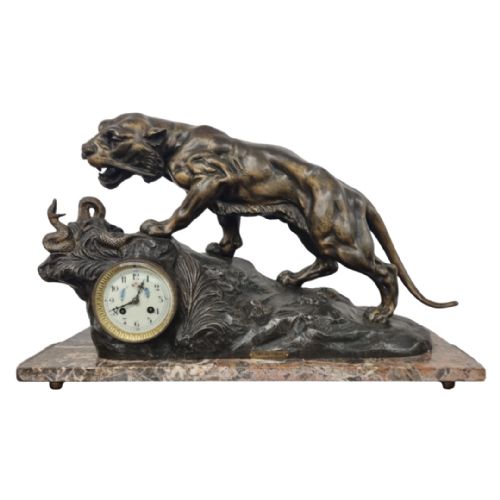
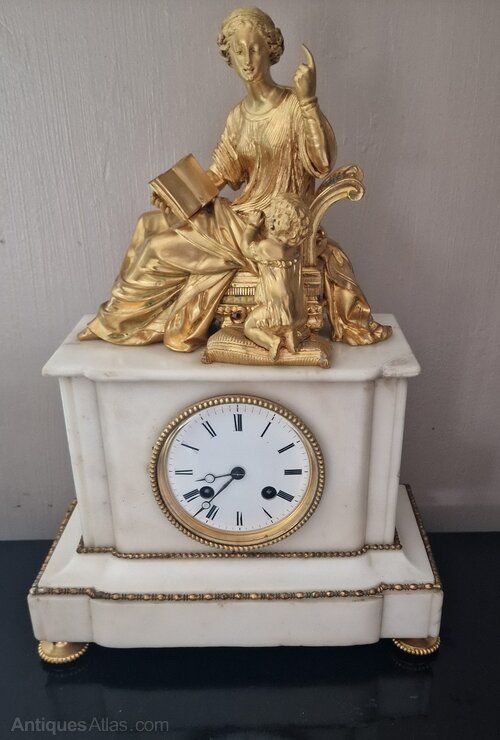
A sculptural bronze clock combines figurative or architectural cast metalwork with a mechanical movement, often taking the form of a mantel clock or clock garniture. These pieces frequently incorporate detailed figures, animals, or mythological subjects alongside the dial.
The selection here draws primarily from nineteenth century French workshops, moving through styles such as French Rococo Revival, Neoclassical, Art Nouveau, and Art Deco. Buyers will frequently encounter versions paired with marble stands or forming part of a three piece clock set.
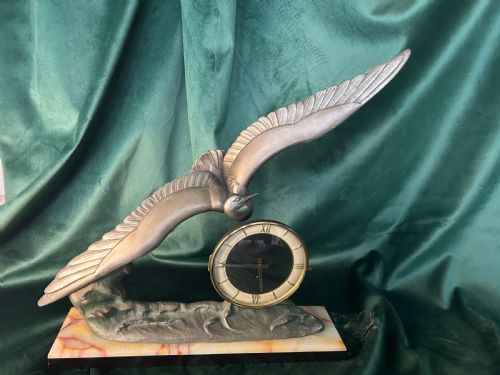
Mantel clocks and clock garnitures dominate the available forms, ranging from architectural marble cases surmounted by bronzed figures to sweeping organic Art Nouveau designs. Each piece reflects the decorative tastes of periods spanning from the early nineteenth century into the twentieth century.
Materials and construction methods
The fabrication of these objects relies heavily on bronze casting, often enhanced with ormolu or gilding to highlight specific decorative elements. Foundries utilised lost-wax or sand-casting techniques to achieve intricate detail in figures, foliage, and architectural mounts.
Marble frequently serves as a substantial plinth or case material, providing a contrasting weight and texture to the metallic elements. Enamel dial plates, glass covers, and subsidiary brass components complete the internal and external structure of the timepieces.
Watch out for startled serpents and watchful tigers sharing mantel space with delicate dragonflies and cherubs.
Factors defining superior examples
Quality in these pieces rests upon the crispness of the bronze casting and the depth of the subsequent chasing work by hand. Superior examples display sharp relief in figurative elements and careful finishing that softer castings simply lack.
The integration between the sculptural elements and the marble or metal case marks the distinction between standard production and exceptional craftsmanship. Harmonious proportions, well-preserved gilding or patination, and the integrity of associated garniture pieces elevate the standing of an individual clock.
R Varnier·Berger·Lemerle Charpentier·François Linke
The Sculptural Bronze Clock Glossary
- Ormolu
- A technique involving the application of finely ground, high-karat gold to a bronze object. This mercury gilding process yields a rich, durable yellow finish seen on many nineteenth-century French pieces.
- Garniture
- A set of decorative matching objects designed to be displayed together on a mantelpiece. In clock sets, this typically comprises a central clock flanked by matching vases, urns, or candelabra.
- Spelter
- An alloy of zinc and lead used as a cheaper alternative to bronze for sculptural figures. It appears in less costly decorative pieces and requires careful handling due to its relative brittleness.
- Animalier
- A nineteenth-century artistic style focusing on the realistic depiction of animals, particularly predators and prey. Clocks in this vein often feature wild beasts integrated into the sculptural case.
- Drum Head Clock
- A timepiece housed within a circular metal case resembling a drum, mounted upon a plinth or architectural base. This form is common in nineteenth-century French mantel designs.
Sculptural Bronze Clock: Frequently Asked Questions
How do I wind an antique mantel clock?
Most antique mechanical clocks utilise a key inserted into arbors on the enamel dial to tension the mainsprings for time and strike trains.
Care must be taken not to over-wind the movement, stopping promptly when resistance is felt to protect the internal brass gears.
Where should I place a heavy marble clock?
These dense objects require a deeply stable, level surface such as a heavy sideboard or a secure mantel shelf to support their considerable weight.
Avoid placing them in areas subject to vibrations or direct sunlight, which can destabilise the mechanism and affect the marble or enamel.
What does a clock garniture include?
A garniture typically consists of a central timepieces accompanied by two matching side ornaments such as urns or vases.
These matching pieces share the same materials, patination, and sculptural vocabulary to create a balanced arrangement across a mantelpiece.
How do I distinguish bronze from spelter?
Bronze offers greater weight, a resonant sound when struck lightly, and a capacity for sharp, crisp surface detail during casting.
Spelter is lighter, softer to the touch, and often reveals a greyish base metal where the surface finish has worn away over time.