




Antique Stone Mantle Clock
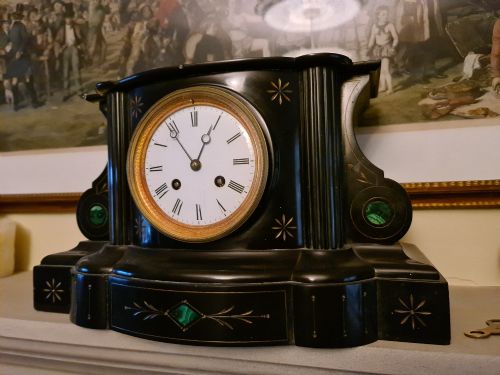
An antique stone mantle clock brings architectural presence and heavy mineral colour to a room, anchoring a mantelpiece with solid Victorian gravity.
Antique Stone Mantle Clock
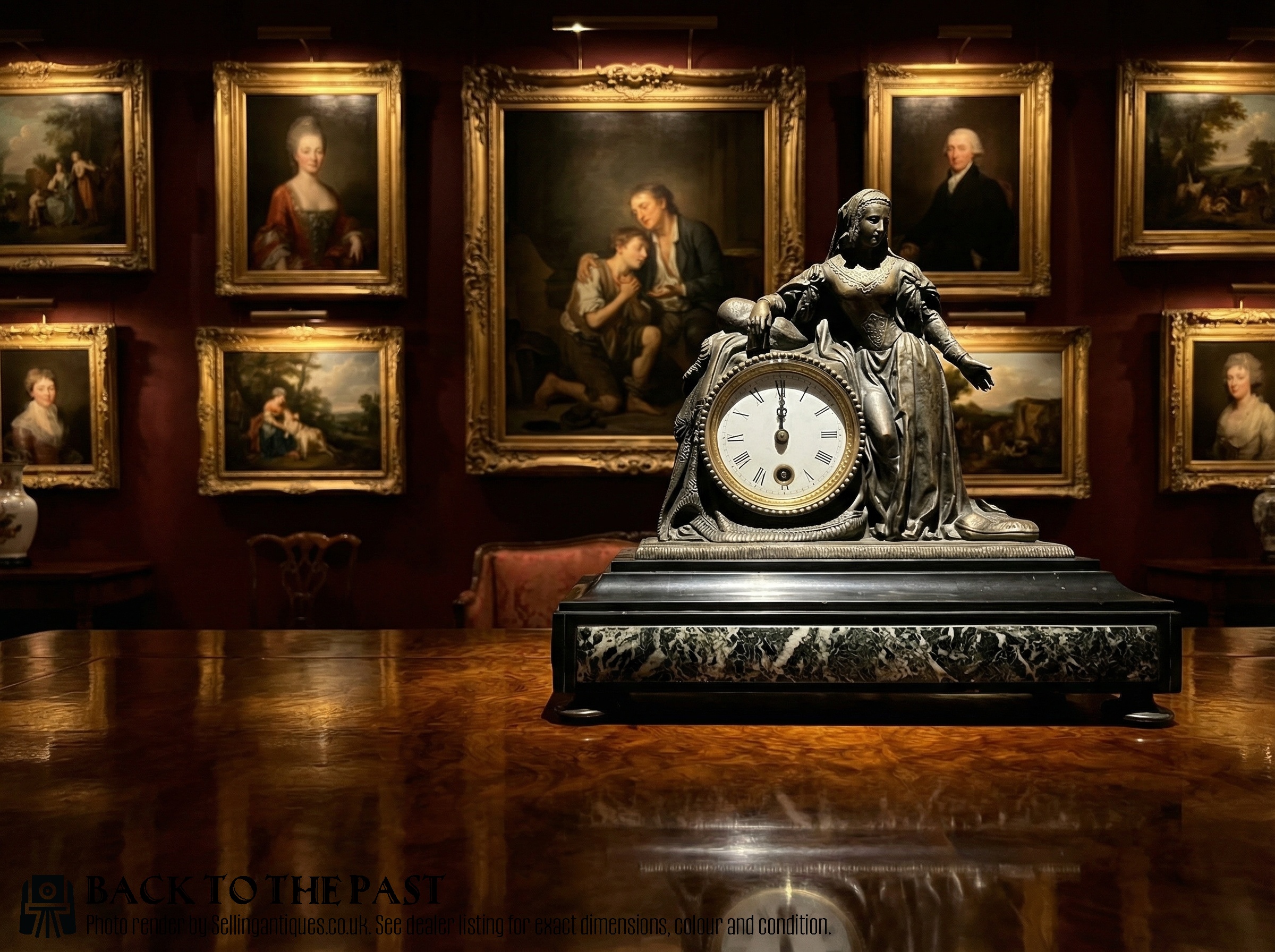
When you search for an antique stone mantle clock, you are looking at substantial heavy timepieces constructed from dense mineral blocks. The examples you are most likely to meet on this page hail from the nineteenth century, with Victorian pieces dominating the selection in solid marble and slate.
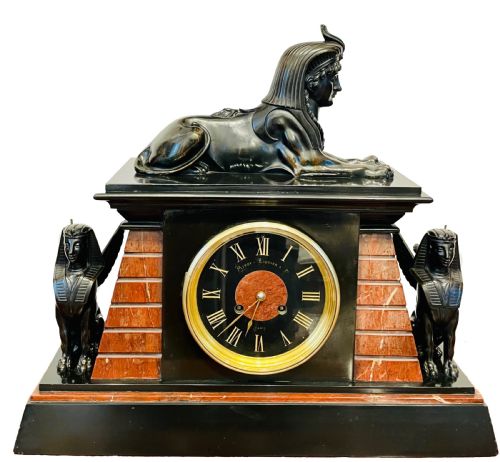
These clocks take diverse architectural forms, ranging from simple block structures to grand garnitures with matching side ornaments. Styles span classic Victorian designs through to Egyptian Revival and Neoclassical interpretations, alongside later Art Deco iterations.
Origins heavily lean towards French workshops, notably featuring movements from makers such as Philippes Paris housed in robust stone chassis. The forms vary from straightforward domestic timekeepers to monumental architectural facades.
Materials and construction methods
Makers utilised dense natural materials like black slate, Sienna marble, and regular marble, often accented with inlays of malachite or highlights in brass and glass. These heavy stone blocks were laboriously cut, shaped, and polished to create smooth architectural surfaces.
Enamel dials were fitted into the stone faces, protected behind glass bezels and driven by complex eight day movements. Artisans incorporated classical revival motifs and Egyptian influences directly into the stone carving or through applied brass elements.
Listings feature marble, slate, brass, glass, and malachite across Victorian, Neoclassical, and Art Deco styles.
Assessing quality in stone clocks
Engineering also dictates worth, as seen in robust eight day movements signed by notable makers like Philippes Paris compared to simpler internal mechanisms. The crispness of the stone cutting and the integration of classical or Egyptian revival motifs reveal the original maker's skill.
Philippes Paris
The Antique Stone Mantle Clock Glossary
- Garniture
- A set consisting of a central clock flanked by matching side ornaments, designed to sit together on a mantelpiece.
- Black Slate
- A fine-grained metamorphic rock used extensively for Victorian clock bodies, prized for its ability to take a deep, dark polish.
- Sienna Marble
- A decorative yellow-brown Italian marble featuring dark veining, utilised in high-end nineteenth century clock cases.
- Eight Day Movement
- A mechanical clock movement that requires winding roughly once a week, typical of better quality domestic timekeepers.
- Egyptian Revival
- A nineteenth century design style incorporating motifs inspired by ancient Egyptian architecture, such as sphinxes and pyramids, applied to clock cases.
Antique Stone Mantle Clock: Frequently Asked Questions
How heavy is an antique stone mantle clock?
These pieces are exceptionally heavy because they are constructed from solid blocks of marble, slate, and other dense minerals.
Buyers must ensure their mantelpiece or shelf is structurally sound enough to support a weight that often exceeds ordinary wooden or ceramic clocks.
How do I wind an eight day clock?
An eight day movement requires a key inserted into winding holes on the enamel dial to tension the internal springs once a week.
Care should be taken not to overwind the mechanism, ensuring the clock maintains accurate time throughout its weekly cycle.
Are these clocks French or British?
Many high-quality nineteenth century stone clocks found in Britain houses actually originated in French workshops and utilised imported movements.
French makers frequently exported architectural marble and slate cases that catered to British interior tastes.
How do I identify a Neoclassical style clock?
Neoclassical pieces draw inspiration from ancient Greek and Roman architecture, featuring clean geometric lines, columns, and restrained classical motifs.
These designs contrast with the more ornate Egyptian Revival or heavy Victorian classical styles found in the same era.