




Antique Marble Bistro Table
An antique marble bistro table brings enduring French café style and robust utility into modern spaces.
Antique Marble Bistro Table
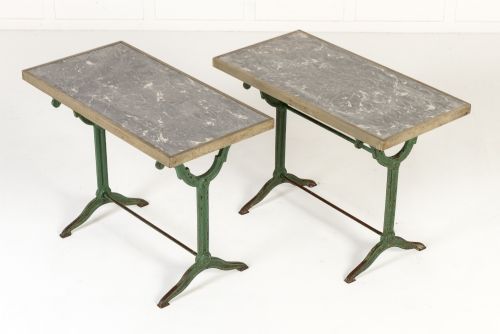
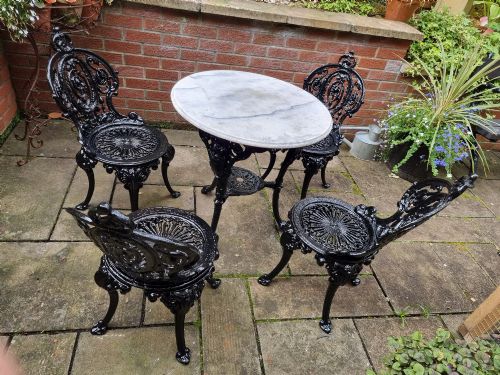
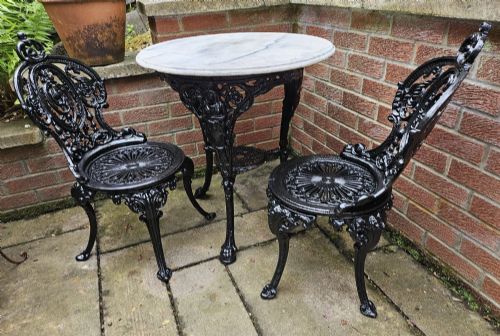
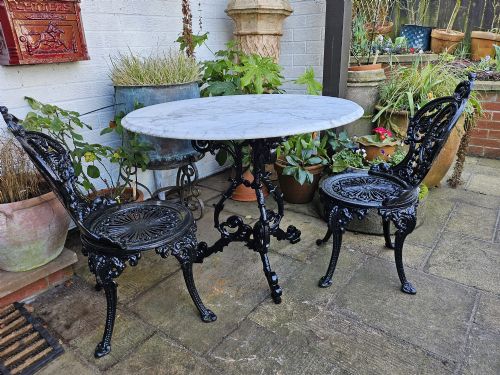
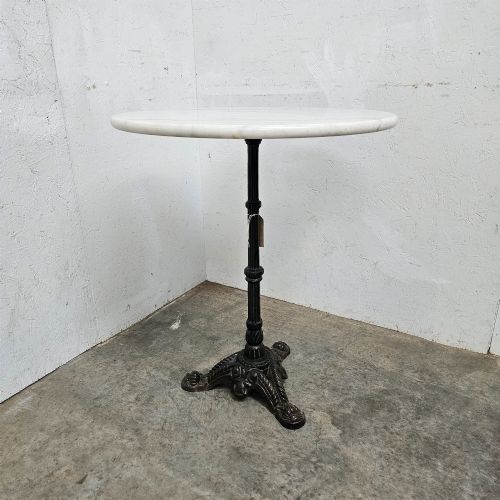
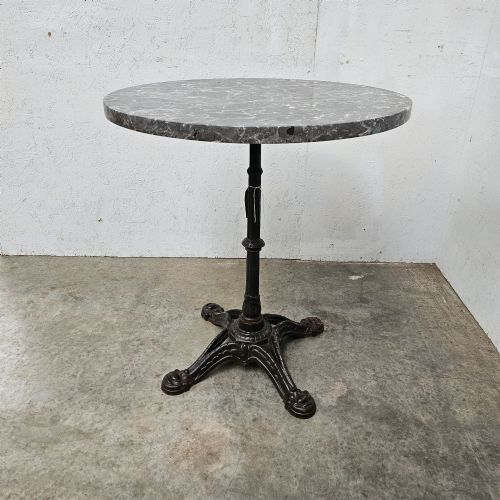
An antique marble bistro table combines heavy stone tops with durable metal bases designed for commercial and domestic use. When searching for an antique marble bistro table, buyers encounter forms originating primarily from French and British contexts spanning the nineteenth and early twentieth centuries.
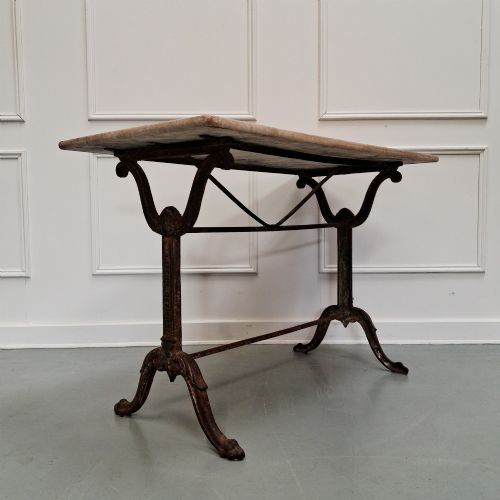
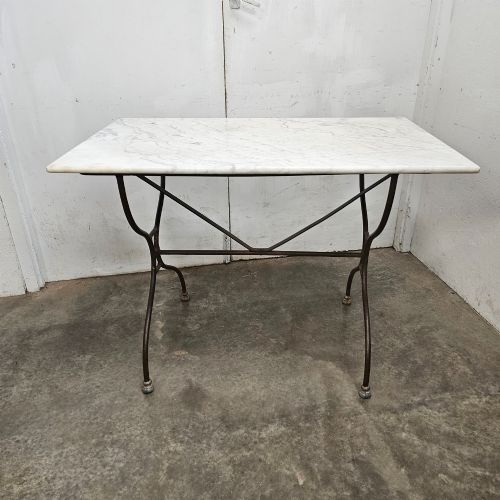
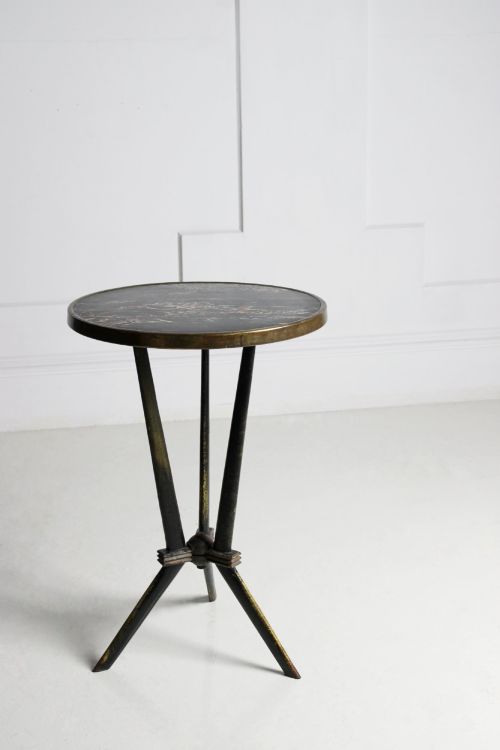
The inventory on this page demonstrates that these pieces appear frequently as traditional bistro, café, and patisserie tables alongside related garden, console, and centre tables. Most examples feature circular or rectangular stone surfaces supported by cast iron or wrought iron frameworks.
Origins trace across Victorian, Edwardian, and nineteenth century periods, with French industrial and country styles heavily represented. Buyers commonly select these versatile tables for compact dining areas, kitchens, and garden rooms.
Materials and construction methods
Construction relies upon heavy natural stone paired with industrial metals to ensure stability and weight. Tops consist of white marble, grey marble, green marble, or multi-coloured specimen marble slabs resting on structural bases.
Bases utilise cast iron, wrought iron, and occasionally brass or wood components shaped through period foundry and metalworking techniques. The heavy metal frames provide the necessary counterweight to support dense stone tops without tipping.
Many a sturdy bistro base has spent decades debating the weather outdoors while holding nothing heavier than a morning espresso.
Factors determining quality
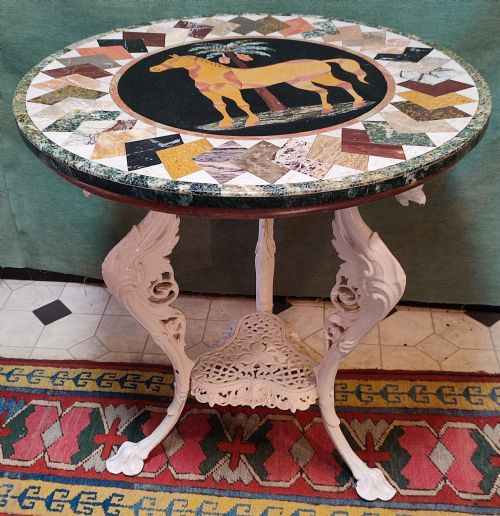
Quality rests upon the character and weight of the stone top, with superior examples displaying rich veining, specialised marble varieties like green or specimen work, and substantial thickness. The finesse of the iron base also dictates grade, separating utilitarian foundry work from more decorative Rococo Revival or ornate French designs.
Proportion and structural integrity define the higher tiers of surviving pieces, where original patination on both metal and stone remains intact without excessive modern intervention.
The Antique Marble Bistro Table Glossary
- Bistro table
- A small dining table originally intended for use in commercial cafés and drinking establishments. These pieces typically feature compact footprints suitable for restricted spaces.
- Specimen marble
- Stonework composed of numerous small geometric or geological marble fragments assembled into a decorative mosaic pattern. This technique creates complex multi-coloured surfaces.
- Cast iron
- An iron-carbon alloy poured into moulds to create intricate structural bases and decorative legs. It provides exceptional weight and durability for outdoor and commercial furniture.
- Patisserie table
- A specialised commercial table historically utilised in French bakeries and pastry shops. They often share the heavy iron and marble configuration seen in standard bistro furniture.
- Console table
- A table designed to stand against a wall, frequently supported by wall brackets or heavy legs. In historical pieces, these often share identical iron and stone materials with freestanding bistro tables.
Antique Marble Bistro Table: Frequently Asked Questions
Can I use an antique bistro table outside?
Many surviving examples were originally built for outdoor garden or pavement use and feature weather-resistant cast iron bases. However, natural marble remains porous and vulnerable to frost expansion, so vulnerable stone benefits from winter storage indoors.
Regular cleaning and protection from standing water help preserve the historic iron patinated surfaces against active corrosion in damp climates.
How do I clean an antique marble top?
Historic marble requires gentle cleaning using warm water and mild, pH-neutral soap to avoid etching the polished stone surface. Acidic substances like vinegar, citrus, and wine can permanently dull the marble finish if left unattended.
Prompt wiping after use protects the stone from absorbing staining liquids into its natural pores over time.
Are these tables heavy to move?
The combination of dense natural stone slabs and heavy cast iron bases makes these tables remarkably weighty and stable. Moving them generally requires two people to lift the top and base safely without straining joints or damaging flooring.
Many period tables feature separate tops resting on the iron base rather than being permanently fixed, allowing the pieces to be dismantled for transport.
How do I distinguish French bistro tables from English ones?
French examples often exhibit distinct café or industrial foundry traits, including specific leg curvatures, patisserie origins, and green or grey marble variations. English counterparts frequently align with Victorian or Edwardian domestic aesthetics, including conservatory and garden table classifications.
Examining the casting marks, bolt types, and regional marble sources provides further clues regarding the workshop origin of each piece.