




Antique Map Cabinet
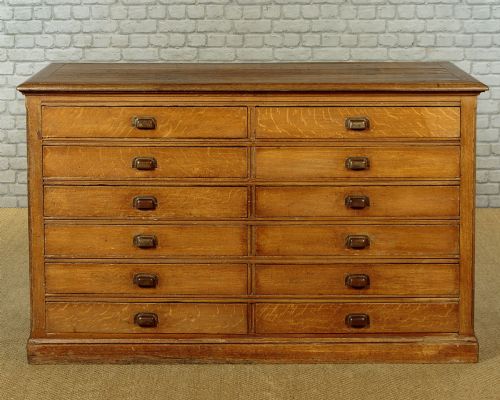
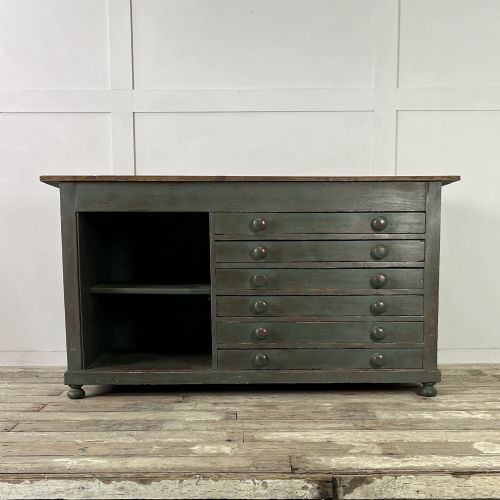
An antique map cabinet stores large format charts and plans safely, bringing fine timber work and functional depth to a room.
Identifying an antique map cabinet
The antique map cabinet category encompasses large storage forms, including floor standing folio cabinets, plan chests, and heavy collectors cabinets designed to hold flat sheets. Pieces span the eighteenth century, the Victorian era, and early twentieth century periods like the Edwardian epoch.
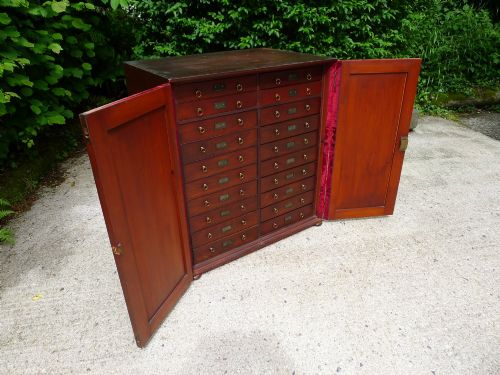
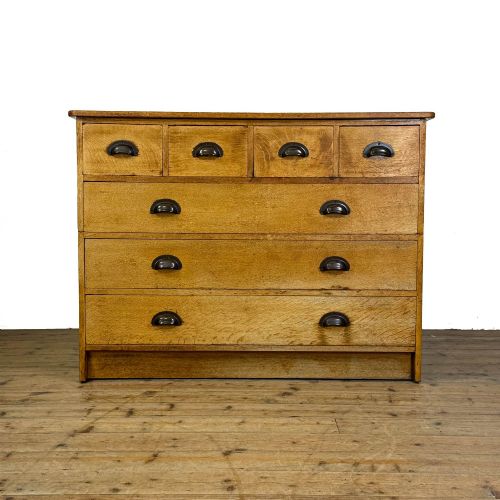
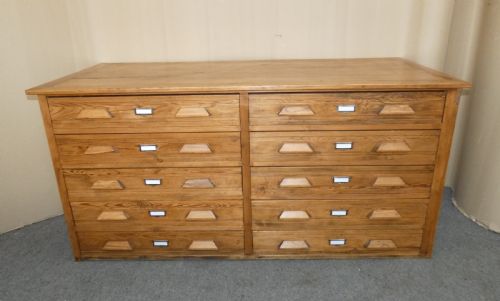
Most examples found on this page are constructed from mahogany, walnut, or oak, often arranged as wide chests of shallow drawers built specifically for manuscripts, charts, and drawings.
Styles range from George III simplicity through Gothic Revival oak to later Edwardian interpretations, reflecting the changing tastes of institutions and private scholars who needed to preserve large paper documents.
Distinguishing quality across pieces
The degree of refinement rests on the choice of timber and the precision of the drawer construction, where tight joints and smooth sliding actions separate utilitarian pieces from grander commissions.
Provenance and maker attribution elevate certain works significantly, transforming a standard storage unit into a notable example of period cabinet making.
Retail Price Guide 2026
Typical UK retail prices for map cabinet, calculated from the Sellingantiques database of over a million retail prices indexed since 2003. This retail price guide relies exclusively on Sellingantiques data; no external sources or auction records are used, so the figures do not describe the wider market.
The listings combine mahogany, walnut, and oak across Victorian, Edwardian, and eighteenth century periods.
Whytock And Reid Of Edinburgh·Brady·Benjamin Taylor And Sons·Maple And Co·Maples Of London
The Antique Map Cabinet Glossary
- Folio Cabinet
- A tall piece containing wide, shallow shelves or drawers designed for storing unbound paper sheets, maps, and large prints. These units protect fragile documents from light and dust.
- Plan Chest
- A heavy chest featuring numerous wide drawers built specifically for architectural drawings and maps. They provide flat horizontal storage to prevent paper curl.
- Collectors Cabinet
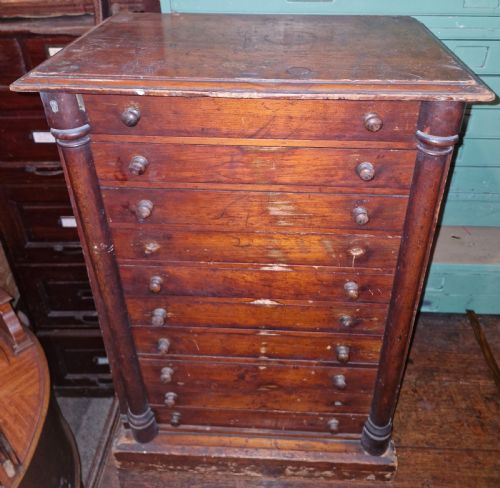
- A specialised case fitted with many small internal drawers for specimens or small objects. They often feature panelled doors enclosing the drawer stack.
- Gothic Revival
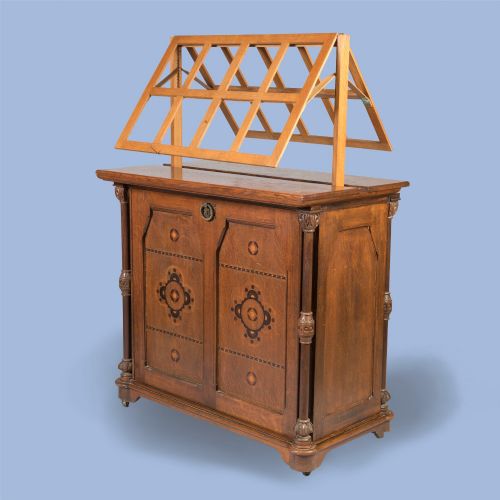
- A nineteenth century architectural and decorative style drawing on medieval forms. Pieces in this idiom display pointed arches, heavy mouldings, and robust oak construction.
- Boxwood Inlay
- Contrasting pale wood inserted into recesses in a darker timber surface to form delicate geometric or floral patterns. This technique highlights the borders and panels of finer furniture.
Frequently Asked Questions
How were antique map cabinets used originally?
These cabinets served in offices, libraries, and studies to organise large paper documents, charts, and architectural plans flat and flat files prevented curling.
Cartographers, surveyors, and collectors relied on the shallow drawers to sort delicate folios without folding them.
What woods do these cabinets use?
Makers predominantly selected dense hardwoods like mahogany, walnut, and oak to provide the necessary structural strength for wide drawers.
Secondary decorative touches often involved boxwood inlay, satinwood, and brass hardware to enhance the exterior appearance.
How do I date an antique map cabinet?
Dating relies on observing the timber choice, construction methods, and stylistic cues such as George III proportions or Gothic Revival mouldings.
Maker stamps and labels also help pinpoint the exact decade of manufacture, ranging from eighteenth century pieces to early twentieth century examples.
Are these cabinets suitable for modern homes?
The wide, shallow proportions make them ideal for organising contemporary art prints, collections, or flat linens in a study or hallway.
Their substantial timber presence also allows them to function as striking sideboards or display surfaces.