






Antique Mantelpiece Timepiece
An antique mantelpiece timepiece brings mechanical precision and period character to a room, sitting quietly upon the shelf as it has for generations.
Antique Mantelpiece Timepiece
An antique mantelpiece timepiece is a self-contained clock designed to stand on a shelf or mantel, keeping hours in domestic and formal spaces alike. When searching this phrase, a buyer encounters everything from Edwardian mahogany household clocks to ornate French ormolu examples from the nineteenth century.
The pieces appearing on this page span the nineteenth and early twentieth centuries, covering periods from the Regency era through to Art Deco. Formats range from simple wooden carriage clocks and lantern clocks up to elaborate portico clocks and porcelain-mounted garniture sets.
Victorian and Edwardian versions in mahogany or brass dominate the selection, alongside continental pieces in marble and bronze. Buyers find both English makers working in London and Edinburgh and French workshops producing gilt bronze and porcelain designs.
How they were made
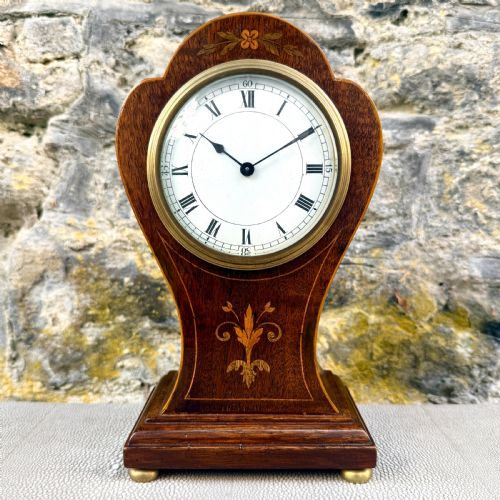
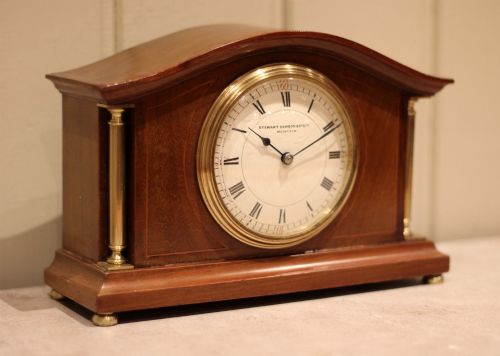
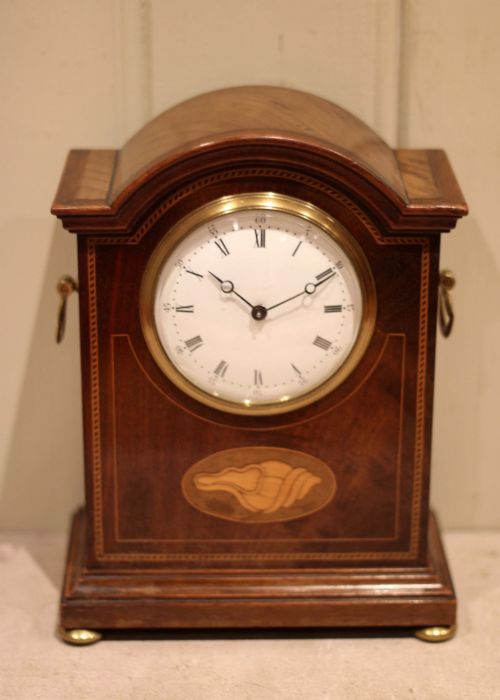
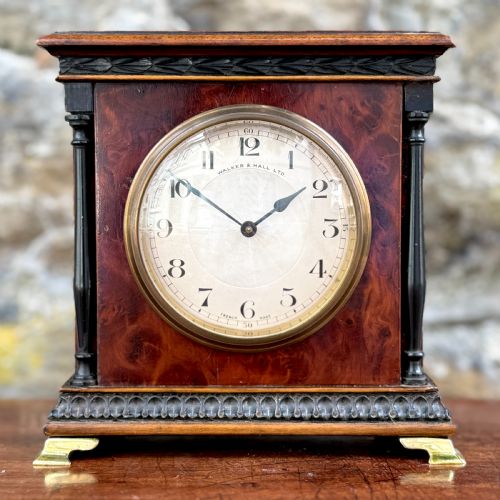
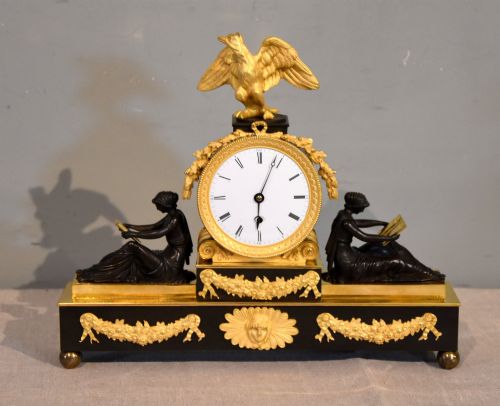
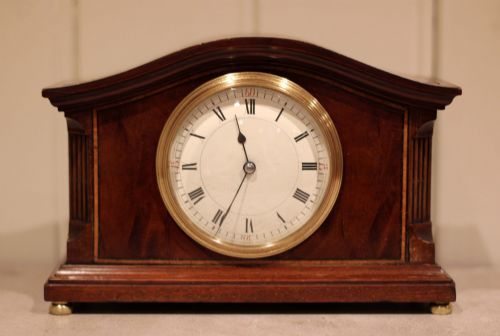
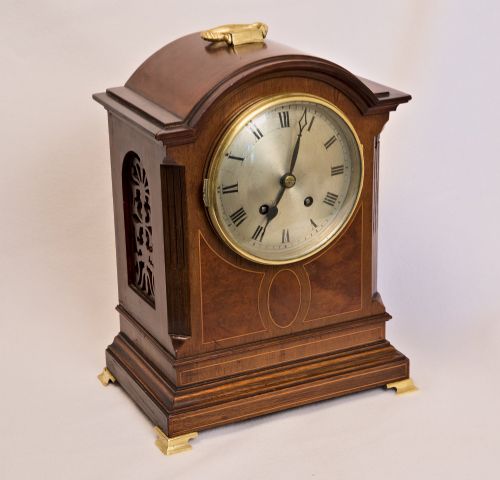
Cabinetmakers constructed wooden cases using mahogany, rosewood, satinwood, and walnut, often applying delicate marquetry or brass inlay. Metalworkers cast brass, ormolu, and patinated bronze into structural frames and decorative figural mounts.
Dials integrated glass faces, painted enamel numerals, and engine-turned brass masks to protect delicate hands and movements. Stonework also played a structural role, with red marble, sienna marble, and green glass shaping distinct architectural silhouettes.
A porcelain-mounted boudoir clock sits ready to tick away the hours while an ivory-tusked bronze elephant stands guard over another.
What varies in quality
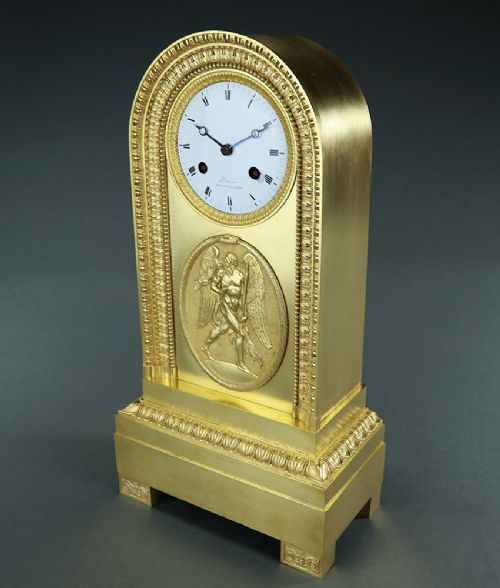
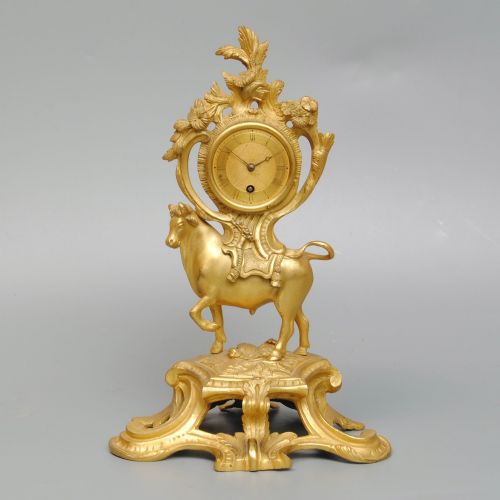
The crispness of the casting in ormolu and bronze determines the definition found in figural and floral ornaments. Sharp, deeply chased details separate superior decorative mounts from softer, simpler production pieces.
Case construction reveals the maker's hand through precision in wood veneers, the tightness of mitred joints, and the integration of inlaid lemon wood or marquetry. High-grade materials like solid mahogany or figured walnut paired with fine enamel dials elevate a piece above standard domestic models.
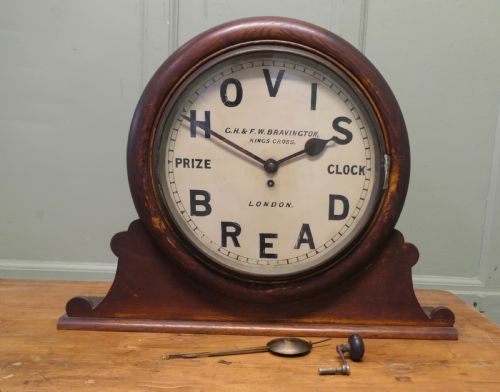
G.H & F.W Bravington London·Walker and Hall·Baetens London·Viner London·Arnold and Frodsham·Grey of Edinburgh·Henry Marc·Delépine
The Antique Mantelpiece Timepiece Glossary
- Timepiece
- A clock that tells the time without striking hours or chiming melodies. It relies purely on its going train to drive the hands.
- Ormolu
- Gilt bronze created by applying a mercury and gold amalgam to cast bronze. This technique produced a durable golden finish seen on French decorative clocks.
- Portico clock
- A monumental clock design styled like a classical temple with pillars or columns flanking the central dial. These architectural pieces often used rosewood and ormolu.
- Carriage clock
- A small, portable spring-driven timepiece fitted with a handle, originally designed for travelling. Many featured glass panels to display the internal escapement.
- Garniture
- A set consisting of a central clock flanked by matching decorative objects such as urns or vases. They created a symmetrical arrangement on a mantelpiece.
- Lantern clock
- An early brass chamber clock of cage-like construction designed to hang on a wall or stand on feet. They represent some of the earliest domestic mechanical clocks.
Antique Mantelpiece Timepiece: Frequently Asked Questions
How do I wind a mantel timepiece?
Most mechanical timepieces require a matching key inserted into the winding square on the dial face. Turn the key gently until resistance indicates the mainspring is fully wound.
Avoid over-winding the mechanism, as this can strain the internal spring. Regular, careful winding keeps the beat steady and accurate.
Where should I place a mantel clock?
These clocks belong on stable horizontal surfaces such as mantelpieces, sideboards, or brackets secured to the wall. A stable foundation prevents vibrations from disrupting the pendulum or balance wheel.
Keep wooden and gilt cases away from direct sunlight and heat sources to protect the finish and prevent timber from warping.
How do I tell an Edwardian clock from a Victorian one?
Victorian clocks often favour heavier materials like dark mahogany, marble, or elaborate ormolu with ornate historical revival styles. Their proportions tend to be robust and heavily decorated.
Edwardian designs frequently lean towards lighter satinwood or inlaid mahogany cabinets influenced by Art Nouveau or simpler neoclassical tastes. The lines are generally cleaner and more restrained.
What is the difference between a French and English clock?
French mantel clocks from the nineteenth century frequently emphasise decorative arts, utilising ormolu, porcelain panels, and figurative bronzes in styles like Louis XVI Revival. The visual focus rests heavily on the sculptural case.
English timepieces often prioritise robust case timber, such as mahogany or rosewood, paired with restrained brass dials and traditional joinery. They reflect a domestic focus on solid craftsmanship and dependable mechanics.