


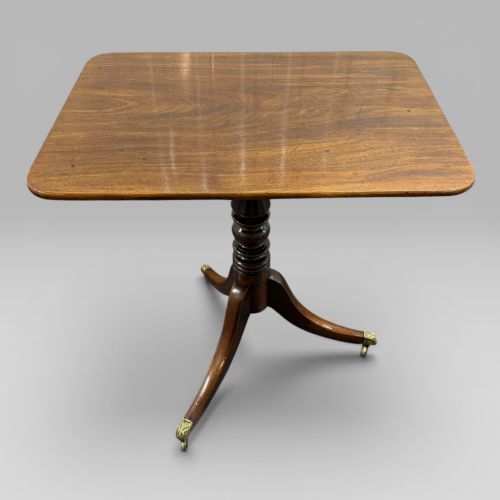
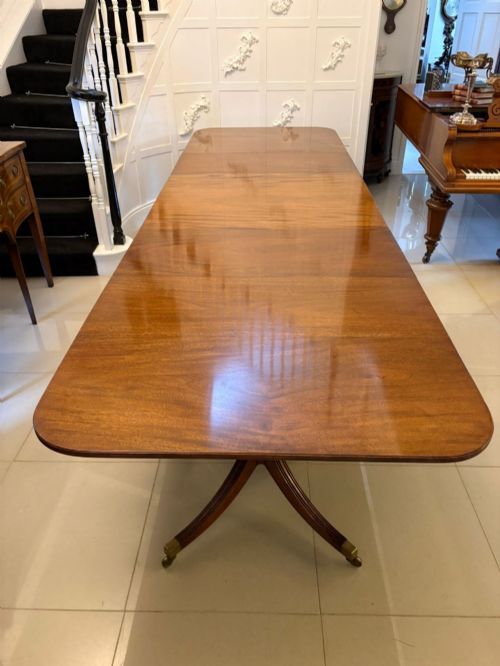
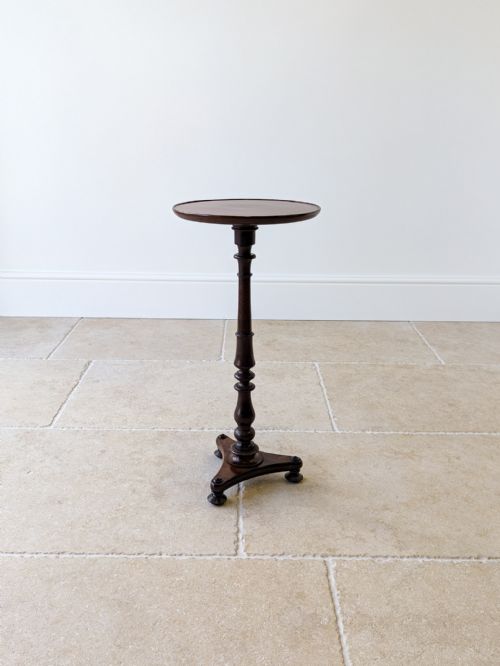
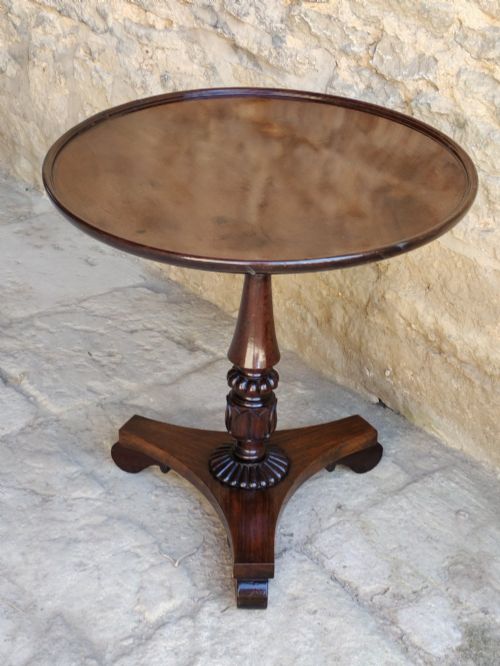
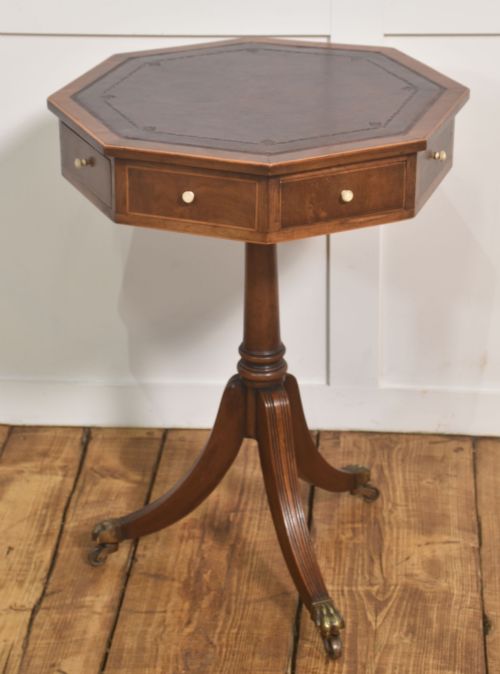
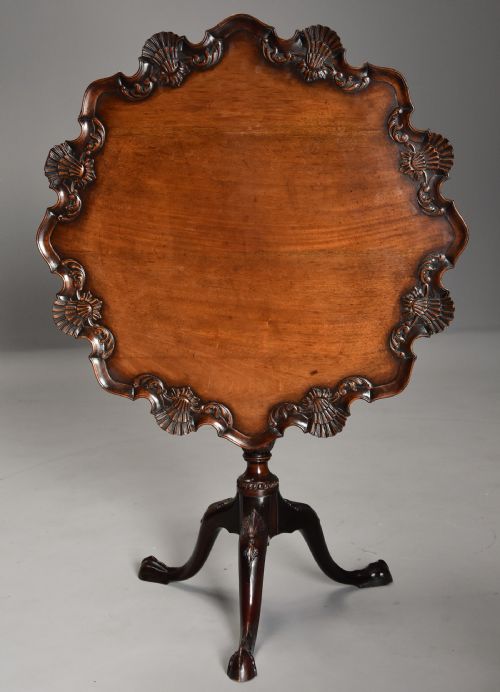
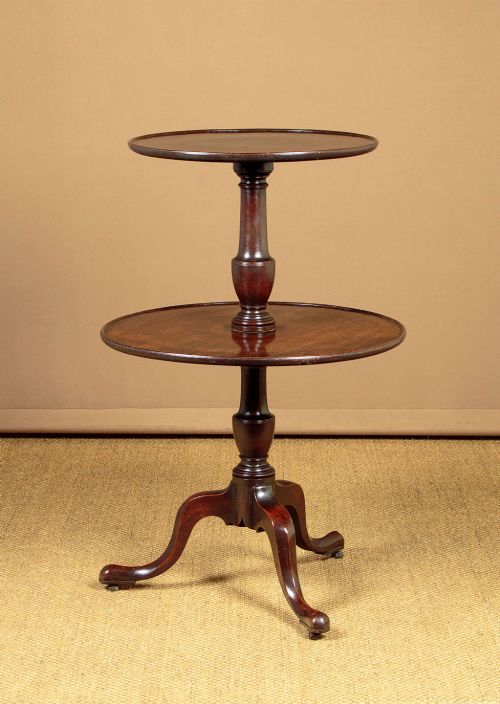
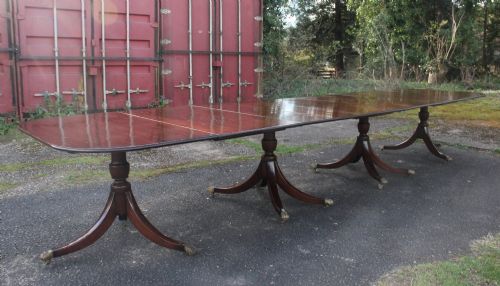
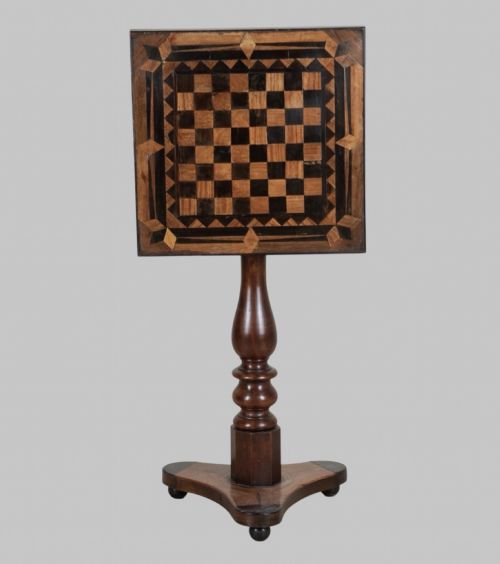
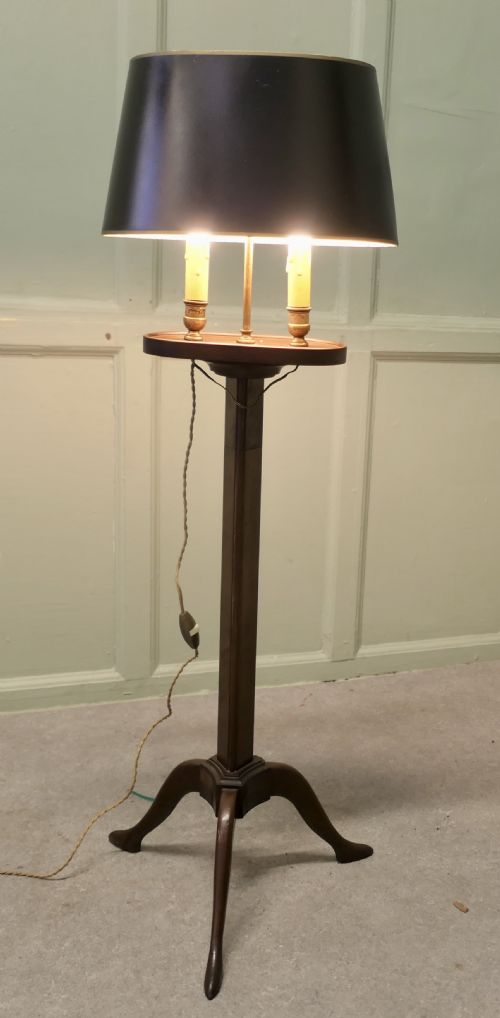
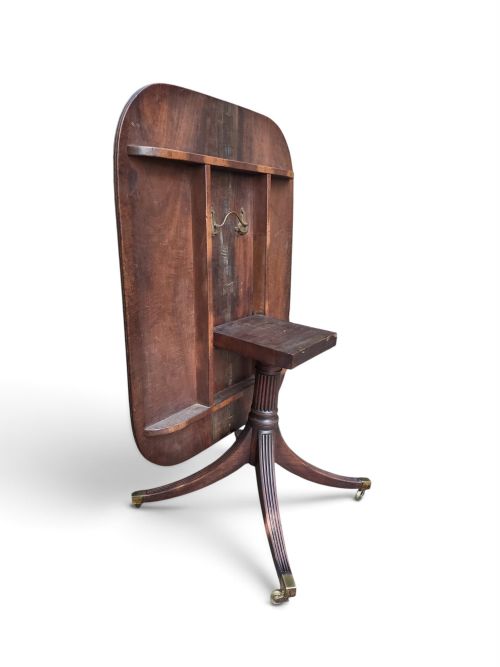
Antique Mahogany Tripod Base
When you handle an antique mahogany tripod base, you hold a stable three-legged support designed to tip, spin, or steady tables and stands.
Antique Mahogany Tripod Base
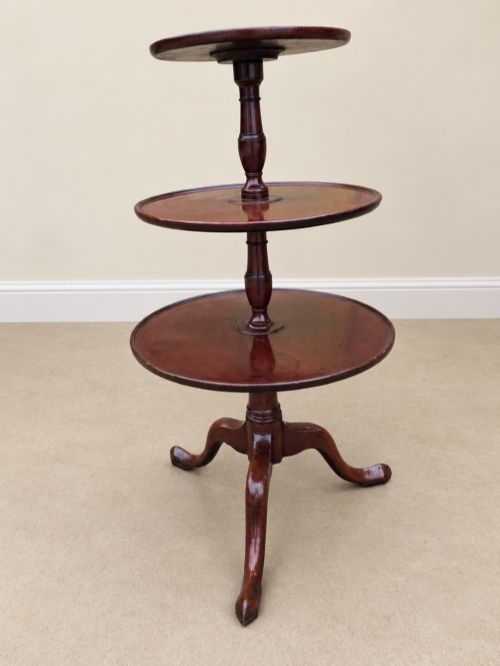
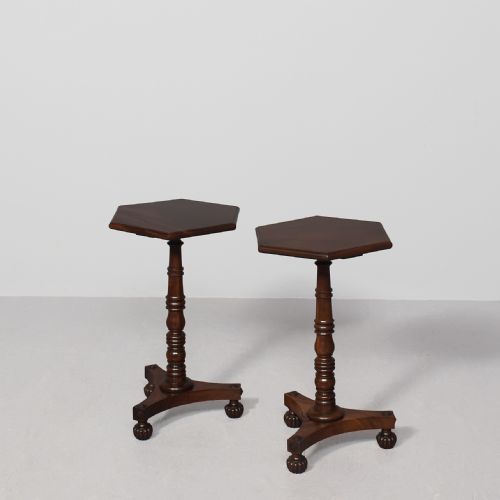
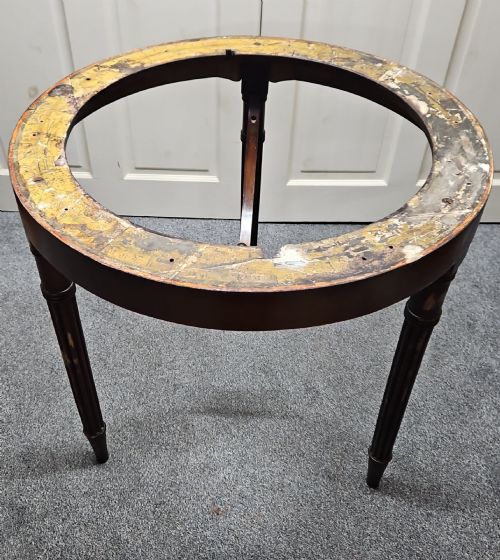
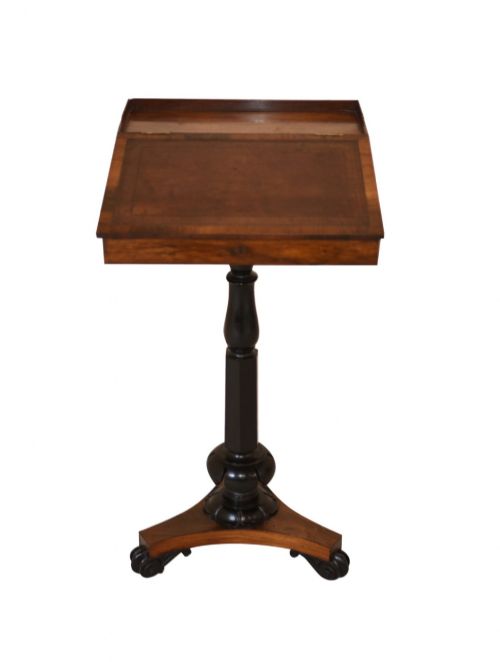
An antique mahogany tripod base supports a variety of small and functional furniture pieces spanning several historical periods. Buyers searching this phrase look for practical three-legged supports carrying surfaces or display tops.
The pieces appearing most frequently range from Georgian and Regency wine tables to Victorian occasional stands and Edwardian examples. These items serve flexibly as bedside surfaces, plant holders, or reading stands.
Makers fashioned these supports with three splayed legs to prevent rocking on uneven floors. The design allows the pillar and legs to remain steady while holding tilting tops or fixed surfaces.
Materials and construction methods
Cabinet makers relied primarily on mahogany for its dense grain and strength, frequently combining it with rosewood, walnut, or boxwood for inlay work. Brass components provided functional adjustments on lamps, music stands, and tilting mechanisms.
Turning lathes shaped the central columns, while hand-carving produced the curved three-legged tripod bases. Joinery techniques united the pillar to the legs using sturdy dovetail or tenon joints to withstand the pivot of tilt-top mechanisms.
Antique Mahogany Tripod Base Retail Price Guide 2026
Typical asking prices for mahogany tripod base among the pieces listed under this phrase on Sellingantiques today, from the lower quarter to the upper quarter. They describe what is for sale here now, not the wider market.
Listings feature mahogany paired with secondary materials including brass, rosewood, walnut, boxwood, marble, leather, and fabric across multiple centuries.
Assessing quality and craftsmanship
Superior examples demonstrate refined turning on the central pillar and crisp carving along the tripod legs. Lesser pieces display heavier, simpler proportions without decorative detail.
The integration of the mechanism dictates the standard of execution. High-grade tilt-top tables lock securely into place with well-fitted brass catches, whereas ordinary pieces exhibit looseness in the pivot block.
The Antique Mahogany Tripod Base Glossary
- Tripod base
- A three-legged support structure designed to keep small tables and stands stable on uneven floors. This configuration underpins wine tables, torchieres, and tilt-top surfaces.
- Tilt-top table
- A table with a hinged top that folds vertically when not in use. This mechanism allowed makers to store the furniture flat against a wall.
- Torchere
- A tall, slender stand designed to hold a light or plant. These pieces utilise a sturdy tripod base to support elevated weight safely.
- Wine table
- A small occasional table intended for holding glasses and bottles. They frequently feature circular tops mounted on pivoting tripod columns.
- Boxwood inlay
- Contrasting light wood inserted into recesses within the mahogany surface. Craftsmen used this technique to create geometric or floral borders.
Antique Mahogany Tripod Base: Frequently Asked Questions
What is an antique mahogany tripod base used for?
These supports hold small movable furniture such as wine tables, torchere plant stands, and music holders. Their three-legged design prevents rocking.
Buyers place them beside seating or in corners to hold lamps, books, and decorative objects without occupying substantial floor space.
How do you operate a tilt top table?
A catch or brass pivot under the surface releases the table top so it swings from horizontal to vertical. This allows compact storage against a wall.
When returning the top to the flat position, the locking latch secures the surface back onto the pillar.
Are all tripod tables Georgian?
The form spans multiple eras, appearing across Georgian, Regency, Victorian, and Edwardian periods. Stylistic details help distinguish the exact age of each piece.
Early examples often feature plain mahogany or subtle carving, while later Victorian and Edwardian versions introduce varied inlays and heavier proportions.
Can these tables hold lamps securely?
The three splayed legs distribute weight evenly to maintain stability for floor lamps, candle stands, and table lamps. The wide footprint keeps the stand balanced.
Heavier variations designed as torchere stands or standard lamps accommodate vertical loads safely on wooden or carpeted floors.