

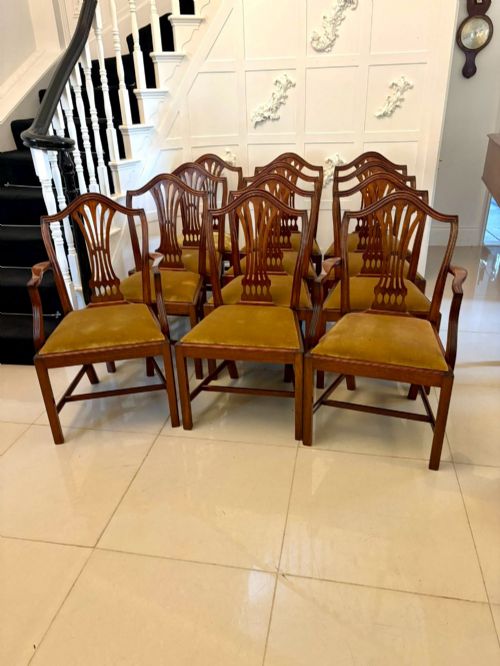
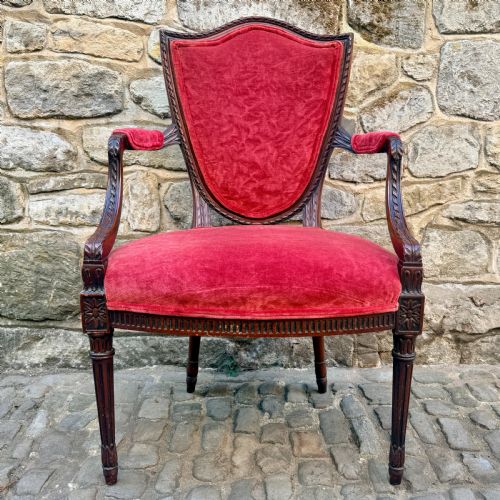
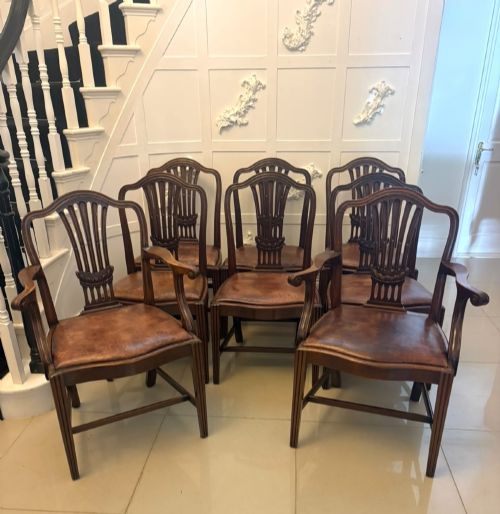
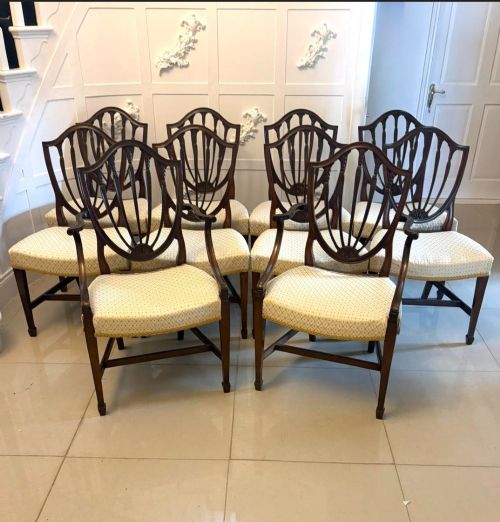
Antique Mahogany Shield Chairs
Antique mahogany shield chairs are elegant seats featuring carved backrests shaped like traditional shields, sought after by collectors for their refined Georgian and revival aesthetics.
Antique Mahogany Shield Chairs
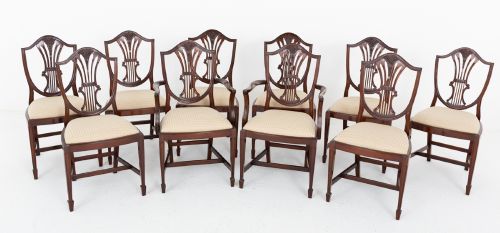
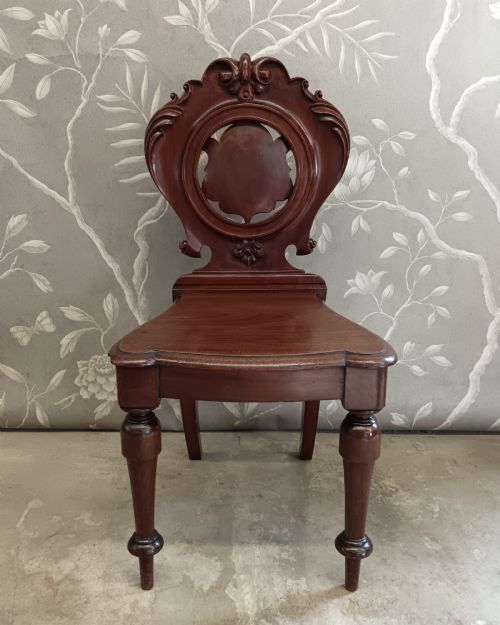
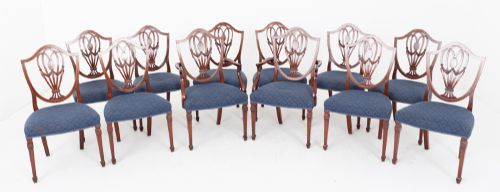
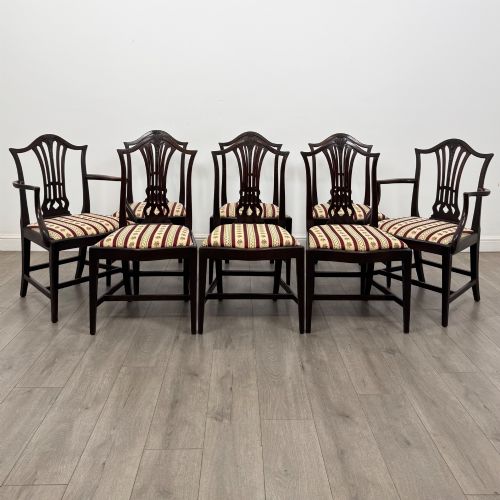
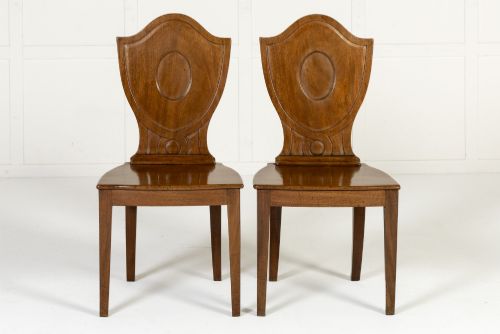
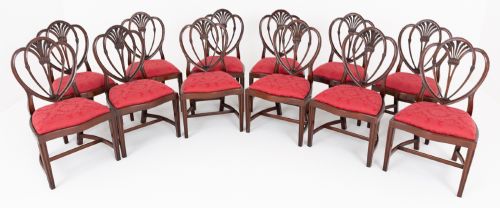
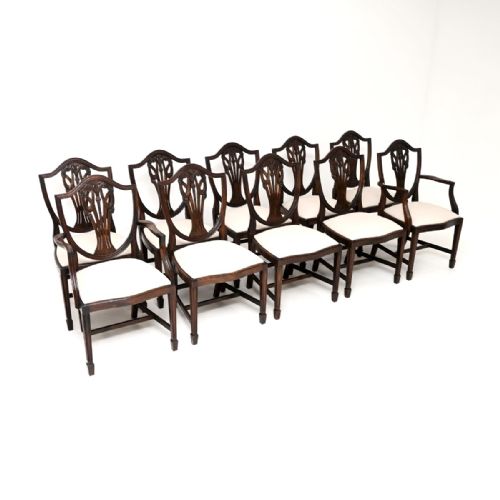
When you search for antique mahogany shield chairs, you encounter seating ranging from eighteenth-century originals to later nineteenth-century and twentieth-century revivals. The forms span individual hall chairs and armchairs to large dining sets comprising both standard chairs and carvers.
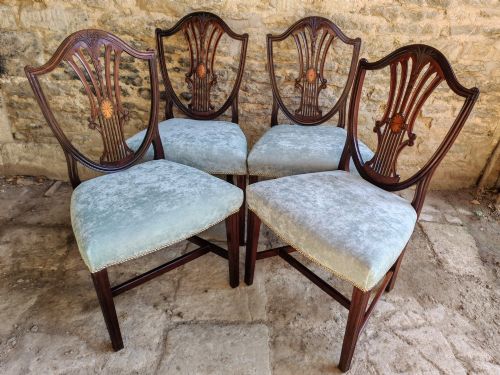
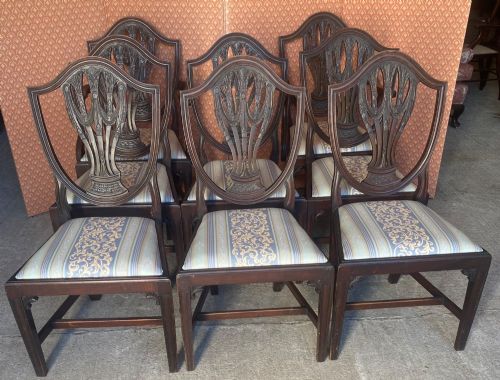
The prevailing examples on this page follow the Hepplewhite style and its later revivals, characterised by the distinctive shield-shaped backrest. These pieces appear across periods including Georgian, Regency, Victorian, and Edwardian eras, reflecting enduring design appreciation.
How They Were Made
Cabinetmakers constructed these seats using solid timber, notably mahogany and Cuban mahogany, often enhanced by carved details on the frame and backrest. Upholstered variants incorporate materials such as leather, fabric, and velvet over supportive padding.
Detailing frequently involved brass elements and intricate woodwork applied to the crest rail and splat. The joinery combines traditional framing techniques designed to withstand sustained use in dining rooms and halls.
Antique Mahogany Shield Chairs Retail Price Guide 2026
Typical asking prices for mahogany shield chairs among the pieces listed under this phrase on Sellingantiques today, from the lower quarter to the upper quarter. They describe what is for sale here now, not the wider market.
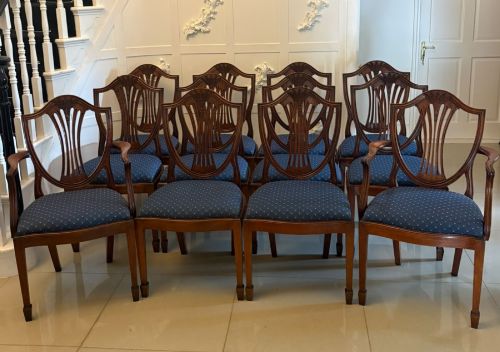
Several sets include matching carvers, ensuring the table head rests match the rest of the dining room.
What Varies in Quality
The refinement of the carved splat and the symmetry of the shield-shaped frame distinguish finer examples from standard production. Crispness in the foliage, wheat ear, or Prince of Wales feathers motifs indicates superior craftsmanship.
The integrity of the timber, the uniformity of a matched set, and the preservation of original leather or upholstery contribute significantly to the standing of the piece. Matching sets of twelve or sixteen maintain higher consistency than assembled groups.
Maple and Co
The Antique Mahogany Shield Chairs Glossary
- Shield back
- A chair back shaped in the outline of a heraldic shield, popularized by eighteenth-century designers like George Hepplewhite. This silhouette forms the defining visual characteristic of the category.
- Carver
- An armchair designed with armrests, traditionally placed at the head of a dining table or used as a desk chair. Pairs of carvers frequently accompany larger sets of dining chairs.
- Splats
- The vertical wooden strip or openwork design in the centre of a chair back. In shield chairs, these often incorporate carved urns, drapery, or interlaced ribbons.
- Cuban mahogany
- A dense, heavy variety of mahogany sourced from the Caribbean, prized for its rich colour and fine grain. Furniture makers utilised this timber for high-status pieces.
- Hall chair
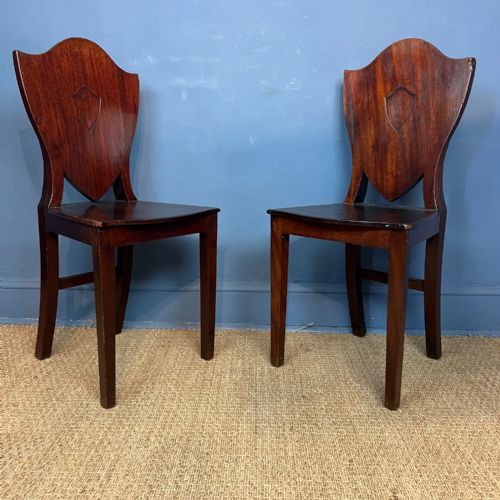
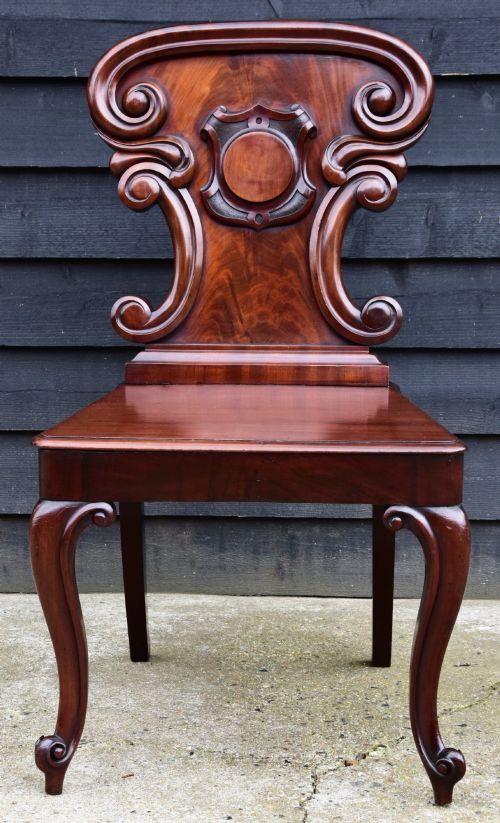
- A rigid wooden seat, frequently un-upholstered, designed for entrance halls and often featuring carved or painted family crests. These pieces prioritize sculptural impact over padded comfort.
Antique Mahogany Shield Chairs: Frequently Asked Questions
How do I spot an eighteenth-century original?
Authentic eighteenth-century pieces display period-appropriate joinery, hand-carving depth, and rich timber patina developed over centuries of use.
Examination of the underside and structural joints reveals the hand-tooled marks typical of Georgian cabinetmaking workshops.
What is a carver chair?
A carver is an armchair designed to match a set of dining chairs, typically positioned at the table ends.
These pieces feature integrated armrests and generous proportions compared to the standard side chairs in the set.
Are shield chairs comfortable for dining?
Many shield chairs feature upholstered drop-in seats covered in leather, fabric, or velvet for dining comfort.
Revival and original variants alike balance upright posture support with cushioned seating surfaces.
How do I date a revival piece?
Revival pieces from the Victorian or Edwardian eras exhibit machine-assisted joinery alongside nineteenth-century finishing techniques.
Stylistic cues often point to Hepplewhite revival movements rather than the original eighteenth-century manufacturing period.