

Antique Mahogany Sarcophagus
These antique mahogany sarcophagus pieces bring grand classical proportions and deep timber grains directly to your dining room or drawing room.
Antique Mahogany Sarcophagus
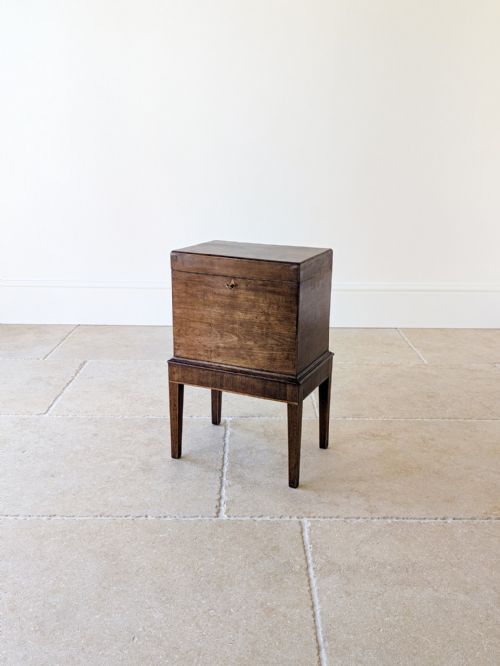
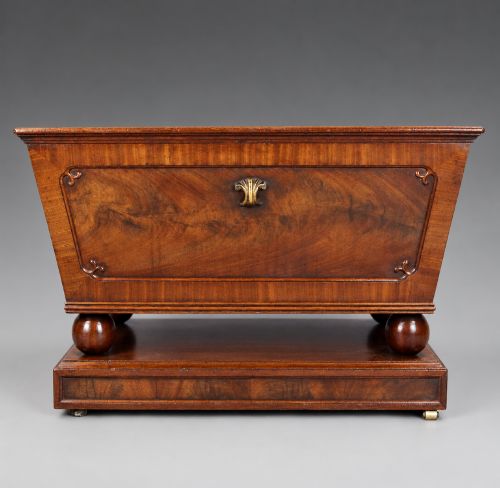
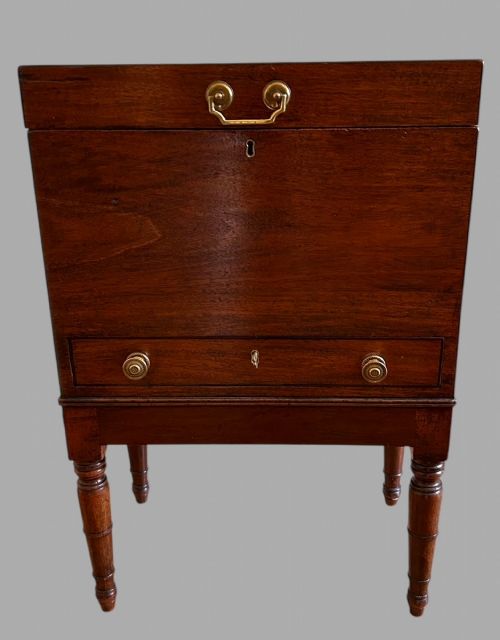
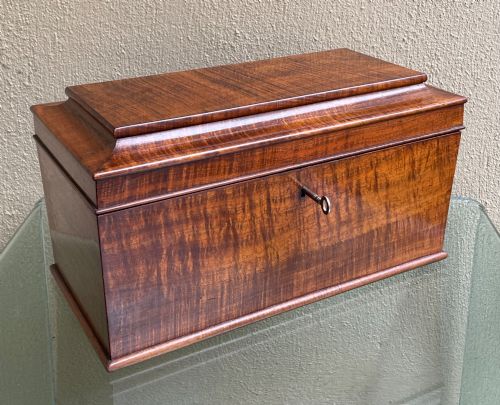
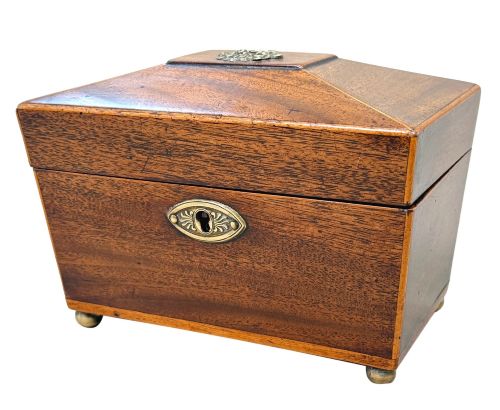
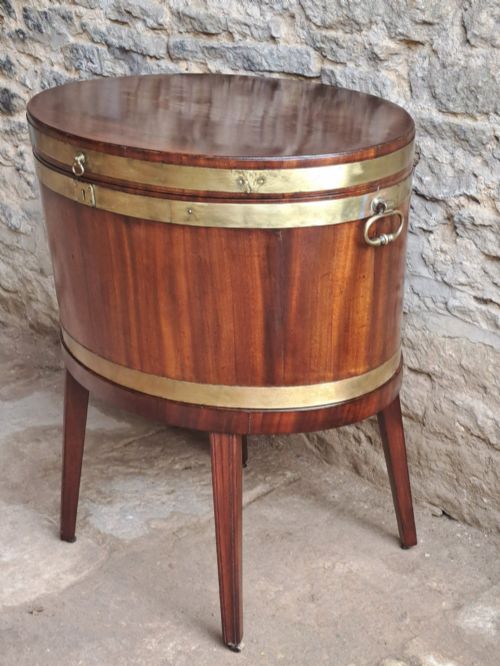
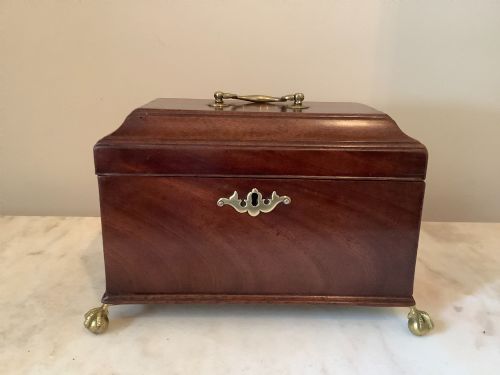
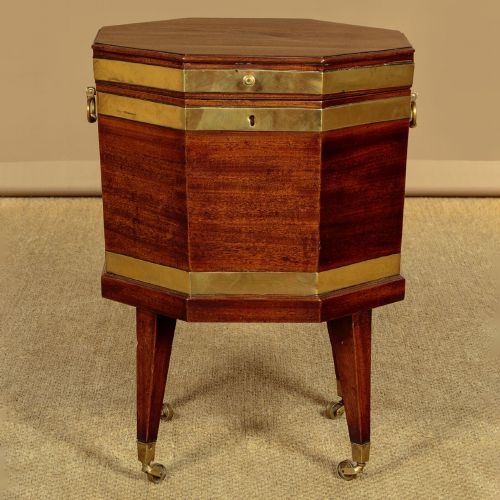
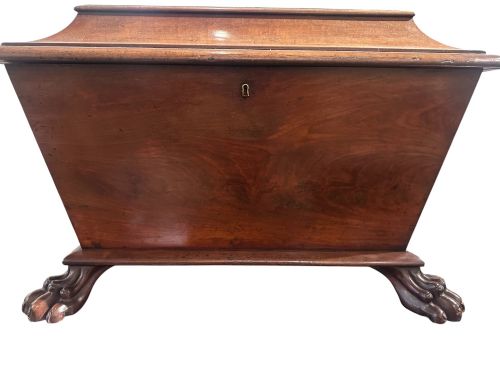
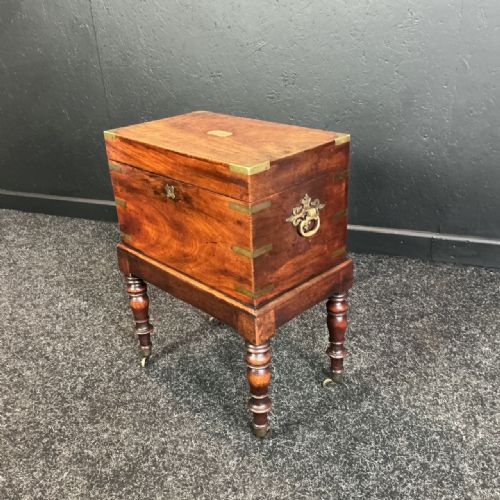
When you search for an antique mahogany sarcophagus, you encounter substantial containers built to hold wine bottles or precious tea leaves. The forms divide principally between large floor-standing cellarettes for the dining room and smaller table-top tea caddies designed for the parlour.
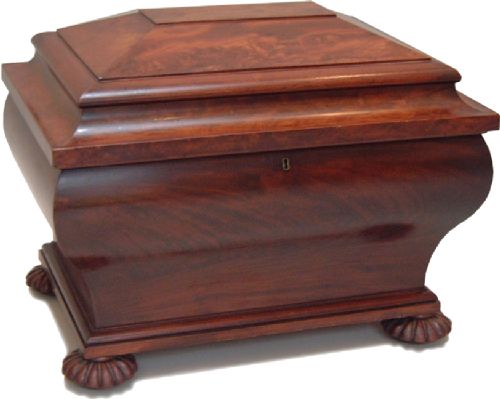
Most examples you meet on this page date from the Georgian, Regency, and Victorian periods, taking their name and silhouette from classical monumental tombs. They appear in varied guises, including octagonal, oval, and faceted boxes, frequently equipped with internal compartments or lead linings.
The objects served practical domestic roles in wealthy households, keeping vintages cool or locking away expensive dry goods. Today, collectors value them for their architectural presence and the rich figure of the timber.
Materials and construction
Cabinet makers utilised dense timbers, notably solid mahogany and figured flame mahogany, often applied over sturdy secondary woods to build these heavy carcasses. Many cellarettes incorporate heavy brass handles, brass banding, and occasionally ormolu mounts to accent the classical outlines.
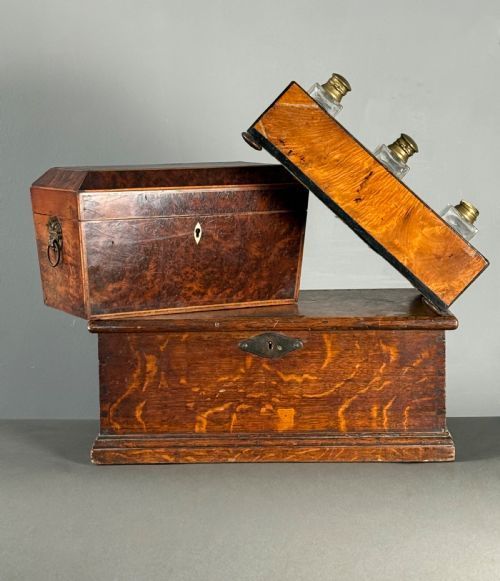
Detailing frequently involved subtle boxwood inlay, ebony stringing, or bone and mother-of-pearl accents, particularly on the smaller tea caddies. Inside, makers fitted lead linings for wine storage or intricate wooden partitions and secret drawers for dry leaf containers and glass mixing bowls.
Listings feature pieces spanning the Georgian, Regency, and Victorian eras, constructed primarily in solid and veneered mahogany.
Judging quality and execution
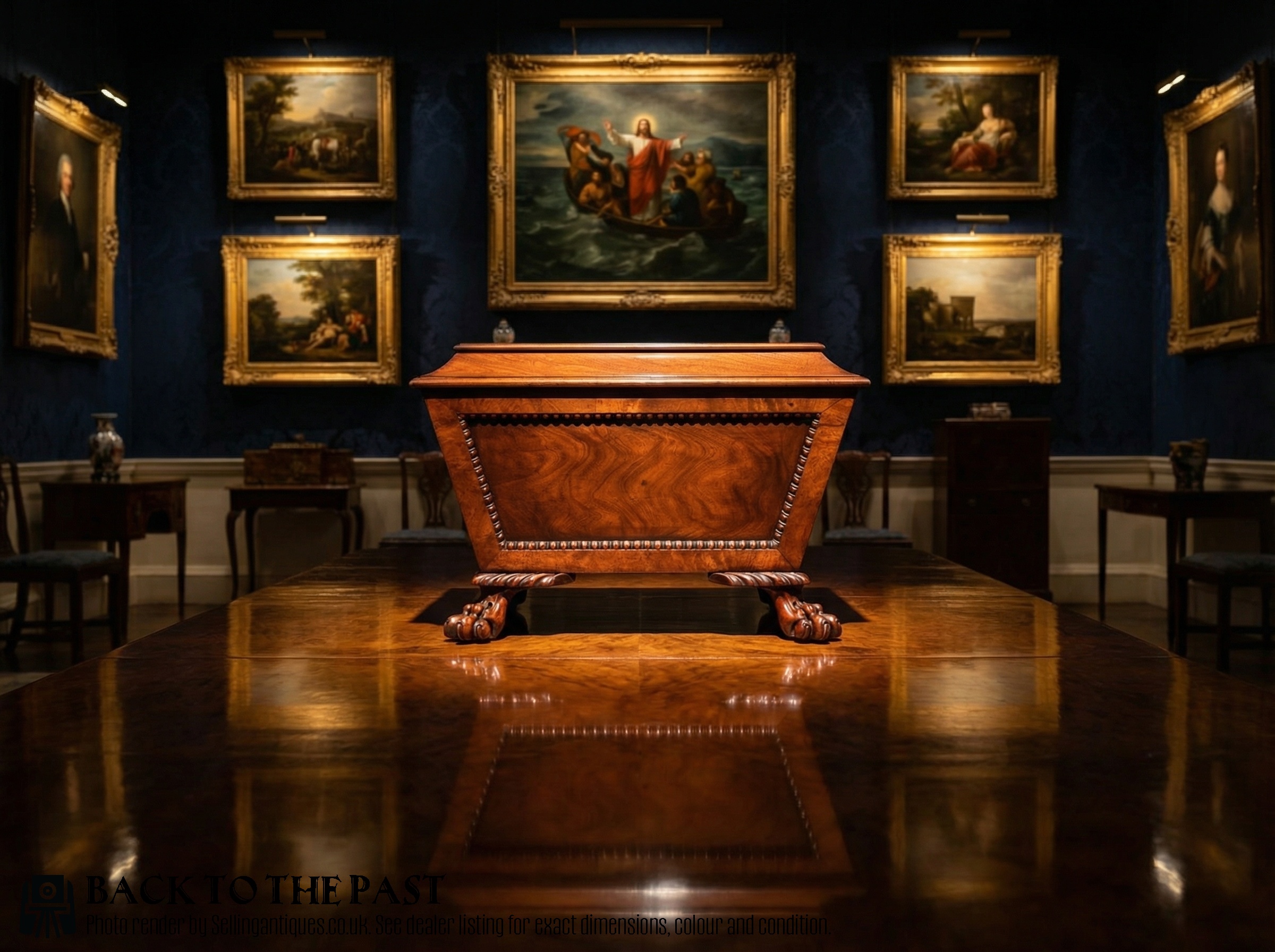
Quality rests principally in the choice of wood figure and the crispness of the classical carving around the feet, collars, and lids. Superior pieces display heavily figured flame mahogany matched symmetrically across the panels, whereas simpler boxes rely on plain grain.
Internal fittings also separate standard items from superior works, such as intact original lead liners in wine coolers or finely constructed secret compartments in tea caddies. The precision of brass mounts and the survival of original castors or feet indicate higher workshop origins.
Edwards and Roberts·Gillows
The Antique Mahogany Sarcophagus Glossary
- Cellarette
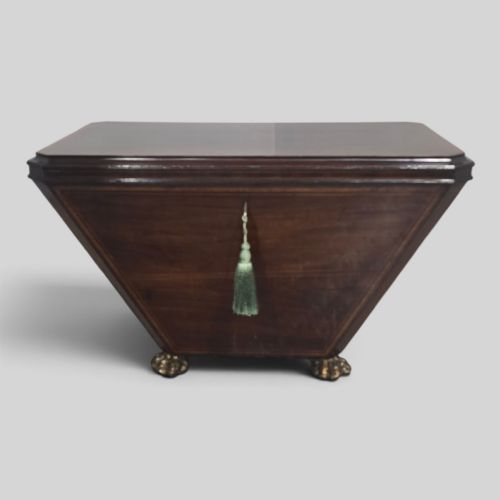
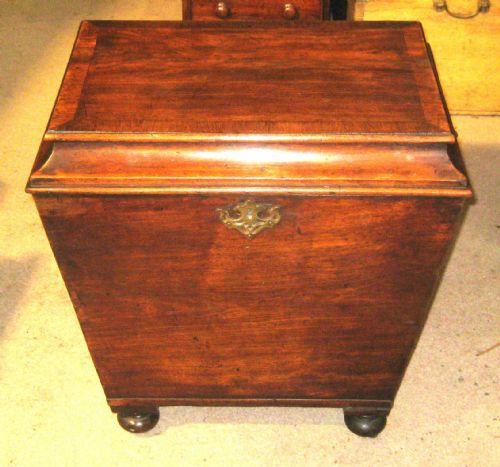
- A lockable container used for storing wine and spirits within the dining room. They range from small tabletop boxes to large floor-standing pieces mounted on legs or feet.
- Tea Caddy
- A small box constructed to hold loose tea leaves securely under lock and key. Interiors often contain lidded canisters and mixing bowls made of glass.
- Teapoy
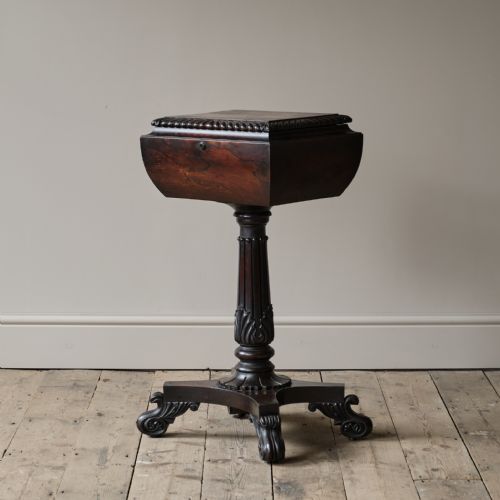
- A small pedestal table fitted with a box or tea caddy on top. They typically stand on a central pillar supported by three or four carved feet.
- Ormolu
- Gilt bronze mounted onto furniture as a decorative decorative element. It provides a bright metallic contrast against dark mahogany surfaces.
- Flame mahogany
- Timber cut from the fork of the mahogany tree to produce a rippling, flame-like grain pattern. Cabinet makers reserved this veneer for the most prominent exterior surfaces.
Antique Mahogany Sarcophagus: Frequently Asked Questions
What is an antique mahogany sarcophagus used for?
These pieces served as functional storage vessels in affluent period homes, functioning either as wine coolers to hold bottles on ice or as caddies to protect expensive tea leaves.
Today, buyers repurpose the large floor-standing cellarettes as side tables or log bins, while smaller tea caddies find places on desks and sideboards as decorative storage.
How do I date an antique sarcophagus?
Dating relies on observing the stylistic details, such as the heavy classical proportions typical of Regency pieces versus the sharper inlay work associated with George III production.
Hardware styles, secondary woods, and internal construction methods like handmade dovetails also provide clear chronological markers for the eighteenth and nineteenth centuries.
Are these cellarettes waterproof inside?
Many period wine coolers retain their original lead linings, which were soldered to hold ice and melting water alongside wine bottles.
Over the decades, some linings have suffered wear or removal, so examining the internal compartment helps determine whether a piece remains suitable for actual chilling tasks.
What is the difference between a cellarette and a teapoy?
Cellarettes are generally larger, heavier containers designed to sit on the floor or on low frames near the dining table for heavy glass and bottle storage.
Teapoys are elevated on slender pedestals and focus on holding dry tea leaves, often incorporating delicate internal compartments and glass mixing bowls.