
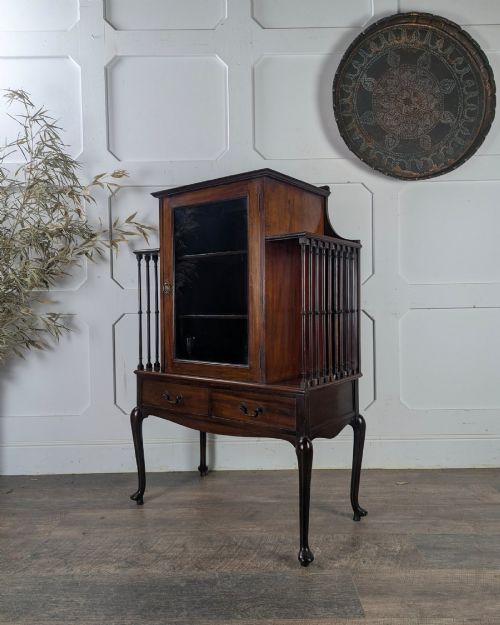
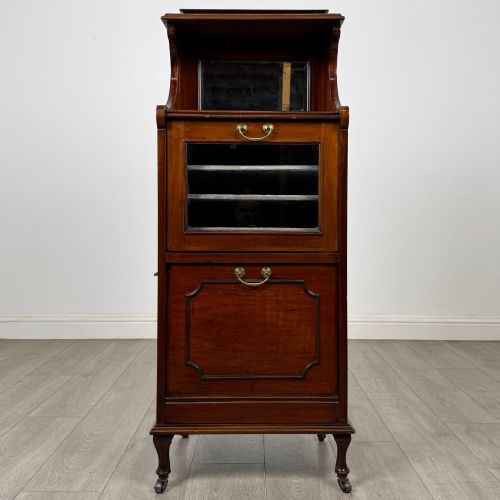
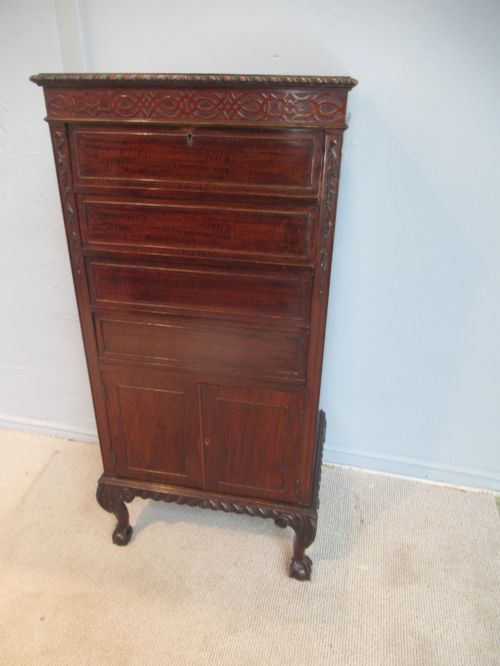
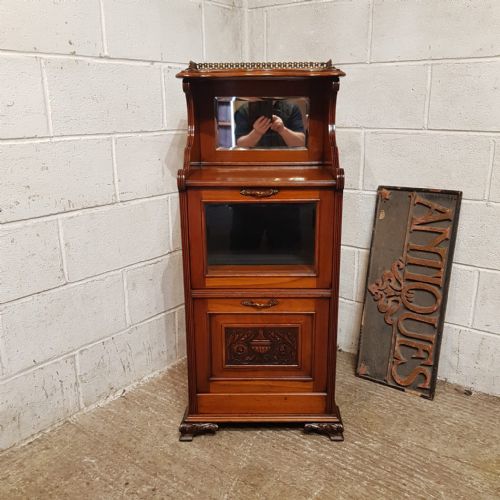
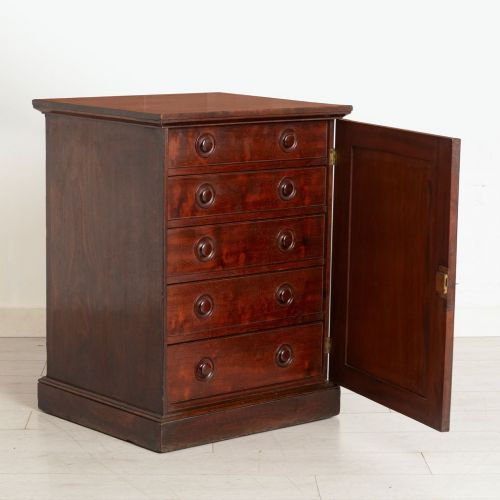


Antique Mahogany Music Cupboard
An antique mahogany music cupboard is a purpose-built home for sheet music and folios that brings fine Edwardian and Victorian cabinet-making into a modern room.
Antique Mahogany Music Cupboard
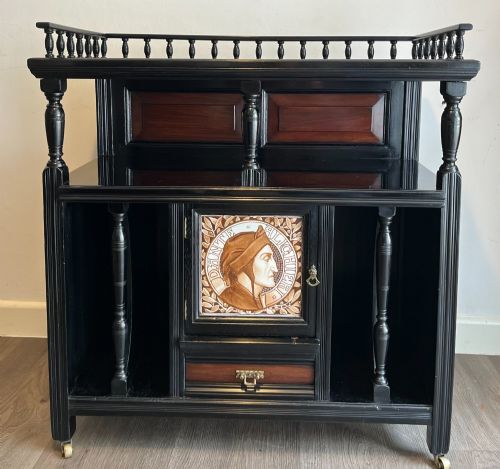
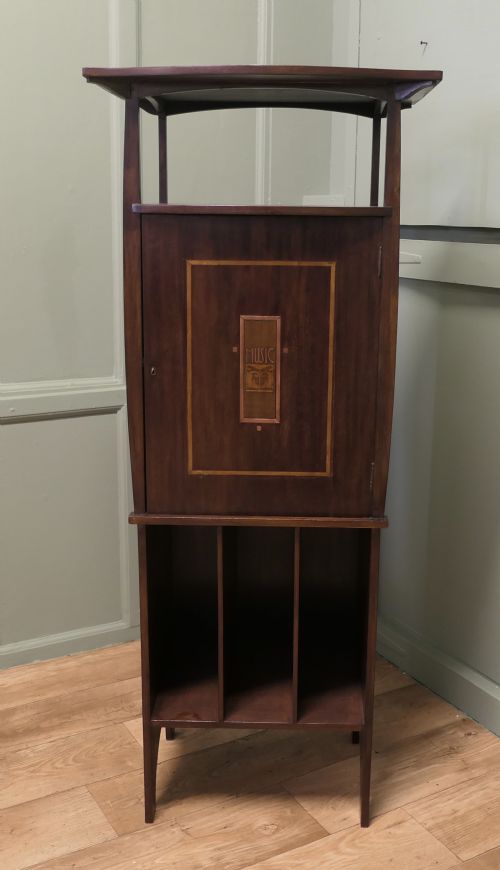
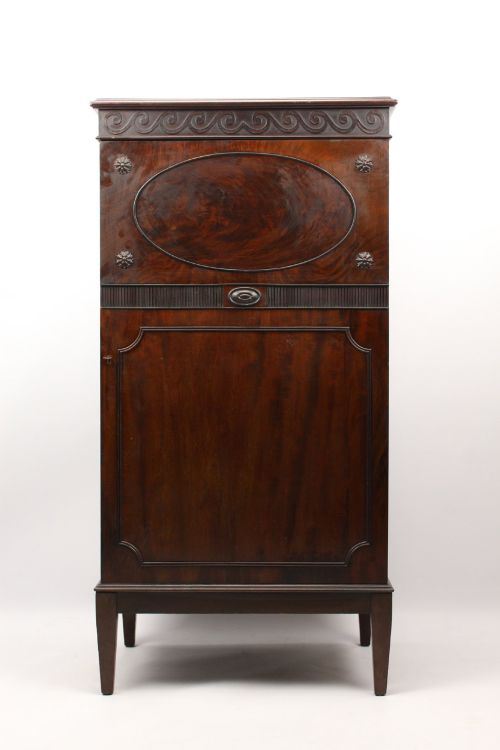
When you search for an antique mahogany music cupboard, you encounter tall, narrow pieces designed specifically to store folios and sheet music beside a piano or in a parlour. The selection ranges from late nineteenth-century examples to later twentieth-century forms.
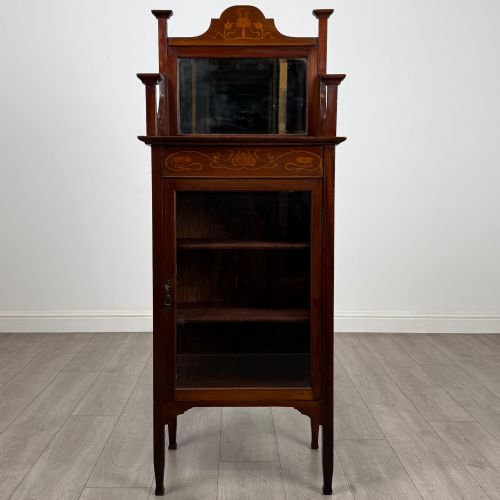
You are most likely to meet Edwardian pieces on this page, often featuring slender proportions, satinwood inlay, and drop-front or drawer storage built to keep scores flat. Victorian and Arts and Crafts iterations also appear, alongside variations configured for display or file storage.
The primary forms include narrow side cabinets, pedestal cabinets, and glazed display hybrids. Each type reflects the domestic musical habits of the late nineteenth and early twentieth centuries, repurposed today for compact storage.
How they were made
Cabinet-makers relied on solid mahogany and flame mahogany veneers over secondary timbers, often accentuating the grain with contrasting boxwood and satinwood inlay. Brass handles, hinges, and occasional glazed doors completed the construction.
Interiors typically contained dedicated shelving or internal drop-front drawers engineered to organise heavy paper folios without bending. Workshop techniques ranged from traditional marquetry panels to clean Arts and Crafts joinery.
Listings span the Victorian, Edwardian, and Arts and Crafts periods, featuring mahogany, satinwood inlay, and brass hardware.
What varies in quality
The standard of timber selection and inlay precision marks the division between ordinary workshop production and finer maker-attributed pieces. Finer cabinets display carefully matched flame mahogany veneers and crisp, hand-cut wood inlay rather than printed decoration.
Structural integrity in the drawer runners and drop-front mechanisms dictates everyday utility. Cabinets retaining original brass hardware, working locks, and unwarped internal dividers command greater appreciation among collectors.
GM Elwood for JS Henry·Denby and Spinks·Collinson and Lock London·Keeble London·Lidstone London
The Antique Mahogany Music Cupboard Glossary
- Marquetry
- Decorative patterns formed by fitting together thin veneers of wood and other materials onto a structural surface. This technique allows for elaborate floral or geometric designs across cabinet doors.
- Satinwood inlay
- Contrasting yellowish timber inserted into the mahogany surface to create borders and motifs. It provides a bright visual accent typical of Edwardian cabinet work.
- Drop-front
- A hinged panel that opens downward to grant access to internal shelves or drawers. It allows musicians to browse sheet music without pulling out a full drawer.
- Pedestal cabinet
- A tall, freestanding piece of furniture with a narrow footprint designed to fit tight spaces. These units maximise vertical storage room in smaller nineteenth-century parlours.
Antique Mahogany Music Cupboard: Frequently Asked Questions
What were music cupboards originally used for?
These cabinets stored sheet music, folios, and manuscript books near a domestic piano or music room. The shallow drawers and compartments kept paper scores flat and organised.
Today, buyers repurpose them as bedside tables, hallway cupboards, or compact storage units for modern media and papers.
How do I date an Edwardian music cabinet?
Edwardian pieces typically date between the late eighteen-nineties and the first decade of the twentieth century. Look for lighter mahogany tones, satinwood stringing, and neoclassical or Sheraton revival motifs.
Heavier proportions, darker finishes, and bolder carvings usually point toward earlier Victorian origins.
Can these cabinets hold vinyl records?
Many standard music cabinets feature internal dimensions well suited for twelve-inch LP records or modern folios. The drop-front drawers provide convenient access for browsing a collection.
Checking the internal height and depth of the specific compartments ensures your records will fit comfortably.
What is the difference between a music cabinet and a side cabinet?
Music cabinets were manufactured with specific internal divisions, drop-fronts, or shallow drawers designed specifically for paper sheets and folios. Side cabinets generally feature open shelving, general cupboards, or display glass.
Many surviving pieces blur these lines, having been adapted or built with multi-use display and storage in mind.