

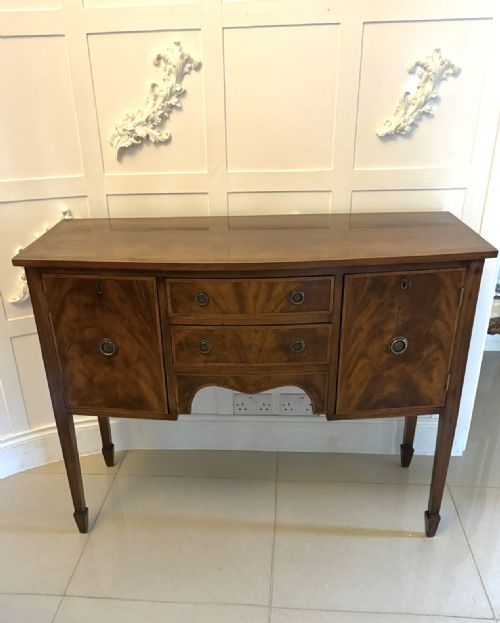
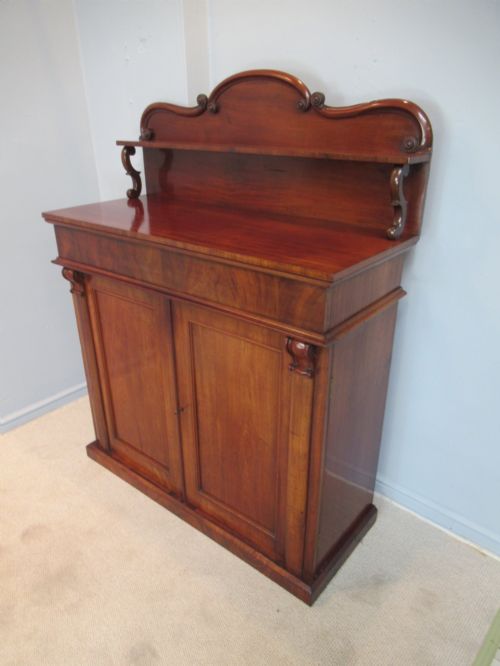
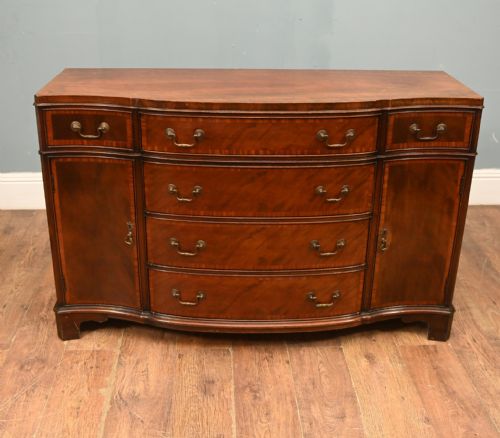
Antique Mahogany Dining Cupboard
An antique mahogany dining cupboard brings stately timber and practical storage into a room, offering a place to stow dining ware with period grace.
Antique Mahogany Dining Cupboard
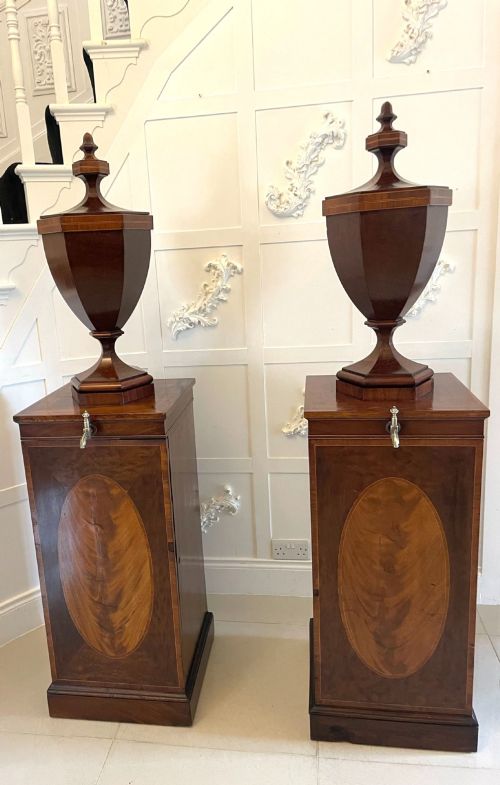
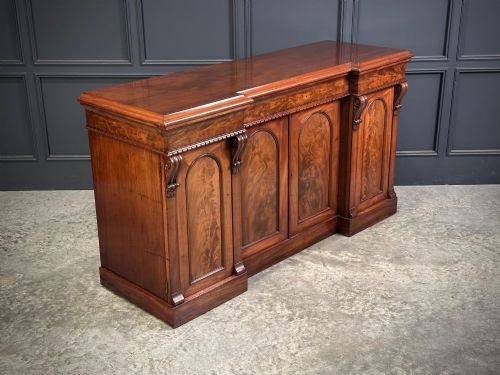
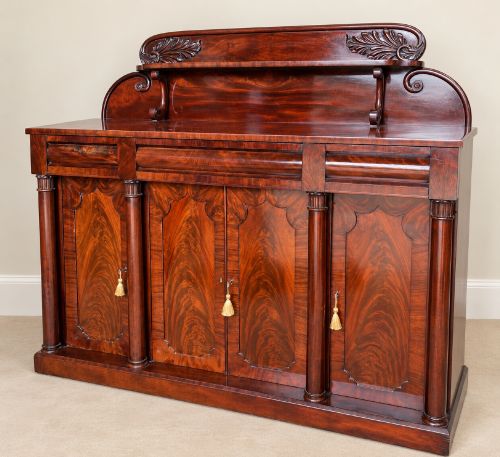
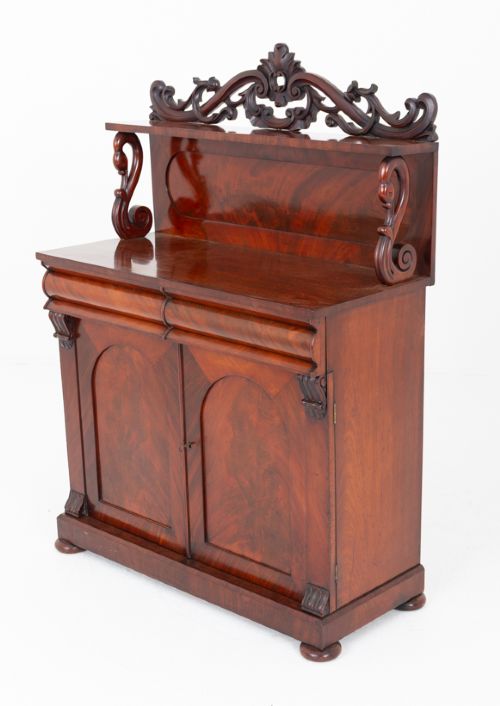
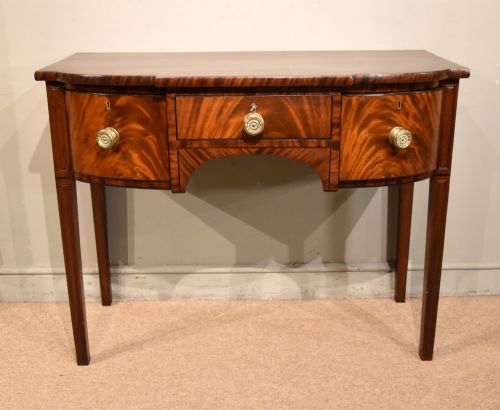
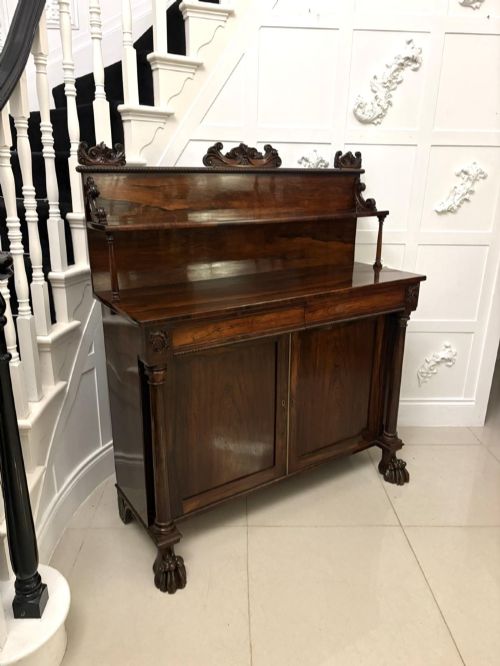
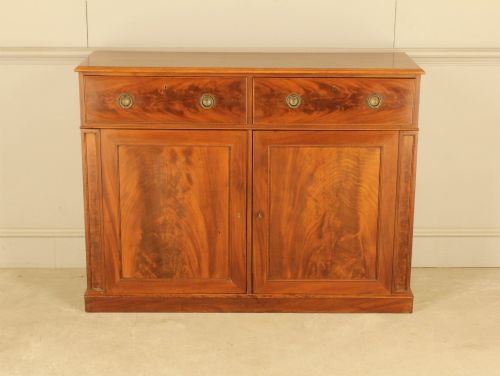
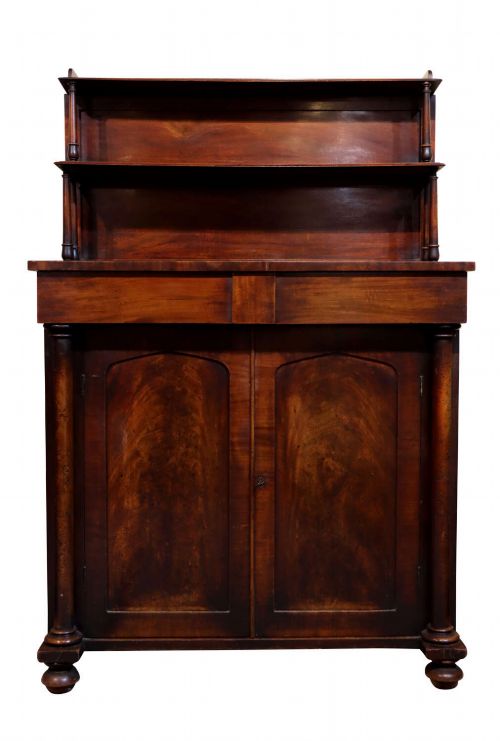
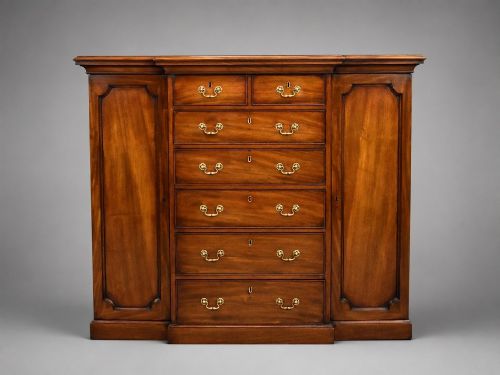
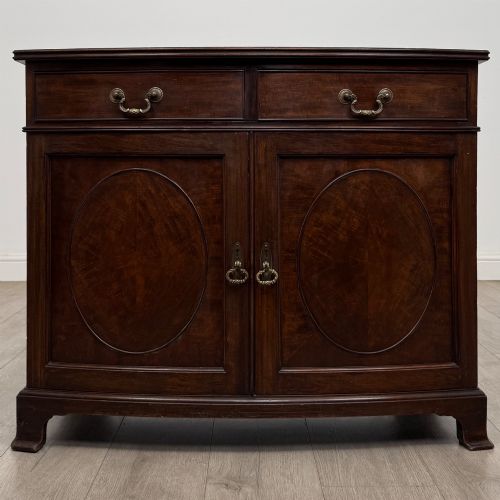
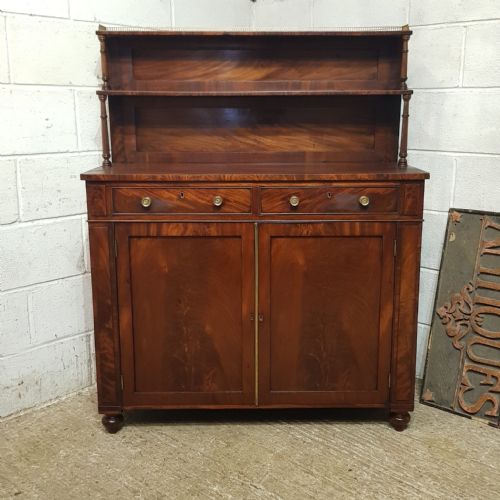
An antique mahogany dining cupboard encompasses various forms associated with the dining room, including sideboards, chiffoniers, serving cupboards, and pedestals. These pieces appear across multiple eras, ranging from Georgian and Regency creations to Victorian and Edwardian examples, alongside later revivals and early twentieth-century designs.
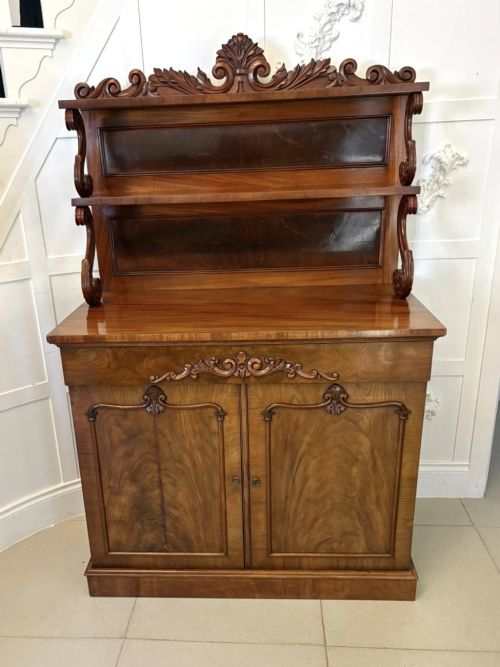
Buyers most frequently encounter Victorian and nineteenth-century chiffoniers and multi-door sideboards on this page. These pieces often feature tiered upper sections, enclosed lower cupboards, and substantial timber construction suited to traditional dining spaces.
The Measure of Quality
Quality rests in the choice of timber and the handling of the grain, where selected flame mahogany veneers display depth and movement that plain timber lacks. The precision of cabinetmaking, from tight boxwood inlay to the smooth operation of doors and drawers, dictates the standing of a piece.
Proportion and architectural presence separate standard items from superior examples. Pieces that retain original brass mounts, well-figured surfaces, and balanced proportions across serpentine or bowfront shapes command greater appreciation.
Materials documented across the page include solid mahogany, flame mahogany veneer, brass hardware, boxwood inlay, glass, and marble.
The Antique Mahogany Dining Cupboard Glossary
- Chiffonier
- A low sideboard or cupboard, typically featuring a tiered superstructure or shelf back above enclosed lower storage. It serves as a traditional dining room server.
- Flame mahogany
- A veneer cut from the fork of the mahogany tree where branches join the trunk. This produces a dramatic, flamy ripple pattern prized by cabinetmakers.
- Bowfront
- A convex, curved cabinet front that swells outward. This shape softens the corners of dining room furniture and requires skilled joinery.
- Serpentine
- A front contour characterised by a convex centre flanked by concave curves. It demands precise carpentry to follow the flowing line.
- Boxwood inlay
- Contrasting pale wood inserted into recesses within the darker mahogany surface. It creates geometric or linear borders that frame panels and drawers.
Antique Mahogany Dining Cupboard: Frequently Asked Questions
What is an antique mahogany dining cupboard used for?
These pieces function primarily as storage and serving units in a dining room. They hold china, glassware, linens, and silver while providing a surface to set out food and drink during meals.
Historically, they evolved to meet the demands of formal dining, keeping tableware close at hand while adding architectural dignity to the room.
How do I tell a Regency sideboard from a Victorian one?
Regency pieces often display classical restraint, clean architectural lines, and brass gallery rails. They date from the early nineteenth century and lean toward neoclassical elegance.
Victorian examples tend to be heavier in proportion, featuring rich flame veneers, elaborate carved details, and sometimes tiered mirror or shelf backs known as chiffoniers.
What does flame mahogany mean?
Flame mahogany refers to a decorative wood veneer harvested from the junction where a branch meets the main tree trunk. The grain twists into dramatic, flame-like patterns.
Cabinetmakers applied this veneer to prominent surfaces like doors and drawer fronts to catch the light and showcase the natural beauty of the timber.
Where should I place a dining cupboard in my home?
A dining cupboard suits a dining room, living space, or large hallway where its length and depth can be accommodated safely. Ensure there is enough clearance for doors and drawers to open fully.
Keep the timber away from direct heat sources and strong sunlight to protect the polish and prevent the mahogany veneer from drying out.